admin
admin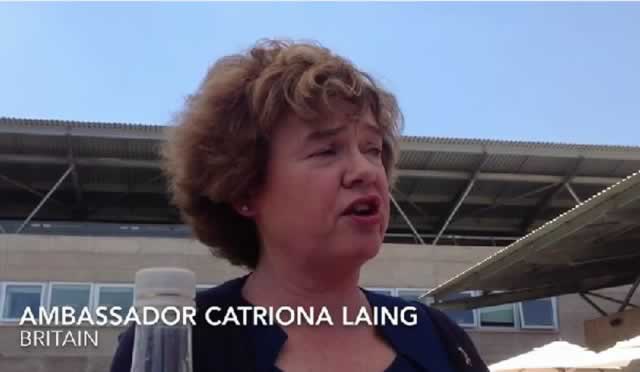

Lloyd Gumbo Senior Reporter
New British Ambassador to Zimbabwe, Ms Catriona Laing, has hinted that the European Union might not renew its illegal sanctions regime on Zimbabwe when it expires at the end of this month.
In an exclusive interview with The Herald on Wednesday, Ambassador Laing said if the embargoes were dropped, they would open a new chapter in the relations between Zimbabwe and European countries.
She however insisted that there were no economic sanctions on Zimbabwe, despite the fact that Article 96 of the Cotonou Agreement prevented the channelling of EU aid directly to the Government of Zimbabwe as well as suspension of financing of budgetary support and other projects.
“There are two sets of restrictions that the European Union has with Zimbabwe and these are EU wide and not UK specific,” said Ambassador Laing.
“The first is called the appropriate measures, which were put in place following the challenges of the elections of 2002, which means the EU at the moment does not have a formal political dialogue with the Government of Zimbabwe.
“And it doesn’t have a formal development dialogue around the European Union development programme.
“Various measures are being looked at right now and as of the 1st of November potentially could expire and if that happens, there will be some announcements around that. I can’t go any further than that at this stage.
“And if that happens, then the political dialogue restarts and the Government of Zimbabwe becomes a full partner and looking at how development expenditure is allocated.”
She said the second set of “restrictive measures” were targeted at designated individuals as well as the Zimbabwe Defence Industries.
“The only two people who remain on that list of travel ban and asset freezes are the President and Grace Mugabe. There are no other individuals on that list. They are not therefore economic sanctions in any sense at all.
“If we had any economic sanctions on this country, I wouldn’t have just told you about the trade delegation. So there is no way at all that we are trying to restrict economic growth here, certainly not through use of economic sanctions.
“That is simply not the case and I want to put that very clearly on record,” she said. The EU imposed overt and covert illegal sanctions on Zimbabwe in 2002 at the behest of Britain after Government embarked on the fast track land reform programme after the latter reneged on its commitment to fund land redistribution from the white minority to the black majority.
The bloc has over the years sought to use divide and rule tactics by removing some officials from the sanctions list while leaving others.


 Online Reporter