admin
adminmainly from Germany of replacing embattled IMF head Dominique Strauss-Kahn.
Europe’s 27 finance ministers shifted position on how to deal with a deepening debt crisis in Athens, refusing to rule out new loans, or a second bailout, and expressing a willingness to offer more time to meet 110 billion euros in existing commitments – but demanding 50 billion euros of sell-offs first.
That came after they gave their expected approval of a 78-billion bailout for Portugal, and anointed Italy’s Mario Draghi to take the place of France’s Jean-Claude Trichet at the head of the European Central Bank, the pivotal bailout backer, in October.
However, the meeting fell under the spectre of Strauss-Kahn’s appearance in a New York courtroom, with the International Monetary Fund managing director denied bail on attempted rape charges that could see him kept behind American bars for much of his life.
A major mover in global efforts to prevent Europe’s sovereign debt crisis from spreading to other parts of the financial system, Strauss-Kahn was pivotal to the first Greek bailout and the subsequent, wider EU policy response that has since seen Ireland, to the tune of 67.5 billion euros, and Portugal reel in external aid. After a worse-than-expected recession in Greece, though, the ministers finally admitted the worst-kept secret in European politics – that new loans worth potentially tens of billions of euros cannot now be ruled out.
“I don’t exclude it but we haven’t taken that decision,” said Juncker, who heads the Eurogroup of finance ministers from the shared currency zone.
Greece’s spiralling debts are now tallied at some 330 billion euros, and Juncker said the ministers had taken note that Athens had agreed “to additional measures enabling it to respect budgetary limits for 2013.”
Privatisations, he added, “will take on added importance,” meaning they will have to be massively accelerated.
Greek Prime Minister George Papandreou has already complained at some European partners even suggesting his Socialist government sell a Mediterranean island or a monument from antiquity in order to keep the wolves at bay.
But Juncker also dangled a carrot at Greece, saying he did not exclude some sort of “re-profiling,” a term understood around the talks to mean giving Greece more time to pay off broadly the same amount of money owed as under the present schedule.
Any extension would inevitably see Greece on the hook to its EU partners and the IMF into the next decade at least.
First, though, Greece has to do more to bring its debt-to-output ratio under the current 150 percent – equivalent to a year-and-a-half of the country’s entire economic output.
Divisions, of course, remain across north and south – with The Netherlands, one of just a handful of gold-plated eurozone economies, indicating reluctance to lend new sums amid an emerging realisation that not all the payments due to it may come back.
Another Triple-A credit-rated state, Austria, is also favourable to extending the repayment period, pending a report by EU and IMF officials due next month before the next 12-billion-euro installment is due for transfer. – AFP.


Online Reporter
- Chronicle
- July 31, 2026
- 25 views
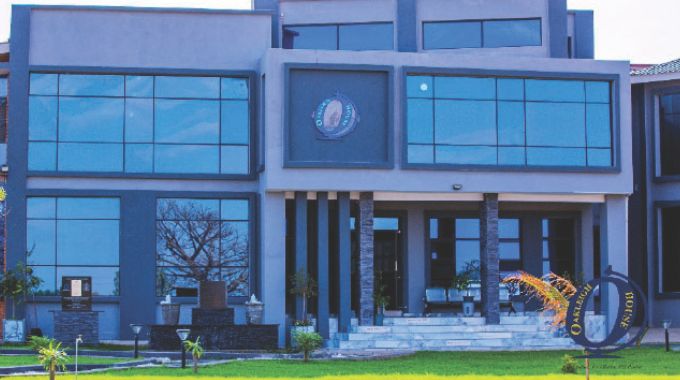
Beitbridge to host Matabeleland South PASSAF festival
Muvhuso Chibi, [email protected] Beitbridge District will host this year’s Provincial Annual Science, Sport and Arts Festival (PASSAF) from 3 to 4 August 2026 at Oakleigh House Trust School, with learners…