Chronicle Editor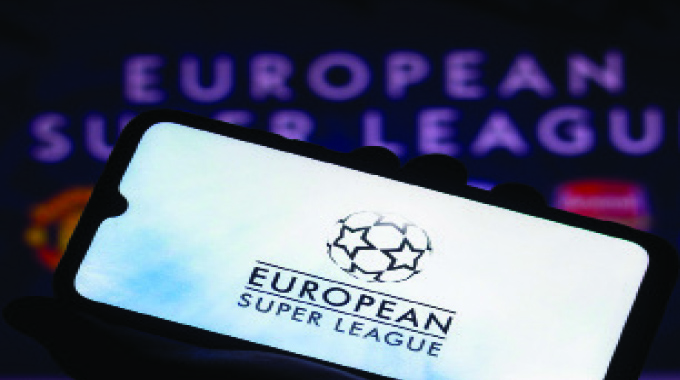
IT wasn’t hard to notice that something was up. Not only was the president of Uefa giving a rare press conference, Aleksander Ceferin had been joined from his organisation’s wood-panelled offices by Nasser al-Khelaifi of Paris Saint-Germain and La Liga’s Javier Tebas. Each was there to talk about a single court judgment whose ramifications, even Ceferin admitted, have yet to be fully digested. That’s how seriously the powers-that-be take the European Super League.
On the day, the European court of justice’s ruling in the case brought by the European Super League Company against Uefa had something for everyone. The headline takeaway from the 71-page document was that Uefa (like Fifa) had been “abusing a dominant position” and needed to change. As the regulator of the game, its rules on allowing the creation of new competitions had not been “transparent, objective, non-discriminatory and proportionate” and were “contrary to competition law”.
This is language likely to give even the most resolute of administrators collywobbles. On the other hand, the ruling didn’t seem to have a problem with Uefa more broadly. It did not seek to stop the authorising of competitions. It was OK with Uefa being the regulator of European football at the same time as controlling its biggest competition, the Champions League. It equally endorsed Uefa’s priorities, arguing — as the governing body does — that it is right any new competition should fit within the current international match calendar and be “based on equal opportunities and merit”.
The company that represents the interests of the Super League and its remaining clubs (Real Madrid and Barcelona, with Juventus’s status unwinding) gave its own presentation. The chief executive of A22 Sports, Bernd Reichart, used the occasion not only to celebrate the judgment which he believed had “set football free” but also reveal a new model for the Super League. The key details to the revised proposition included the addition of internal promotion and relegation, exit from the competition for 20 men’s clubs each season and, oh, every match being free to watch on an app currently known as Unify.
These innovations prompt further questions. Promotion and relegation have been introduced to neutralise one of the key complaints against the original Super League: that it was a closed competition with a fixed group of 16 clubs playing each other every year.
The new structure would be more open, but a team in the top “star” division would be guaranteed three years’ uninterrupted competition. Opening up to more teams, meanwhile, means revenue once to have been shared between a small group must be spread wider. And that revenue may well turn out to be less than expected. Let’s just say it’s hard to find a business – never mind a sporting competition – that has chosen to give its premium content away for free online and found it to be a shortcut to billions.
If the ideas seem unpersuasive, it’s because the concept of the Super League was never that deep in the first place. There was a lot of spiel about making every fixture count, about the best playing the best, but in reality what made the competition truly seductive to its member clubs (a number that, of course, included Manchester City, Liverpool, Manchester United, Chelsea, Arsenal and Spurs) was the chance to make more money. That was the heart of the Super League proposal and, after Thursday, it is not clear it remains.


 Online Reporter