

 Chronicle Editor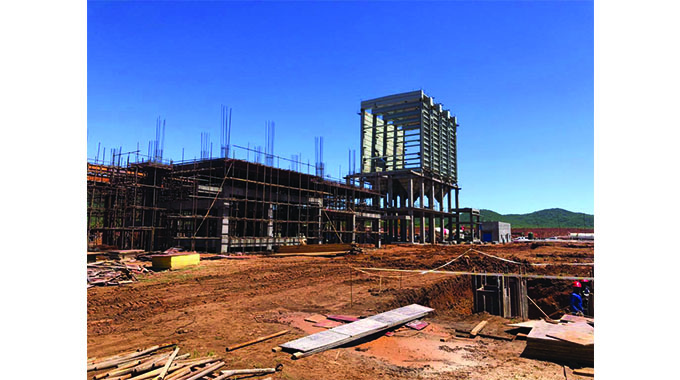
Patrick Chitumba, [email protected]
THE Midlands Province has achieved more in terms of life-changing socio-economic development projects under the Second Republic and is poised to grow further with President Mnangagwa at the helm following his August 23 Presidential victory.
Former Minister of State for Provincial Affairs and Devolution in the Midlands Province, Cde Larry Mavima, said this in an interview in which he expressed confidence that President Mnangagwa will deliver the promised transformation.
With infrastructure development shaping up in every part of the Midlands province and the country at large, he said Zimbabwe is on the rise and nothing will stop its ascendancy.
Political analysts and economic actors have welcomed President Mnangagwa’s re-election saying his leadership ensures continuation of the development agenda he has pursued since assuming power in 2017.
From 2018 to date the Midlands Province, which is endowed with rich mineral deposits, has been the biggest beneficiary of projects implemented by the Second Republic with 791 of them completed out of a total of 1 083.
The projects implemented by the Second Republic are already benefiting a population of 1,8 million in the province’s eight districts, which include Chirumhanzu, Gokwe North, Gokwe South, Zibagwe, Mberengwa, Tongogara (Shurugwi), Runde and Gweru.
According to a compendium of achievements released by the Government, the total number of completed projects stood at 791 while 292 are ongoing out of the 1 083 total projects.
CRiding on the successful implementation of these life-changing projects in the past five years, Cde Mavima said the province was confident that the next five years under the leadership of President Mnangagwa will leave the province better than before.
“The province has achieved more in terms of people-centered and life-changing socio-economic development projects since the coming in of the Second Republic in 2018 and is poised to grow more with President Mnangagwa at the helm following his August 23 Presidential victory,” he said.
“Leaving no, one and no place behind has become synonymous with the leadership of President Mnangagwa, who has made it a buzz phrase that has found resonance among the people in both rural and urban areas.”
Cde Mavima said through devolution funds – local authorities were being assisted in fulfilling their obligation of ensuring improved access to social amenities across the country through the development of key infrastructure such as clinics, classroom blocks, roads, and bridges among other facilities.
The upgrading of infrastructure is in line with the National Development Strategy 1 (NDS1), a national five-year economic management masterplan running from 2021 to 2025. Under NDS1, the Government is focusing on building, expanding, and restoring key enabler infrastructure such as roads and energy.
Infrastructure development is expected to play a key role in ensuring the country attains the status of an upper middle-income economy by 2030. The devolution funds were distributed to both urban and rural district councils in 2019.
This proves that President Mnangagwa’s leadership is pro-development with the vast resources found in the province expected to be deployed in supporting key projects, said the minister.
“President Mnangagwa and Zanu PF’s victory means the continuation of the development agenda we have experienced as a province in the past five years.
“The development thrust led by President Mnangagwa has seen massive achievements in various sectors of the economy that include; infrastructure development, dam construction, reviving old and opening of new mines, adoption of climate-proofed agricultural practices that have made the country food secure among others. We are confident in our President who has the people at heart,” he said.
Cde Mavima said made reference to the planned opening of one of Southern Africa’s biggest steel plants, the US$1,5 billion Dinson Iron and Steel Company (Disco) Manhize plant in Mvuma that will transform the Midlands Province into a massive industrial hub.
The world-class integrated iron and steel plant would tap into a resource base that is estimated to last for 100 years.
It comprises a carbon and steel plant, an iron ore mine, and a ferrochrome plant, which will also result in over 10 000 people benefiting through employment across value chains.
The massive investment is one of the fulfilled promises under the Second Republic, which has scored numerous successes in the implementation of high-impact development projects covering different sectors of the economy.
Cde Mavima also said the revival of Ziscosteel in Redcliff was underway and this, among other projects are being achieved under the National Development Strategy (NDS1), which builds momentum towards the attainment of an upper middle-income economy by 2030.



 Online Reporter