admin
admin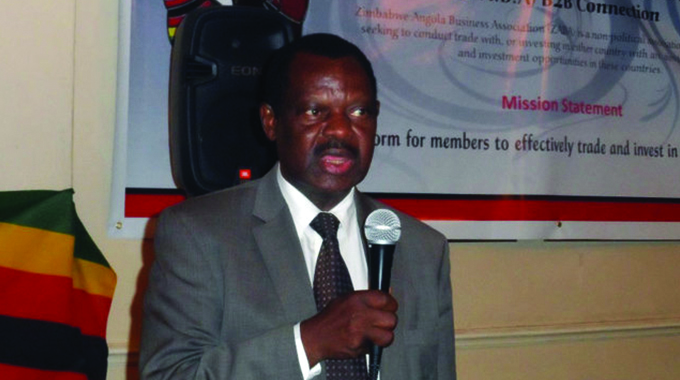
Business Reporter
FORMER Reserve Bank of Zimbabwe Governor Dr Kombo Moyana says he is writing a book titled, “Zimbabwe Economic Transition from 1981-1993”, in which he seeks to share his experiences while at the institution.
Dr Moyana who joined the Reserve Bank in 1981 as a Deputy Governor before becoming the Governor said: “I am currently working on a book titled, “Zimbabwe Economic Transition from 1981-1993. And l would like to take our nation, economics, financiers, academic students, and stakeholders through my time (1981-1993) as the Governor of the Reserve Bank of Zimbabwe”.
He said Zimbabwe over the years went through some of Africa’s greatest achievements but was now going through some of the most difficult trying time.
“I joined the Reserve Bank of Zimbabwe in 1981 as the deputy Governor the Reserve Bank of Zimbabwe. At the time, the annual inflation rate was at 5,4 percent and month-to-month inflation rate was at 0,5 percent,” said Dr Moyana.
“In 1981 our currency of Z$2, Z$5, Z$10 and Z$20 denominations were released, with the US$1 being equivalent to Z$0.657.”
With positive economic policies, he said real growth for 1980-1981 exceeded 20 percent and his responsibility as the Deputy Governor then was to help export industries and setting up a monitoring and controlling access to international borrowings by Government.
“And private sector players ensured that the new nation repaid its external loans timely and fully,” he said, adding that this resulted in external banks flooding the new nation’s entrepreneurs with capital and trade finance for sectors such as agriculture, mining, manufacturing and tourism.
During that period the country registered high growth rates, lower interest rates on foreign loans and Zimbabwe supplied foodstuffs from Cape to Cairo.
“I was then appointed as Governor of the Reserve Bank of Zimbabwe and Chairman of The Board up to 1993 when I retired.
“During my era the Government of Zimbabwe followed the Growth-with-Equity plan whose main aim was to achieve a sustainable high rate of economic growth and speedy development in order to raise incomes and standards of living for all the people,” said Dr Moyana.


 Online Reporter