Online Reporter
Artistes play various roles in society; some use art to be a voice for the voiceless by employing mediums such as poetry, music, theatre and visual art. In some cases, dance is incorporated into music or plays to deliver a message more effectively.
This week, we shine the spotlight on contemporary dancer Nontokozo Maseko, who is part of the Ezimnyama Dance Ensemble. A former member of Sekunjalo MaAfrica, Maseko shares her journey in the arts industry, a path that has seen her being nominated for the 2021 Bulawayo Arts Awards and tour countries like France and Switzerland with the group.
Q: When did you venture into the arts industry, and how did you realise you had a talent for dance?
A: From the tender age of six, I found myself falling in love with dance. I joined the school dance club, though I didn’t take it seriously at first – it was just a hobby. It was when I became part of a dance group called Sekunjalo MaAfrica that I realised I was a professional dancer.
Q: Can you share your experience working with Sekunjalo MaAfrica and how you ended up with Ezimnyama?
A: I had a great experience working with Sekunjalo MaAfrica, as I learnt a lot from them. I later encountered Ezimnyama Arts Ensemble while they were performing contemporary dance, and that’s when I discovered there were more forms of dance. Being eager to explore other dancing styles, Ezimnyama Arts Ensemble felt like my perfect home. It was a dream to be part of such an amazing family, so I joined them.
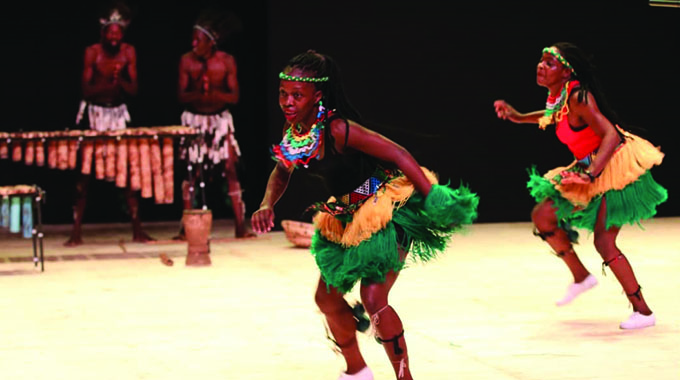
Q: What would you consider your best moments working with Ezimnyama?
A: I’ve been privileged to be part of some amazing productions performed in Zimbabwe, Botswana, France, Spain and Switzerland. Being nominated for the Roil Bulawayo Arts Awards was also a significant milestone, as it validated my craft. My best moment, however, was flying to Europe for the first time – realising that dance can take you places, offering exposure and new opportunities to learn.
Q: What are the advantages of working as part of a group compared to working solo?
A: Working in a group is beneficial because you get to learn, perform and enjoy teamwork. On the other hand, working solo has its advantages, but it can be more challenging. The pressure on the artiste can limit the quality of work, as there’s less collaboration to bounce ideas off.
Q: Which themes are reflected in your dance performances?
A: We address societal issues using dance, including themes such as HIV/AIDS, TB, drug abuse and mental health awareness. We also perform purely for entertainment to provide people with moments of relaxation and enjoyment.
Q: How do you maintain a healthy lifestyle to stay fit for the stage?
A: Being a dancer is akin to being an athlete – it requires a lot of physical energy. On my free days, I make sure to exercise to stay fit and prepared for performances.
Q: What challenges have you faced as a female dancer?
A: During the Covid-19 pandemic, we faced many challenges because the industry was completely shut down. It was especially difficult for dancers. One major challenge that many female dancers face is the misconception that dancing, particularly for women, is associated with prostitution. We work hard to educate society and change this narrative.
Q: What advice would you give to a young girl who dreams of becoming a dancer?
A: Early in my career, many people thought I would end up doing bad things like prostitution because I was a dancer.
Such comments were setbacks, but when they saw me flying out of the country, they began to believe in my talent. If you do well in art, you can sustain yourself. Recently, I participated in a national production called Sonke/Tose, where I had the chance to meet other female artistes and share skills. I’m determined to be a role model for the younger generation pursuing dance as a profession.