


 malvernmugadzikwa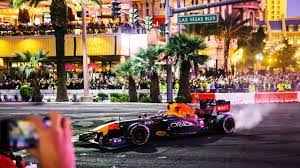
WHAT happens in Vegas goes straight to Biggin Hill, as far as Formula One is concerned.
The sport has bet big on its November night race in Nevada and, thousands of miles away on what used to be a World War Two airfield south of London, there is a team ready to put on a show.
The Biggin Hill media and technology centre, first established by former F1 supremo Bernie Ecclestone, is where Formula One’s global television feed watched by millions is produced.
On-car and pitlane cameras can be controlled remotely, graphics and radio messages added to images and vast amounts of data transferred around the world in the blink of an eye with the help of broadcast technology partner Tata Communications.
The November 18 race on the famed Las Vegas Strip is the big new addition for this season, and in another dimension to previous ones around the Caesar’s Palace parking lot in 1981 and
1982.
“There is a good reason we are going there and that’s to make it look fantastic,” Dean Locke, Formula One’s director of broadcast and media, told reporters at a Biggin Hill open day last month.
“There is a lot of pressure to make that look like the race our executives think it should look like, and how we position those cameras.
“The track will have public access at 13 points, while partnership arrangements with trackside hotels and casinos are a complication.
There are no support races to test the technology and Formula One has to be ready to roll in Abu Dhabi for the season-ender days later.
More than Hubble
Each race sees 500 terabytes of data transferred to Biggin Hill, an amount Formula One puts at 50 times the amount NASA’s Hubble space telescope produces in a year. For the Australian Grand Prix, according to Tata’s head of service delivery Gary Crocombe, it takes 300 milliseconds for footage to go from Melbourne to Biggin Hill and back.
Thirty timing loops are embedded in the asphalt at every track and also relay onboard video feeds, telemetry and key marshalling data to and from cars speeding past at more than 300kph and timed to 1/10,000th of a second.
More than 36 miles of fibre cabling link trackside nodes transfer data, much of it encrypted for team use, to an event technical centre and then back to Britain.
Augmented graphics and virtual advertising, for regional audiences, are added from Biggin Hill.
The average time for something said on team radio to go global is between 15 seconds and a lap and producer Ray Warner, ears tuned for gems in a babble of sound, is the man who chooses what to use.
“You have got about a second to think about what you’re going to do with it,” he said.
“Kimi (Raikkonen) was difficult. (His famous line) ‘Leave me alone, I know what I am doing’ almost didn’t get broadcast because the quality of the radio wasn’t brilliant.” – Reuters


 Online Reporter