Online Reporter
Theseus Shambare, Features Writer
IT used to be death that brought us together.
In Zimbabwean tradition, funerals, memorial services and cleansing ceremonies were more than just obligations — they were sacred summits of kinship.
Families gathered regardless of financial hardship, distance or lingering feuds.
New in-laws were introduced.
Cattle were slaughtered.
Stories flowed like rivers, rekindling childhood memories, resolving decades-old grudges and affirming ancestral lines.

But that rhythm has slowed.
Over time, under the influence of modern life and Western individualism, many began to retreat into nuclear silos.
The once-vibrant “extended family” model quietly fractured.
People focused on their immediate households — driven by economic pressure, migration, mistrust or the simple loss of time.
Visiting a cousin became a chore.
Attending a niece’s lobola ceremony suddenly required “budgeting.”
Some moved abroad and stayed emotionally abroad, even when physically home.
The culture of “I think for my own household” crept in, replacing the collective spirit of “we are one family.”
WhatsApp family groups, once buzzing with coordination for funerals or communal support, became silent or contentious battlegrounds.
Even in urban settings, relatives lived in the same city for years without seeing each other.
“In my 20s, we could just show up at a cousin’s house,” recalls Mr Moses Mashavave, a miller in Bulawayo who had family travel from Harare and Gutu to celebrate his 50th birthday recently in Harrisville Township.
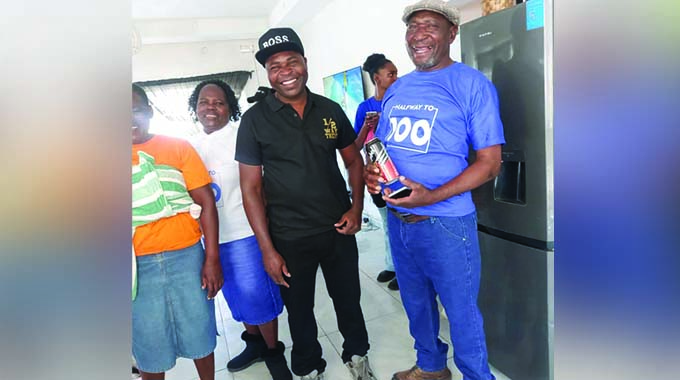
“Now, people say ‘you should have called first’ or ‘we are not available’. It is like we lost our spontaneity and maybe, our warmth.”
Yet in a curious twist of social evolution, a new type of family gathering is emerging — one that may be trying to rebuild those broken bridges.
From Chitungwiza to Chivhu, from Masvingo to Mount Darwin, families are increasingly gathering for birthdays, anniversaries, baby showers and even themed get-togethers.
A growing number are choosing joy over grief, reunions over rituals, cake over isitshwala — at least for a change.
“I am happy, my nephews, my sisters, my in-laws travelled long distances, just to celebrate my birthday,” said Mr Mashavave.
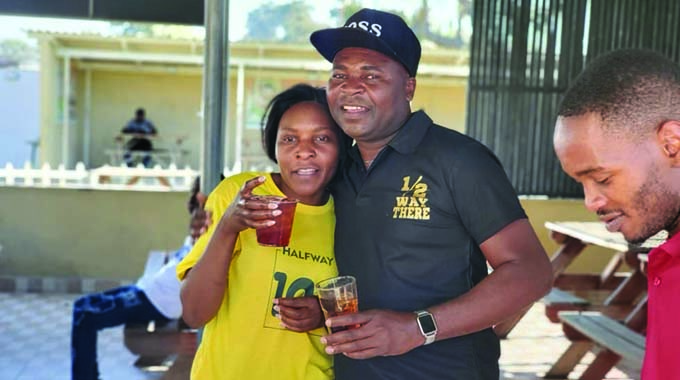
Mrs Fungai Mudzamiri, a 35-year-old nurse based in the UK, returned home last December to organise her grandmother’s surprise 85th birthday in Marondera.
It was the first time in five years that the whole family gathered without a funeral bringing them together.
“There were tears, yes, but not of mourning. We laughed. We danced.
Even the elders were surprised we could gather just to honour someone while they are still alive,” she said.
Social commentators say this shift is both symbolic and significant.
“These joyful gatherings are emerging as new rituals of reconnection,” said Dr Tatenda Mapara, a sociologist at the University of Zimbabwe.
“They are filling a void — a way for scattered families to find meaning, identity and solidarity outside of grief. It is not a rejection of tradition, but perhaps a remixing of it.”
Pan-African philosopher and author Joshua Maponga believes these changes must not signal a loss of identity, but rather a moment of cultural adaptation.
“The society is dynamic. We are not living in a vacuum,” he said.

“Yes, diaspora is bringing all sorts of things — baby showers, house warming and themed parties. But even in the midst of these, intelligent people must take time to recognise the sacredness of people meeting. These are moments of historical recollection. While we embrace the new, we must not forfeit the benefit of our culture.”
Maponga noted that while ancient gatherings were rooted in land and communal rhythms, modern equivalents — from funerals to reunions — can still serve as cultural touch points if approached intentionally.
“We can still populate these spaces with our genealogies, our stories, our totems. That way, even a birthday can carry the spirit of the ancestors.”
The trend also reflects a broader cultural realignment.
With increased global exposure, many Zimbabweans — especially in the diaspora — have absorbed new customs.
Birthday parties with décor themes. Destination family picnics. Cousins’ retreats. Shared memory books.
These once “Western” ideas are being repurposed for local contexts.
But the picture is not entirely rosy.
Some view these emerging gatherings with scepticism.

Critics argue they are becoming arenas for showboating — where success is flaunted, class divisions deepened and those without resources feel subtly humiliated.
“In my family, people with money throw big parties and post everything online,” said Tinashe Ncube, a 26-year-old from Bulawayo.
“Those of us still finding our way feel judged or overlooked. It is like we only matter when we have ‘made it’.” Others raise concerns about the eroding depth of the gatherings.
“We have replaced the ceremony with Instagram,” said Khulu Jeremiah Hove, 71.
“Yes, we are seeing each other more, but we are not talking about who we are, where we come from or what we owe each other.”
The generational divide is evident.
To younger Zimbabweans, these joyous events are an expression of modern identity and agency — a way to celebrate life while people are still present.
For many older Zimbabweans, however, the absence of ancestral rituals, clan introductions or family meetings at these events feels like a loss of structure and cultural continuity.
And yet, somewhere in the middle, a compromise seems to be emerging.
Some families now hold “combo” events — a birthday or wedding anniversary on a Saturday, followed by a more reflective family indaba on Sunday.
Others invite village elders to open celebrations with traditional dances or totem recitations, blending old and new in meaningful ways.
“Maybe we do not have to choose,” said Dr Mapara.
“We can celebrate life while honouring legacy. The key is intention. Are we gathering to build or just to perform?”
Veteran actress and cultural advocate Jesesi Mungoshi sees these gatherings as a stage for storytelling — both literal and symbolic.
“Every family event is a script waiting to be performed,” she said.
“When we sit in a circle, laugh, cry, share a meal — we are not just marking time, we are reminding each other who we are. We must not lose that essence, even if the costumes and settings have changed.”
Traditional leader Headman Luke Gondo of Nyandoro chieftainship echoes the need to blend modern trends with ancestral wisdom.
“A family that forgets its roots will be like a tree without water — green for a while, then dry forever,” he said.
“These new gatherings are welcome, yes, but they must carry the spirit of kinship. Let there be totem greetings, let elders speak, let the young know where their bloodlines run. Otherwise, we risk meeting for the sake of meat and music and not for meaning,” he said.
For all the debate, the growing consensus is that something is better than nothing.
In a world fractured by distance, economic hardship and history, the simple act of coming together — even briefly, even imperfectly — carries weight.
Mrs Grace Mhembere, a retired teacher in Gweru, summed it up: “We used to only gather when someone died. But now, I have danced at my granddaughter’s birthday and cried with joy at my son’s wedding anniversary. These moments keep us human. They remind us we are not alone.”
As Zimbabwean families continue to evolve, one truth remains: the desire to belong, to connect and to be remembered is timeless.
Whether united by loss or by laughter, the journey back to one another has begun.