admin
admin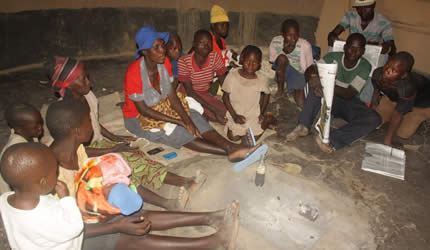
Sadly, Mthandazo died at three weeks, leaving Ngwenya devastated forcing her to forsake the religion she has been following since birth.
Ngwenya has either been pregnant or breastfeeding in her lifetime and has had three miscarriages because of lack of proper prenatal care.
Almost all her children are only 10 months apart.
The children include an unnamed one who died soon after birth in 1987; Innocent (1988); Nyasha (1990); Petros (born in 1992 but died at six months); miscarried in 1992; another miscarriage 1994; Tatenda (1996); Ropafadzo (1998); Moses (2000); Billy (born in 2002 but now late); Barbra (2004); Martha (2006); Kuda (2008); Sibongile (2010) and Mthandazo (2013).
Ngwenya admits she has never used any form of contraception saying: “My husband’s first wife, 50-year-old Delia Maongera, has also never used family planning and we do not believe in that. Giving birth is a God- given gift and using family planning methods is going against His will.”
Just like Maongera, Ngwenya says, she would only stop giving birth when her womb gives up for it is God’s desire to bear as many children as possible.
Ngwenya and Maongera adhered to the opinions, ideas and teachings of their church and found nothing wrong with having many children.
Their children total 40 but they find it extremely hard to feed, clothe, house and educate them.
Their case is a drop in the ocean as many women in Zimbabwe fail to make family planning choices because they are hindered by either religion, level of education and resources.
Because of our patriarchal society, some women also often lack the power and find it difficult to choose the number of children they want in their lifetime.
Women simply do not have control and power over their reproductive health.
Whether educated or not, women bow down to prescribed societal values and give birth to many children to justify the value of lobola paid to their parents.
For some the easily accessible oral contraceptives are a challenge, they sometimes forget to take them.
But with many children and failure to space them comes numerous challenges as those faced by Ngwenya.
Yet, family planning services can improve maternal mortality by reducing unintended high risk pregnancies such as those faced by Ngwenya.
These services can also help improve newborn and child survival by lengthening inter-pregnancy intervals.
In 2011, over 200 000 women were using a form of modern contraception supplied by Population Services Zimbabwe.
According to the Zimbabwe Demographic Health Survey 2010-2011, low contraceptive use has been recorded among women in most parts of Zimbabwe’s rural areas as compared to those in urban areas.
For example, in Zimbabwe, 59 percent of married women use a contraceptive method, an increase from 55 percent in 2005-2006 results.
An estimated 57 percent of married women use modern contraceptives regularly, leaving thousands without the ability to plan the timing and spacing of their children.
The ZDHS says modern family planning methods include female sterilisation (1 percent), the pill (41 percent), intrauterine divice (IUD) (less than 1 percent), injectables (8 percent), implants (3 percent), the male and female condom (less than 1 percent), lactational amenorrhoea method (LAM) (less than 1 percent) and emergency contraception.
Traditional methods include rhythm (periodic abstinence), withdrawal and various folk methods such as string and herbs.
The most popular contraceptive is the pill, with 41 percent usage in married men, according to the ZDHS.
The unmet need for family planning, was at 13 percent among married women and remained unchanged since 2005-2006.
Even when women have access to contraceptives, stock-outs are common, and their method of choice may not be available, limiting women’s ability to choose a method that best suits their needs.
The ZDHS results also confirm the power men have over women’s family planning choices as they showed that most men interviewed said they wanted slightly larger families than women.
Overall, the report said, 56 percent of women and 60 percent of men wanted four or more children.
According to the study, Manicaland province recorded a 56,2 percent contraceptive use an increase from 52,4 in 2005-2006.
Mashonaland East province recorded a decline in contraceptive use from 64 percent in 2005-2006 to 62,5 in 2010-2011.
Contraceptive use in Mashonaland Central province went up from 61,4 percent to 63,8 percent.
The Millennium Development Goals 2012 Zimbabwe Progress Report said even though all men and women have knowledge of a contraceptive method, a marginal decline took place in the use of contraceptives in 2010-2011.
The adolescent birth rate increased from 96 per 1 000 girls in 2009 to 114,6 percent in 2010-11.
MDG 2012 Progress Report also says socio-cultural/religious issues were noted as one of the challenges responsible for the deteriorating condition of maternal mortality in Zimbabwe.
Zanu-PF in its election manifesto has emphasised the need to improve the health delivery system to attain health for all.
“This is particularly important in view of the numerous challenges facing Zimbabwe’s health sector such as shortage of skilled professionals and healthcare staff, an eroded infrastructure with ill-equipped hospitals or clinics and lack of critical medicines and commodities.
“As part of its policy of health for all, Zanu- PF will address these challenges as a matter of top priority over the next five years,” read the manifesto.
The Sadc Protocol on Gender and Development has set up specific health, HIV and sexual reproductive health targets.
Article 26 (a and b) of the protocol addresses maternal mortality and mental, sexual and reproductive health.
State parties, Zimbabwe included, have committed to adopt and implement legislative frameworks, policies, programmes and services to enhance gender sensitive, appropriate and affordable quality health care by 2015, and in particular to
a) reduce the maternal mortality ratio by 75 percent, and
b) develop and implement policies and programmes to address the mental, sexual and reproductive health needs of women and men.
The challenge is not confined to Zimbabwean women, but world over.
And the world is reacting to the urgent need for availability, accessibility and usage of contraception in both developing and developed countries.
This has seen reproductive health gaining political visibility in recent years, starting with the adoption of universal access to reproductive health as a second Millennium Development Goal 5 target in 2007 and followed by the launch of a Global Strategy for Women and Children’s Health in 2010.
Today, more than 200 million women worldwide want, but do not have access to, contraceptives, and many of these women live in Africa.
In response, the Global Poverty Project and Women Deliver recently announced a new family planning campaign, “It Takes Two”, aimed at raising awareness of, increase demand for, and improve access to family planning information and services around the world.
The announcement came on the first day of the 3rd Women Deliver Global Conference at the just ended Women Deliver conference in Kuala Lumpur, Malaysia.
Co- founder and CEO of the Global Poverty Project Hugh Evans emphasised the importance of access to contraceptives.
“When women do not have access to contraceptive services and information, or they are actively denied information and services, it is a violation of their human rights.
“Two hundred and twenty-two million women in the developing world lack access to modern contraception. Of these, most live in the world’s poorest countries and lack basic information about sexual and reproductive health,” said Mr Evans.
At the London Summit on Family Planning (FP) in July 2012, US$2,6 billion was pledged to reduce the unmet need for family planning services in developing countries by 120 million women by 2020.
Evans said “It Takes Two” will utilise the Global Poverty Project’s Global Citizen platform, an innovative online platform and mobile application that tracks and rewards activist action through a point-scoring system and harnesses the power of social media to “gamify” family planning.
Founder and president of Women Deliver, Jill Sheffield emphasised the need for governments to meet their FP2020 commitments.
“We are excited to be launching this innovative, public engagement campaign to encourage governments around the world to meet their FP2020 commitments.
“We need girls, boys, women and men to demand family planning information and services, and we need governments, donors, and others to meet that demand with increased and improved access to modern contraceptives and education. When girls and women can’t plan their fertility, they can’t plan their lives,” she said.
According to Sheffield, 800 women around the world die of preventable causes related to pregnancy and childbirth, and 99 percent of these deaths occur in the developing world daily.
“In other words, each day, we have 800 opportunities to save a mother, daughter, aunt or sister. We know that when women have access to contraceptives and can choose when to have children, they are more likely to survive childbirth. They are also better prepared to care for and invest in their children and their families. Simply put, when women survive, families, communities and countries all thrive,” she pointed out.
She said many developing countries have made great strides toward increasing contraceptive access and options, but much more work needs to be done.
“We need continued political will and financial investments – both from developing country governments and from donors – to ensure that all women, no matter where they live, have access to the family planning information and services they want and deserve,” she said.
Low fertility rates, she added, have many benefits in both the developed and developing world.
“We know that when women have access to family planning services, they are better able to make decisions about their fertility.
“Too often, women have limited control of their own fertility, which can result in them having children too young, having more children than they want, and/or being unable to properly and safely space their pregnancies,” she said.
This, she revealed, can have negative and serious health consequences for girls and women.
“For example, when babies are spaced too closely, there are risks of maternal injury, prematurity, low birth weight and even fetal death.
“Additionally, adolescent girls who have babies too young are more likely to experience fistula and other serious injuries during childbirth. In places where access to healthcare is limited, these injuries can result in high rates of maternal mortality and morbidity,” she noted.
However, research from the World Bank has clearly shown that when family planning methods are widely available, countries can experience better child health and nutrition, reduced maternal mortality and morbidity, and countless other social, economic and political benefits.
Sheffield said there is mounting evidence to show that when women have access to family planning, everyone benefits.
Firstly, women who have access to family planning methods are more likely to survive childbirth, allowing them to continue to care for their families and contribute to their communities and their national economies.
“In fact, girls and women spend 90 percent of their earned income on their families, while men spend just 30-40 percent. “Ultimately, when girls and women are healthy and empowered, it is clear that entire families and communities have greater potential to flourish.
“Additionally, providing women with access to contraceptives and other family planning methods can slow the spread of sexually transmitted infections such as HIV/AIDS, reduce child mortality rates, improve child nutrition, and many other benefits. In short, investing in women is not only the right thing to do; it’s the smart thing to do,” she explained.
In patriarchal societies, engaging men on family planning is critical, adds Sheffield. “Culturally-sensitive, rights-based sexual education programs can help encourage and empower men and women to make important reproductive health decisions together.
“Additionally, working with grassroots service providers and organizations can also promote sexual health education and improve access to family planning services and contraceptives,” she said adding that engaging leaders – locally and nationally – is essential.
“Men are often in positions of political power and can greatly influence how men and women approach sexual and reproductive health and health.
“By creating and strengthening partnerships with community leaders and policymakers, we can help ensure that sexual and reproductive health education and services are readily available and, hopefully, better-accepted in local communities,” she pointed out.
In time, Sheffield says, these inclusive approaches and others can help break down the barriers that limit women’s ability to access and use the family planning services they want and need.
She also emphasized the need to recognize the impact of religious beliefs on perceptions about family planning.
“Family planning efforts are often much more successful when they have the support of religious groups and leaders.
“To this end, family planning advocates and service providers must work very closely with local religious leaders in the communities they serve to develop culturally-sensitive policies and programs that can be successfully implemented,” she noted.
To make real progress, she added, there is need to actively engage religious leaders in discussions about women’s health and rights – including family planning.
“Women Deliver made a strong effort to engage religious leaders at our recent Women Deliver 2013 conference in Kuala Lumpur, Malaysia.
“In forums like these, we can have frank discussions about the opportunities and challenges facing religious leaders and learn how to better ensure that our programs and our advocacy strategies appropriately reflect and address local beliefs and realities,” she said.
It Takes Two ambassador and notable Victoria’s Secret supermodel Erin Heatherton said the lack of modern contraception to hundreds of millions of women around the world remains “one of the world’s most pressing issues.”
Heatherton said everyone should have the option to plan a family and socio economic levels or country of residence should not limit their choices.
The three-year campaign will launch first in the United States and Uganda, later expanding to eight other countries around the world.
“Putting women at the center of development and delivering solutions that meet their needs will result in huge improvements in health, prosperity, and quality of life,” said Bill & Melinda Gates Foundation co-chair Melinda Gates.
“When women have access to contraceptives they’re healthier, their children are healthier, and their families thrive,” she said.
With such challenges globally, continued advocacy is needed to ensure that governments sustain and increase their commitments to family planning and to girls’ and women’s health and rights more broadly.
Feedback: [email protected]



 Online Reporter