Online Reporter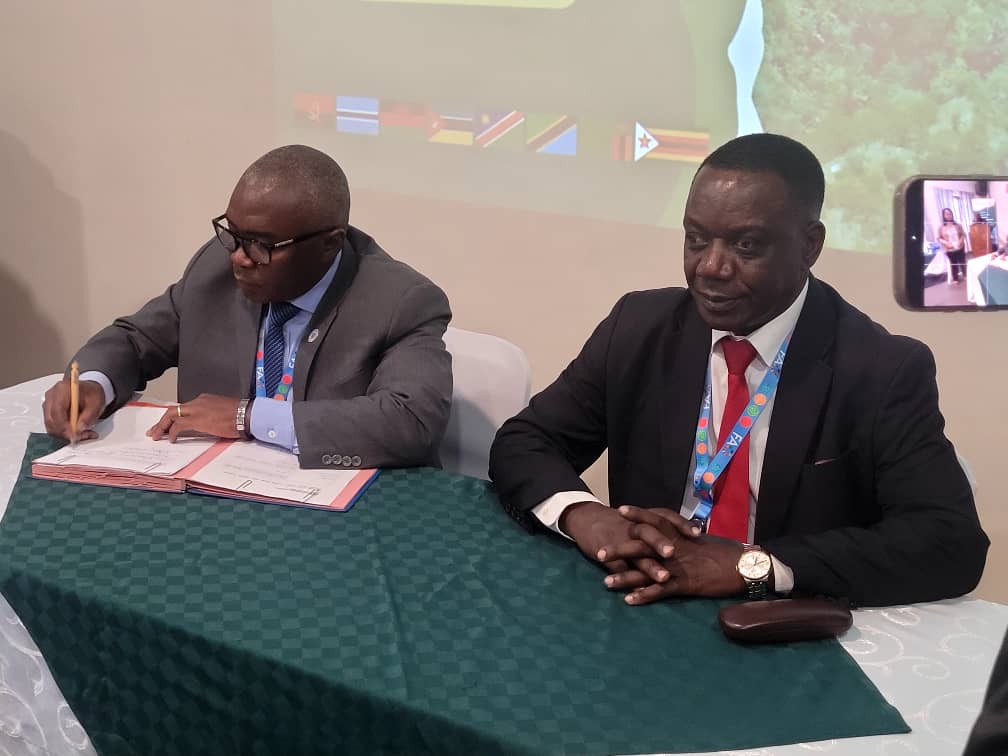
Edgar Vhera
Specialist Writer – Agribusiness
THE Zambezi Watercourse Commission (ZAMCOM) and the Food and Agriculture Organisation (FAO) today launched the Strategic Basin Investment Programme (SBIP) to build climate resilience and sustainable development in the Zambezi Watercourse.
The programme is a regionally-owned, bankable investment framework that complements ongoing initiatives, including those supported by the African Development Bank (AfDB), Climate Investment Funds (CIF), the Global Environment Facility (GEF) and other partners.
The programme is expected to sustain livelihoods, ecosystems, food systems and energy production in eight riparian countries; Zimbabwe, Angola, Botswana, Malawi, Mozambique, Namibia, Tanzania and Zambia. The Zambezi Watercourse has been facing increasing pressure from climate change, land degradation and socio-economic vulnerability.
This led to the development of the Zambezi Strategic Plan (ZSP) 2018-2040 whose implementation was hampered by limited financing and insufficient large-scale investments.
ZAMCOM executive secretary, Mr Felix Ngamlagosi said the SBIP was anchored on ZSP 2018–2040, which provided a long-term vision for the basin.
“ZSP is structured around key pillars of infrastructure investment, livelihood support, water resources management and environmental protection and conservation,” he said.
The implementation of ZSP requires an investment of US$28,3 billion. This calls for innovative approaches, strengthened partnerships, and the mobilisation of new and diverse financing mechanisms to support the effective and timely implementation of the SBIP.
“The SBIP is designed as a transformational regional investment roadmap whose core purpose is to translate strategic priorities into bankable and implementable investments, bridge the gap between planning and financing and enhance climate resilience, water and food security.
“It offers us a unique opportunity to move from planning to implementation at scale, to mobilise resources, and to deliver tangible benefits to the people of the basin,” Mr Ngamlagosi said.
FAO subregional coordinator for Southern Africa, Dr Patrice Talla said the Zambezi River Basin was one of Africa’s most strategic transboundary resources that sustained livelihoods, ecosystems, food systems, and energy production for more than 50 million people across eight countries.
“At the same time, it is increasingly exposed to climate variability, environmental degradation and socio-economic pressures, which require a collective, basin-wide response.
“I am pleased to officially announce today that the FAO-supported Technical Cooperation Programme (TCP), with a budget of US$250 000, is now operational. While modest in size, this project is intentionally designed as a catalytic intervention to lay the analytical, institutional and strategic foundations for mobilising significantly larger public, private and climate finance for the Zambezi Basin,” he said.
Southern African Development Community (SADC), Water Directorate of Infrastructure programme officer, Dr Dumisani Mndzebele said Water Energy Food Ecosystem (WEFE) Nexus had become the secretariat’s vehicle to regional integration of SADC ecosystems aimed at increasing industrialisation, living standards and reducing poverty.
“We are excited to be part of this process and thanks for the multi-sectoral approach, especially the nexus approach.
“We thank ZAMCOM member states for supporting the basin programmes; when ZAMCOM happens, 50 percent of SADC is happening,” he said.