admin
admin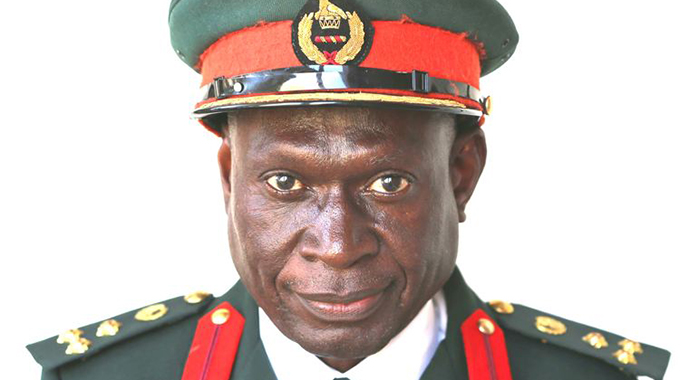
Major (Retired) Pesanai Tauya Special Correspondent
On March 3 2019 the nation was plunged into mourning following the untimely death of Brigadier-General Emile Munemo, whose Chimurenga name was Cde Revolution Tichatonga or simply Cde Revo. His death robbed the country of a revolutionary and son of the soil with a larger than life profile as regards his deeds. The death of Cde Revo marked an end to a lifelong enterprise aimed at emancipating the mind of the Zimbabwean from colonial bondage. Although the road that he walked was arduous, it was also punctuated by countless landmark achievements.
One the achievements was the creation and operationalisation of the Civil Military Relations (CMR) Directorate in the Zimbabwe Defence (ZDF) which focuses on the interaction between the armed forces of a state as an institution, the Government and the other sectors of the society in which the armed force is embedded.
The Command Element of the ZDF has always been aware that one of the ingredients for cordial CMR is the understanding by military personnel of civic affairs hence the need for civic education. Civic affairs teachings should be based on a shared ideology or a set of beliefs about the proper order of society and how it can be achieved. To the late Brigadier-General Munemo and those of his ilk, a clear ideology helps in focusing the energies of members of a community towards a shared vision as individuals with a shared ideology have a similar interpretation of the environment and a prescription as to how that environment should be structured. It goes without saying that an ideology brings about social cohesion which is an ingredient to lasting peace, economic development and security.
The teaching of civic affairs among armed forces was extensively done during the liberation struggle as the Zimbabwe National Liberation Army (ZANLA) and the Zimbabwe People’s Revolutionary Army (ZIPRA) cadres were schooled by commissars in, inter alia, the national history, grievances, politics and the desired ideology.
Brigadier-General Munemo and his colleagues in the liberation struggle believed in scientific socialism based on Marxism and Leninism as the ideology to bring about prosperity and justice in post-independence Zimbabwe. In the spirit empowering the majority Zimbabwean population, the Government embarked on the vastly popular land reform and indigenisation of key sectors of the economy.
This decision won the Zimbabwe Government a few friends in the West and schemes were thus crafted to fell the revolutionary government. The onslaught by the West and its local sidekicks found Zimbabweans divided because of diverse views about what is good for the country. The clash of ideologies was actually posing a major threat to national security.
The situation found the now made up of a mixed grill of veterans of the liberation war who understood politics and young soldiers with no link to any political past. Civic education teachings had been discontinued by the British Military Advisory and Training Team (BMATT), which supervised the integration exercise under the guise that soldiers were supposed to be apolitical and that political education would potentially have a destabilising effect on the integrated forces who were from diverse backgrounds. In the early years of independence, the decision to ban civic education did not affect the soldiers very much as most of them understood their role in CMR, taking from the liberation wartime teachings.
It became apparent to the ZDF Command Element that agents of regime change would seek to subvert and drive a wedge between young and senior soldiers. To prevent this, there was a need to revive formal military civic education to instill a sense of loyalty and patriotism in soldiers.
It was not difficult for the Command Element to decide on who could ably lead the effort to reorient the soldiers in Civil Military Relations. The herculean task of setting up the institutional structures was given to the late Brigadier-General Munemo, also nicknamed “Haina Hurry” for his seemingly lackadaisical yet effective approach. He was chosen because he had the requisite ideological clarity and teaching experience from the liberation struggle.
CMR Directorate was thus established in 2003 with three departments; military civic education programmes, civic action programmes and the military history department. The first and flagship department that was created by Brigadier-General Munemo is the Military Civic Education Programmes (MCEP) department. The International Encyclopedia of Education 2nd Ed Vol 7 defines civic education as the development of citizenship or civic competence (through conveying the unique meaning, obligation and virtue) of citizenship in a particular society or the acquisition of values, dispositions and skills appropriate to that of society. In other words, civic education seeks to produce a better productive citizen in his/ her society. Civic education thus aims to develop the individual’s trust or confidence in existing political institutions.
The mandate of the Military Civic Education Programmes Department in the CMR Directorate is to inculcate nationalism in military and the society at large by focusing on national values (sovereignty, independence, territorial integrity, and unity) which are enshrined in the Constitution of Zimbabwe. The idea behind teaching military civic education is to promote civilian control of the military, encourage national integration and to provide combat motivation. The late Brigadier-General Munemo superintended over the production of modules and a civic education handbook. He also traversed the length and breadth of Zimbabwe conducting CMR workshops.
The second department of CMR Directorate deals with military history. Brigadier-General Munemo sought to compile and preserve history on military theory and doctrine, generalship, strategy, tactics, technology, social and economic factors. Under his stewardship, a project to collect the military history of the Second Chimurenga was launched in 2012. Interviews were conducted with veterans of the war and a lot of primary sources of military history were preserved.
Brigadier-General Munemo also supervised the setting up of military history museums and monuments at unit level in the ZDF. Second Chimurenga battle sites are being revisited for the purpose of recording the events and also help soldiers to draw lessons from the same. The Zimbabwe Staff College now has a Second Chimurenga battle site visit on its programme. The visits to the battle sites have been invaluable to officers, most of whom did not participate in the liberation war to have a better understanding of the practical application of principles of war.
It has also become a tradition for officer cadets to visit national shrines in Zambia and Mozambique, thanks to Brigadier-General Munemo’s efforts. The visits to Freedom Camp in Zambia and Chimoio in Mozambique have left the newly recruited officers determined to defend the country’s independence for which thousands perished and are buried in mass graves.
The third department is the Civic Action Programmes (CAP), which coordinates programmes that are meant to promote human security. The programmes are undertaken with a view to engender friendly relations between ZDF officers and men as militants, and members of society.
The late Brigadier-General Munemo shall always be remembered for his unrelenting drive in promoting ideological purity which has helped in nurturing and preserving the spirit of unity and patriotism in the ZDF. The ZDF’s CMR Directorate has indeed been left poorer by his departure.
May his soul rest in eternal peace.


 Online Reporter