Chronicle Editor
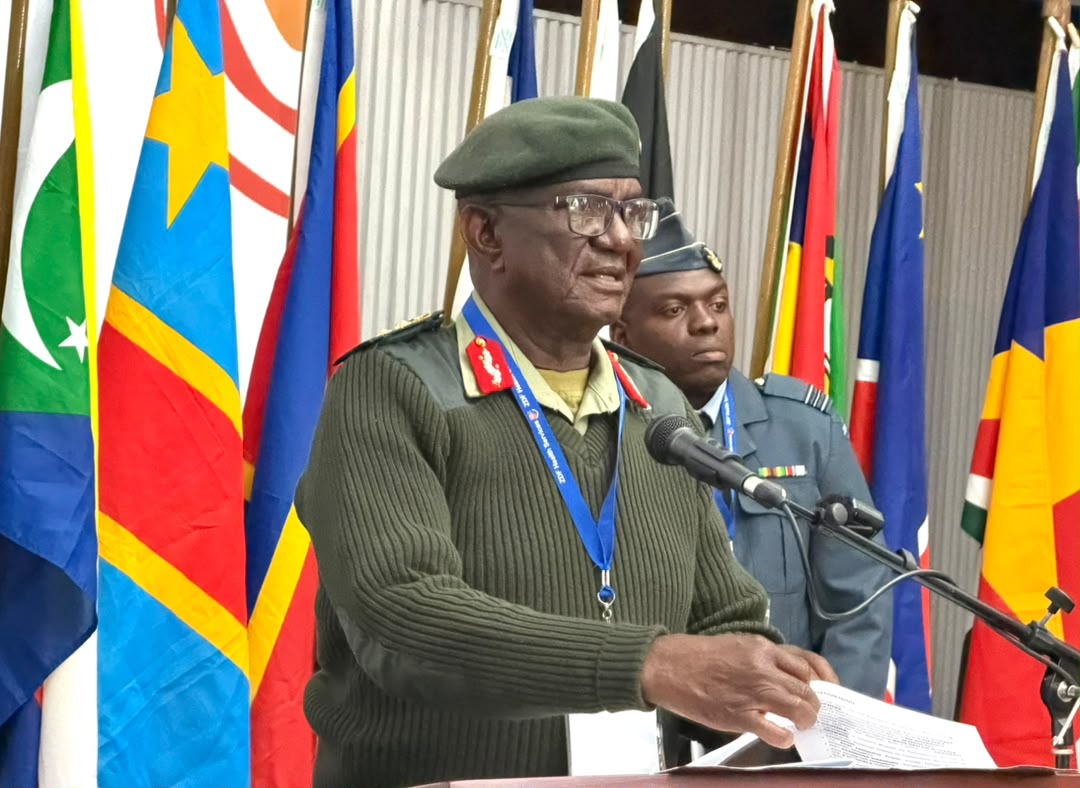
Major General (Rtd) Jackie Sedibe
WE are here to honour and celebrate the life of Cde Dumiso Dabengwa. In South Africa, we regard him as a hero, and brother in arms. A highly treasured son to the people of Zimbabwe and to all freedom loving Africans. We mourn a selfless servant of humanity and a gallant warrior for social justice and peace.
Cde Dabengwa touched a lot of lives through his wise leadership. People from all walks of life, including politicians, social activists, family and friends sought advice from him on various issues of life. When we visited his house late last year, we were lucky to share a meal with him and his family. He was his usual gentle and humorous self, and shared with us, the hilarious story of why he prefers to eat the wing of a chicken to a drumstick. He had unquestionable love for his family and adored his wife and children.
Dumiso Dabengwa belonged to a rare breed of freedom fighters whose patriotism goes beyond national boundaries. A warrior who believed that their own freedom cannot be meaningful as long as their neighbours still toiled under the oppressive clutches of colonialism and imperialism.
Cde Dabengwa’s credentials are to be found in his life-long commitment to the struggle for the liberation of the people of South Africa which he saw as a part of his role as a combatant for the liberation of his own country Zimbabwe.
As a Zapu activist, Cde Dabengwa’s direct involvement in the South African liberation struggle began in the early 1960s after the African National Congress (ANC) had resolved to embark on armed struggle and formed its military wing Umkhonto WeSizwe (MK). To achieve this, the ANC had to recruit young people and send them out of the country to undergo military training abroad before returning to the country to engage the apartheid forces in armed struggle.
Taking new recruits out of the country was a very difficult and dangerous task then, because South Africa was still surrounded by countries whose governments were hostile to the liberation movement and saw the ANC’s armed struggle as “terrorism.” These included Cde Dabengwa’s own country which was then called Southern Rhodesia.
We must never forget the leaders of the countries that helped us attain our independence. For example, Tanzania was the only free Southern African country at a time when most of Southern Africa was still under colonial rule. At that time, Tanzania’s leaders willingly accepted freedom fighters from South Africa. To go to Tanzania, MK recruits had to navigate their way through hostile territories such as Southern Rhodesia and Bechuanaland (Botswana) which were both under British rule and would not allow cadres to use their territories for transit to Tanzania. If any such recruits were found in these countries, they were arrested and deported back to South Africa where they would face arrest and long term imprisonment for conspiring to overthrow the apartheid government. To overcome this obstacle, the ANC, through MK High Command member Joe Modise, established what became known as the underground “pipeline” through Botswana right up to Tanzania. The pipeline was manned by “scouts” or “pilots” who guided the recruits through hostile territories until they reached Tanzania.
On orders from the late Joshua Nkomo, and at the young age of 22, Dumiso Dabengwa was one of these “pilots”. On one of the missions, in 1962, Cde Dabengwa had the mammoth task of facilitating the safe passage of a large group of 32 recruits after collecting them from Matsiloje on the Botswana side of the border where they had been dropped off by Cde Modise, and accommodating them overnight in Bulawayo before ensuring their travel to Zambia.
Because most members of the group spoke isiZulu and isiXhosa which are similar to isiNdebele, Cde Dabengwa advised the group that if they were asked any questions about their identity, they should all say they are a soccer team from Bulawayo going to play in a tournament in Lusaka.
The group travelled safely up to Lusaka where they were picked up by a member of former President Kenneth Kaunda’s United National Independence Party (UNIP).
Later on, an agreement was reached between Zapu and the ANC that they should form an alliance in the fight against colonial oppression and the apartheid regime. The first joint unit of both Zipra and MK to cross into Rhodesia was in August 1967.
The unit crossed at the most difficult and dangerous spot along the Zambezi River for the Luthuli detachment to cross into Rhodesia. This spot was chosen in the knowledge that the Rhodesian forces would have least expected the freedom fighters, to use such a dangerous stretch of the river as their crossing point. The cliff was lined with strong, indigenous trees. The guerrillas would have to tie ropes to the trees and then slide down the face of a cliff in order to drop into Rhodesia.
Cde Dabengwa, who was accompanied by ANC President Oliver Tambo, Zipra Commander John Dube, MK Army Commander Joe Modise, Cde Thomas Nkobi (then national treasurer of the ANC) saw to the crossing of our gallant fighters who President Tambo named the Luthuli Detachment and who were led by those indomitable cadres, Cdes Lennox Lagu and Chris Hani.
While sliding down the cliff, the guerrillas at the top accidentally dislodged some loose rocks at the top of which one hit Cde Dabengwa on the head, leaving him semi-conscious. He had to abandon the crossing and was taken back to Lusaka for his injuries to be treated. Even though Cde Dabengwa could not proceed with the group, his ingenuity as a meticulous strategist in guerrilla warfare tactics, continued to work for them in his absence.
Prior to the crossing, he had personally arranged with a livestock farmer on the Rhodesian side of the border, that once the entire group had crossed and started moving inland, the livestock farmer would drive his livestock behind the group to cover their tracks.
In February 1968, Cde Dabengwa was back in action when he and other leaders of the MK and Zipra crossed into Rhodesia in a wooden raft at the confluence of the Zambezi and Chewore rivers to lead what became known as the Eastern Front or the Sipolilo campaign. Cdes Dabengwa, Modise, Nkiwane and Ntsele crossed deep into Rhodesia to reconnoiter for the groups and see to the setting up of more bases to operate from. Dumiso Dabengwa and his class of guerrilla commanders never sent their fighters anywhere they themselves were not willing to go!
In fact, they often had to be forced to leave the front. In recent discussions, the overall commander of the Sipolilo campaign, Zipra’s gallant fighter Cde Moffat Hadebe recalled that while the morale of the fighters was boosted greatly by the presence of Commanders Joe Modise and Dumiso Dabengwa, after two weeks, a fierce discussion broke out.
The guerrillas, led by Cde Hadebe insisted that the stubborn leaders should leave the war zone and return to headquarters in Lusaka, arguing that they could not risk losing their commanders and other leaders in the event of fighting breaking out. Eventually, Cdes Dabengwa, Modise and other leaders dutifully left the war zone and returned to rear bases in Lusaka from where they directed the operations.
Together they continued to mobilise resources and weapons to allow for the growth of the two armies and to prepare for further MK and Zipra operations.
On this occasion, we can only share just a few of the many instances and ways in which liberation armies across the region worked together. There aren’t enough words to capture the enormity of the contribution that Cde Dabengwa made in this regard.
As we, members of the Luthuli Detachment always say, “Ours was not for personal glory or distinction, but for a noble cause of our time – that of liberating the whole of Southern Africa.”
In our most recent conversations, a few weeks ago, Cde Dabengwa was keen for our working alliance to continue the important work of accurately documenting our shared struggle liberation histories.
He was sincere in his expectation that the work of clarifying and crediting the historical contributions of struggle veterans such as himself would ensure that the values they stood for are captured and extended to current and future leaders alike.
We join millions of Africans across the continent in saluting Cde Dabengwa for his courage, sacrifice, comradeship and the contribution he made to the freedom we now enjoy in our countries.
The name Dumiso Dabengwa will be forever etched in our collective memory, alongside the names of his fellow comrades who include Nikita Mangena, Josiah Tongogara, Joe Modise, Solomon Mujuru, Lookout Masuku, Josiah Tungamirai, Samora Machel, Chris Hani and many other gallant fighters.
Soldiers never die, they are kept alive in stories told by their comrades. Long live the spirit of Cde Dabengwa, Long Live! Amandla!
-Major Gen Jackie Sedibe (Rtd) is a former Mkhonto We Sizwe Chief of Staff and Patron of the Joe Modise Foundation. He presented this tribute at the Dumiso Dabengwa funeral service held at White City Stadium in Bulawayo yesterday.


 Online Reporter