

 admin
admin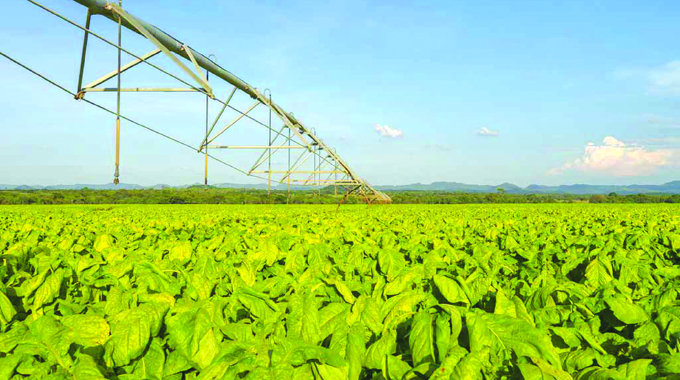
Edgar Vhera
Agriculture Specialist Writer
WITH preparations for the 2022/23 summer season reaching a mad rush, irrigated tobacco farmers have since planted 7 594 hectares of the crop, marking a 19 percent rise from last year’s figure of 6 378ha.
This was revealed by Agricultural Advisory and Rural Development Services chief director Professor Obert Jiri yesterday when he was giving the fortnightly update on tobacco production.
“As of September 30, farmers had planted 7 594ha of tobacco under irrigation against 6 378ha for the comparable period last year. Only the three Mashonaland provinces had planted tobacco under irrigation,” said Prof Jiri.
Land preparation for dryland tobacco
An analysis of provincial production statistics indicate that Mashonaland East had achieved a 45 percent increase in area planted from 2 789 to 4 054ha, while Mashonaland Central and West had not yet beaten the area they planted last year.
Manicaland, Masvingo and Midlands provinces had not yet planted any irrigated tobacco by September 30.
In Mashonaland Central province, only Mazowe district had surpassed its last year’s figure of 774ha by planting 919ha this year, a 19 percent increase. The districts of Bindura, Guruve, Mt Darwin and Muzarabani planted less hectarage compared to the same period last year while Shamva and Rushinga just like last year had not planted irrigated tobacco. Overall, the province’s irrigated tobacco hectarage was 18 percent lower than last year.
For Mashonaland West province, only Zvimba district had increased its tobacco planted hectarage from 720 to 1 200ha, which represents a 67 percent increase. The other districts – Chegutu, Hurungwe and Makonde were still to replicate what they did last year while Kariba, Ngezi and Sanyati districts had not put any tobacco under irrigation. On the whole the province had achieved a 16 percent increase in tobacco plantings this year.
This can partly be explained by higher dam water levels this season in comparison to last year.
Increased irrigated tobacco plantings in Marondera, Murehwa and Seke allowed Mashonaland East province to surpass last year’s figure. Chikomba district this year started tobacco production under irrigation committing eight hectares. The other districts, Goromonzi and Hwedza had committed less area to tobacco this season than last year’s.
Mutoko, UMP and Mudzi districts have not planted any tobacco to this date.
Tobacco Research Board recently revealed that as of August 24, tobacco seeds weighing 839 kgs with the capacity to cover 167 765 hectares had been sold.
The Tobacco Industry and Marketing Board (TIMB) has since reviewed upwards this figure to 996 kgs as of September 23 against 872 kgs for the same period last year, meaning more hectarage is now possible.
It, however, remains to be seen whether farmers will be able to translate this year’s bigger quantity into a correspondingly larger hectarage too. The largest area put under tobacco production was the 146 000 ha in 2019.
At least 80 percent of tobacco production is done by smallholder farmers on dry land.



 Online Reporter