Chronicle Editor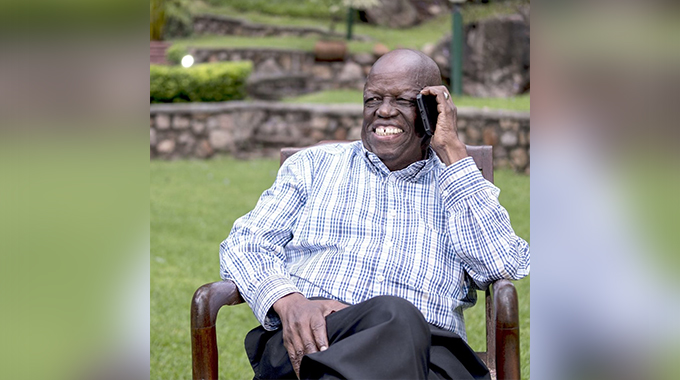
Kudakwashe Mugari, Harare Bureau
ALL my life, I have never seen a horse racing enthusiast like Tshinga Dube. So enthusiastic he was, that he followed up into retirement, all horses that made him win bets and bought them.
He had a collection of retired horses as souvenirs at his plot in Ruwa on the outskirts of Harare. The Durban July was his biggest horse racing fiesta followed by the Dubai Race and Borrowdale Race.
“The fastest horse of Makokoba”, as I called him, always cherished the prospects of watching all the horses that made him win his bets and make big money, grazing in one place. It made him feel good.
One day, I escorted Mdala to his routine dialysis and even as the doctor worked on him, he was watching horse racing. We later laughed it off. Horse racing and betting was his life. He made big money out of it too.
He confided in me that he had bought his first farm in Shangani, Matabeleland South, from betting. It was the horses. I was very close to him. When I say very close, I mean very, very, very close. Tight! Now, God has taken back his gift.
Colonel (Retired) Tshinga Dube wore many hats from military officer to farmer, horse-race enthusiast, ardent Highlanders fan, father and fatherly figure.
My first encounter with Col (Rtd) Dube, was when I published a story at The People’s Voice about Zimbabwe Defence Industries (ZDI) operations. All hell broke loose and he was mad at me.
Two soldiers came to pick me up from my office at Zanu-PF headquarters, seventh floor. I was the Editor of People’s Voice. The officers were friendly as they drove me to Cde Tshinga Dube’s ZDI offices on the eighth floor at ZTA House. I arrived and was shoved straight into his office.

It was him and two other gentlemen wearing black suits and the other, a lady, who later became the secretary in our meeting. I greeted the other guys and the lady, but one man was on the phone speaking in isiNdebele and also watching television. I noticed there was horse racing on the screen. After a tense 10 minutes of waiting and refusing the tea and water on offer, the man banged his phone and with a smile introduced himself.
“Mafana how are you? I’m Rtd Colonel Tshinga Dube, Do you like horses? Should I switch off the television set?” I quickly answered, “No sir”. I also introduced myself and the other guy started by telling me why I had been called to that meeting. I tried by all means to defend the story in my paper but they would not accept my views.
After about 30 minutes of frank talk and a bit of history before and after independence. I asked for forgiveness and we shook hands. Of course, I had agreed to retract the story.
Col (Rtd) Dube closed the meeting by joking about horses. The other guys left and I was left with him and he invited me to watch the biggest horse race on that day “Durbanville Race” with him.
After the race, I realised he had won. He had put his money on the horse that came first. We exchanged numbers and called it a day. I went and retracted the story.
The next day, he phoned and invited me for dinner at his house.
At 6pm, he sent a driver who picked me up and took me to his house in Ruwa. That night, he took me down memory lane, telling me how he joined the struggle and went to Russia for military training. He also showed me pictures of himself. We also talked about his favourite sport of horse racing.
He also showed me horses in his plot.
It was after this encounter that I also developed a passion for horses and farming. From there, we opened lines of communication and I would regularly visit him in the hospital when he was on dialysis.

On those occasions I visited him in hospital, I realised there was a television set in his room and he was glued to it watching horse racing.
Instead of talking about his health, he would let us talk about horses, breeding horses and the horse industry.
One Friday morning, Col (Rtd) Dube phoned to tell me that on Sunday we would be going to Borrowdale Racecourse for the biggest race in the SADC Region.
He also told me that we were going to make money on that race day.
Anxiety took the better of me, I just could not wait. That Sunday morning at 7am I was at his gate. He told me that I was going to drive him and told his driver to take a rest.
His wife gave me pills and packed food for the old man and told me to remind him to take his pills on time. At Borrowdale, the atmosphere was electric. We sat with former President Mugabe’s Chief of Protocol, Ambassador Kajese, two white guys from South Africa and another foreigner from Singapore.
It was all about horses and the main race of that day. When the main race started, Col (Rtd) Dube cheered a horse named Shirley. “Shirley come on, come on Shirley, take me home Shirley, Shirley, Shirley, Shirley . . . Beautiful Shirley,” he bellowed with excitement.
Shirley won.
That day, I saw Cde Tshinga Dube filled with excitement, stamping his feet on the ground with his hands aloft. He hugged me and told me: “Mfana we have won.”
We went back home and along the way, it was all about horses.
On Monday, he called me to his office and gave me US$16 000 as my share for the race we had won the previous day. I couldn’t believe it. I asked myself how much we had won if he could give me such an amount.
I went home and put the money in the litter bin near the gate because I didn’t want my wife to see it because she would ask a lot of questions. But that night I didn’t sleep, thinking about the money and how I would use it.
I went to Beitbridge and bought a Toyota Hiace kombi and that was how I started the transport business. I began to like horses and started pushing Col (Rtd) Dube to teach me how to make more money with horses.
Our relationship deepened to the extent of staying at his house whenever I visited Bulawayo or was in transit to Victoria Falls.
An opening arose in the Makokoba constituency and Cde Dube was in the race for the seat. I relocated to Bulawayo to help him campaign in Makokoba and learn more isiNdebele at the same time.
After the campaigns, we did horses but his wife didn’t like it. The campaign in Makokoba was a bit tricky. I didn’t think Cde Dube would make it because urban areas were opposition strongholds and Cde Dube was from the ruling party. One day I asked him if he was confident that he would win and he told me that he was the only fastest horse in Makokoba and true to his word, he emerged as the fastest horse in Makokoba and won the race to become the Member of Parliament for that constituency. From that day, we nicknamed him the “Fastest Horse in Makokoba”.
Time went by and Col (Rtd) Dube’s health deteriorated, he was in and out of hospital but always wore a brave face despite his health challenges. He was a fighter and a real soldier.

One day, I received a call from Cde Dube before 6am and he told me that he was in Mater Dei Hospital. I said to him “get well soon, I will pray for you” and he thundered: “Don’t pray for me, I’m not dying. Can you go and see Vice President John Landa Nkomo and get my pills and bring them here.”
I went to the Vice President’s office and the secretary let me in after I told her that I had been sent by Col (Rtd) Dube. VP Nkomo gave me a ticket, pills and some cash. From there I was at the airport then to Bulawayo.
I arrived and two guys picked me up and proceeded straight to the hospital. In his room, I found him watching horse races alone and he said: “Mfana you are here? Please come watch the Durban race.”
I gave the doctors the pills that I got from VP Nkomo, from India. The doctor came and attended to him and gave Col (Rtd) Dube two injections but he was busy watching the horse race on TV. I went and slept at his home that night and in the morning I was back in Harare.
Later on, he became a Cabinet minister and I would go to his office and do horses.
Fast forward a week before his death, on my way to Lupane, I called him while in Gweru to let him know that I was passing to see him before I proceeded with my journey.
His wife answered the phone and told me: “Your father is ill in Mater Dei Hospital.” She told me the doctors didn’t want him to be on the phone.
That pained me but I told myself that when I arrive I would visit him but it was already after 5pm, past the visiting hour. While I was in Ntabazinduna around 7pm, I got an SMS on my NetOne line saying “Come to Mater Dei Hospital this evening and see me”. I knew it was the “Fastest Horse” communicating with me.
I arrived at the hospital after 8pm and when I phoned that number, I was directed and within minutes I was in his ward. He looked frail. He smiled, but his voice was faint. I had to put my head close to his face and I asked him how he was feeling. “I’m fine,” he replied.
So you came to see me and I responded in the affirmative. He said the doctors didn’t want him to be on the phone. Weird thing on that day was that the television set was off. Col (Rtd) Dube was for the first time not watching horses on television. We talked about other issues and he promised me that when he came out of hospital, he would come to Harare to see me.
I proceeded to Lupane and later returned to Harare. I was calling his phone daily and his wife was answering and updating me on the situation until last week around 7.30pm. I got a call from Chronicle Editor Lawson Mabhena, we talked about the US$4 million heist and later on, he said “ko nematambudziko aCde Tshinga”.
The Fastest Horse had rested.
I dialled Col (Rtd) Dube’s number and the phone rang but was not answered and on the second attempt his wife picked it, but she was just crying.
“Go well Cde Dube, my mentor. You were my father. You taught me how to speak isiNdebele. You taught me to adopt Bulawayo as my second home.”
All the nights watching television and talking about your war experiences are no more.


 Online Reporter