Online Reporter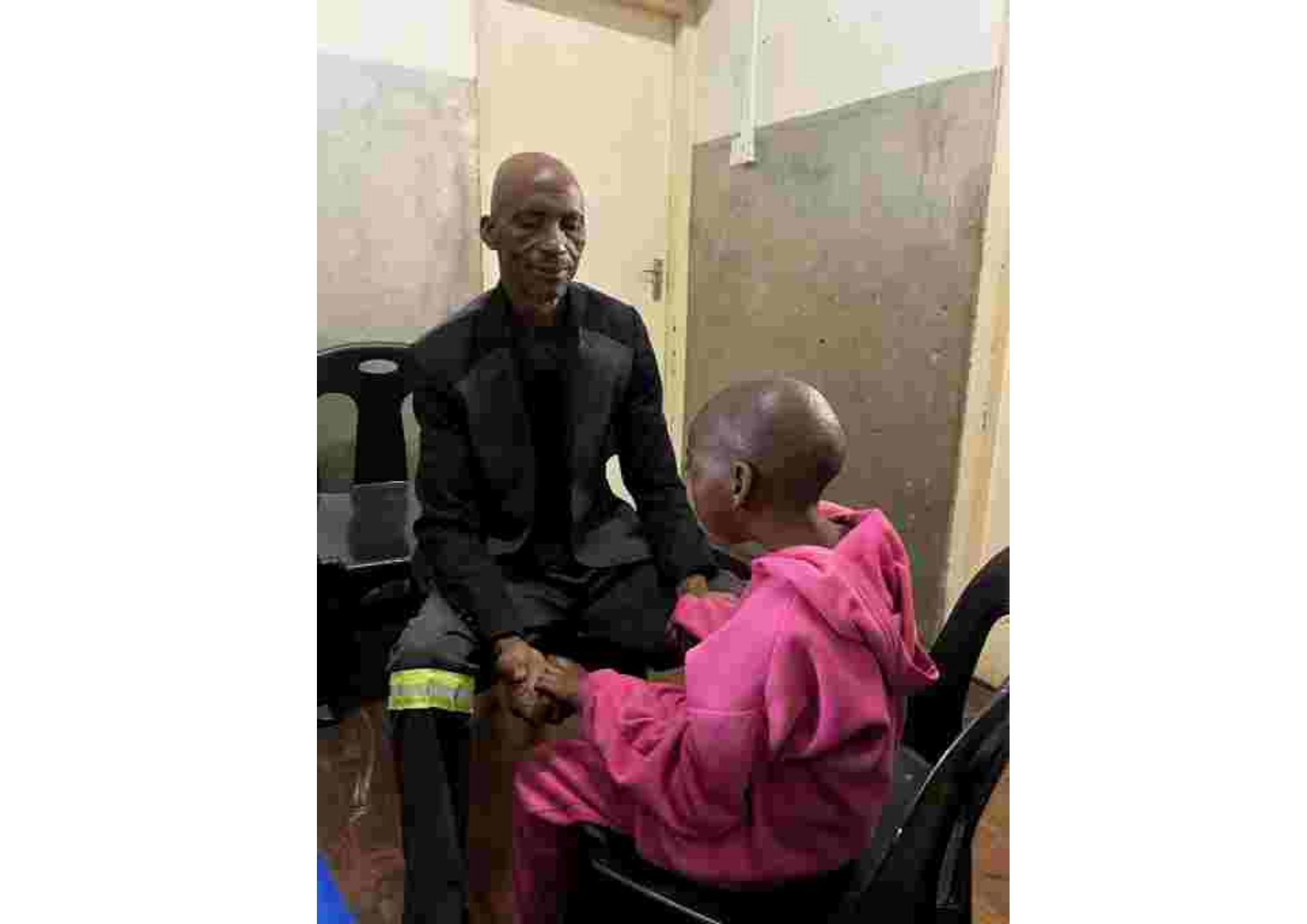
Sukulwenkosi Dube-Matutu [email protected]
WHEN 10-year-old Lebohang Ndlovu’s health began to deteriorate, her world slowly became smaller. Juvenile arthritis robbed her of the ability to walk with ease, forced her out of school and left her needing constant care.
Then, in April, her mother left her in the care of her father, Mr Lovemore Ndlovu, and never returned.
For a man who had been working in South Africa, the decision was life-changing. Mr Ndlovu gave up his job, returned home and took on the responsibility of caring for his daughter — determined that her disability would not deny her the chance to learn, grow and live a fulfilling life.
Now, as he carries Lebohang to physiotherapy sessions at Gwanda Provincial Hospital, his greatest hope is to see her back in the classroom and living as normally as possible alongside other children her age.
His story is a poignant reminder that, for a child living with disability, a parent’s presence can mean far more than simply providing care — it can mean hope.
Lebohang was born without any disability, but her life changed in 2021 when she developed swelling in her feet that progressively made it difficult for her to walk.
Her condition worsened as her joints developed contractures and her rib cage became deformed.
“At first, my daughter was staying with her mother at their rural home in Esigodini while I was working in South Africa. I started receiving reports that her mother was neglecting her and, at one point, she was said to be malnourished.
“She was also constantly coughing because of poor living conditions under the care of her mother,” Mr Ndlovu said.
By 2024, Lebohang’s condition had deteriorated significantly and she stopped attending school while in Grade Three.
In April this year, Mr Ndlovu said, her mother brought her to him and never returned.
Faced with the responsibility of caring for his daughter, Mr Ndlovu sought assistance from the Department of Social Welfare, which helped him obtain an Assisted Medical Treatment Order (AMTO) that he has been using to access medical care for Lebohang at Gwanda Provincial Hospital.
He has also been taking her for regular physiotherapy sessions aimed at strengthening her joints and improving her mobility.
“My daughter has been undergoing physiotherapy sessions at the hospital in a bid to strengthen her joints. My wish is to get her in school so that she can learn just like any other child.
“I’m trying to enrol her at one of the local schools so that she can resume school next term,” he said.
But returning to school will require more than simply securing a place in the classroom.
Mr Ndlovu said Lebohang needs special care and attention, a special diet and protection from the cold, which severely affects her condition. She also requires regular medication.
“My desire is to see my child lead a normal life like any other child,” he said.
For Mr Ndlovu, achieving that dream has meant putting his own life on hold.
He left his job in South Africa and returned home to become his daughter’s primary caregiver.
Gwanda-based child care worker Ms Gugulethu Moyo said Mr Ndlovu’s commitment to his daughter was worthy of admiration.
She said he regularly carries Lebohang to hospital for her appointments from Jacaranda Suburb in Gwanda, where they are currently staying with his sister.
Ms Moyo also praised Mr Ndlovu’s sister for the support she has provided, saying caring for a girl child alone can present unique challenges for a father.
She said the family’s experience had also helped the community understand more about the needs of children living with disabilities.
“The love that Mr Ndlovu has shown for his daughter is something that should be admired. We see him carrying his child and taking her to hospital,” she said.
Nkomwa Foundation Trust director Dr Pick Nkomwa said neglect of children with disabilities was often rooted in a combination of social, emotional and economic factors.
He cited myths and misconceptions about disability, limited knowledge and awareness, stigma and discrimination, denial and pride among factors that could contribute to neglect.
Other factors include a lack of acceptance by families and communities, the shock and emotional stress that may follow a child’s diagnosis, financial challenges and fear of social exclusion.
Dr Nkomwa commended Mr Ndlovu for demonstrating that disability should not diminish a parent’s commitment to a child.
“During my community engagement, I had initially encountered many cases where fathers abandoned their families after the birth of a child with a disability. However, this trend has gradually changed.
“Today, there is a noticeable increase in the number of fathers who remain committed and, in some cases, are the primary caregivers after mothers leave. This reflects a positive shift in attitudes towards disability and parental responsibility, although more awareness and support are still needed,” he said.
Dr Nkomwa said parents needed to accept their child’s condition and provide love, care and equal opportunities.
He urged parents to closely monitor their children’s growth and developmental milestones and seek professional medical advice as early as possible if they notice delays or other concerns.
He said parents should also remain patient and hopeful, as some conditions could improve with timely intervention while others require long-term management and support.
“The family is the child’s first and most important support system. Relatives should provide emotional, psychological, financial and spiritual support to both the child and their caregivers.
“Communities should embrace diversity, remove social barriers that hinder the participation of children with disabilities, promote inclusion and challenge negative stereotypes by normalising disability as part of human diversity,” he said.
Dr Nkomwa said families and communities working together could create an environment where every child with a disability is valued, included, respected and given an equal opportunity to reach their full potential.
He said Lebohang had been referred to Nkomwa Foundation Trust by the Gwanda Provincial Hospital Rehabilitation Department.
Following an assessment, the organisation provided psychosocial support to Mr Ndlovu as her caregiver, as well as essential items for Lebohang.
Dr Nkomwa said efforts were also underway to facilitate Lebohang’s enrolment in an inclusive learning environment.
“As an organisation, we remain committed to walking this journey with the child and caregiver, ensuring they receive the support, dignity and opportunities they deserve,” he said.
While Mr Ndlovu’s commitment offers Lebohang a source of hope, social scientist Reverend Muiti Sibanda said children abandoned due to their disability could carry the emotional scars well into adulthood.
He said being rejected by a parent could leave a child feeling unwanted and worthless, often resulting in low self-esteem and difficulties forming trusting relationships later in life.
He said Mr Ndlovu’s courage and display of love should be emulated by other parents.
Rev Sibanda said some parents leave children with disabilities in the care of relatives, particularly grandparents, without providing adequate financial or other support.
“In most cases where children are left under the care of grandparents, the challenge is that the caregivers will be having limited resources. Access to medical care where needed and quality education can be inconsistent.
“As the child grows into their teenage and school years, the effects become more visible. Without enough financial and physical support, some miss school or lack the basics they need to learn, hence may face stigma in the community,” he said.
Rev Sibanda said the consequences of abandonment could extend into adulthood.
“Emotionally, some carry the pain of abandonment into struggling with trust or fear of being left again. Financially, if education was interrupted, it becomes harder to get good work and to fend for themselves, and poverty can continue,” he said.
For Lebohang, however, her father is determined that her story will not be defined by disability or abandonment.
Having sacrificed his job to care for his daughter, Mr Ndlovu is now focused on rebuilding her life — one physiotherapy session, one medical appointment and, hopefully, one school day at a time.
His dream is simple: to see his daughter return to school, learn alongside other children and have the opportunity to reach her full potential.
And as he carries her towards that future, Lebohang does not have to walk the journey alone.
@DubeMatutu