malvernmugadzikwa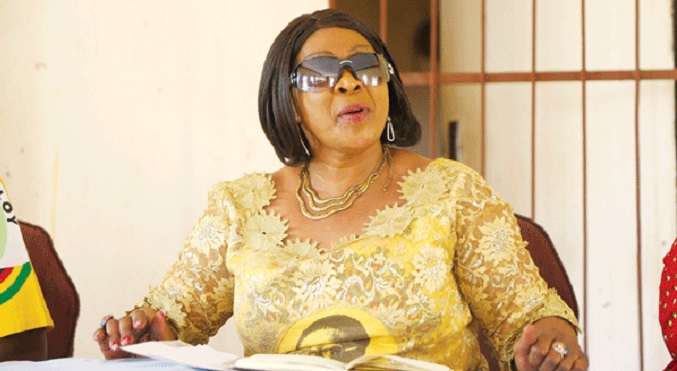
Fatima Bulla-Musakwa
Female legislators who took their oaths of office for the 10th Parliament of Zimbabwe last week have undertaken to hit the ground running and use their influence to tackle issues that advance the development of women and girls in the country.
Twenty-two female legislators were directly elected into the National Assembly, while 60 others were seconded into the House through the proportional representation system.
Three other women made it into the House via the youth quota system.
In total, 85 women will sit in the National Assembly.

Speaking in separate interviews on Friday, legislators from the women’s caucus said their focus will be on issues that include women and girls’ rights, improvement of water and sanitation and economic empowerment.
Beatrice Nyamupinga (ZANU PF women’s quota) said: “Issues of drug abuse and the associated vices through which girls are abused are the issues I intend to tackle.
“We want them to be empowered through education, financial support and through business so that they don’t end up being abused by men who use drugs.
“We also want to enact laws that empower women and girls.”
She said, while women constitute a small percentage of legislators who made it into Parliament, they should speak with one voice.
“In my previous experiences in Parliament, women legislators made sure male legislators understood that they have daughters, mothers and sisters who need to be covered by some of these laws and they supported our motions,” she added.
Honourable Nyamupinga said she will use her presence in Parliament as a platform to inspire young women and girls to join active politics.
Female legislators need to learn from the Rwandan female parliamentary caucus that pushed for a law prohibiting politicians from campaigning using their financial muscle to push out women politicians, who often have meagre financial resources, she said.
“Because it is the use of material things during campaigning which is frustrating our women. Without that law, women will not rise.
“The use of money in political campaigns, especially during primary elections, where people generally use their personal and not party resources, is on the rise and it is affecting our participation.”
Cde Nyasha Chikwinya (ZANU PF proportional representation) said she will focus on the financial empowerment of women.
“We are looking, by and large, at what has happened in financial institutions,” she said.
“What is there for women in financial institutions that will help women as far as their finances and well-being are concerned? We have so many of our young women and men who are out of universities.
“Are they being employed and what is happening to them?
“Is there legislation that will make sure that they are empowered, because sooner or later, they will become a menace?
“So, we are looking at issues that will ensure the level of idleness among our young women and men is contained.
Gokwe Nembudziya representative Flora Buka said she was looking forward to pushing for women’s economic empowerment.
She also plans to deal with child marriages.
“I think what needs to be pushed so much, as it is not part of our culture, is to bring awareness that women also need to be given opportunities to lead,” she said.
“Even women who are not in leadership positions need to be economically empowered to build their confidence and to stop domestic violence in the households.”
Hurungwe West representative Chinjai Kambuzuma rallied female legislators to support each other.
“My desire is to push issues of road rehabilitation, and improvement of water systems to ensure provision of potable water.
“This can be done through the Presidential Borehole Drilling Programme.
“In addition, as women, we must not underestimate ourselves or our influence.
“If we support each other in pushing for motions, results will come.
“The challenge with us as the women’s caucus is that when we face resistance, we give up. That has to change as we embrace boldness,” she said.
Zvimba West legislator Cde Mercy Maruva Dinha said she wants to push for greater financial support for women.
“There are critical community issues where women need financial support to steer development.
“I think this time, as women, we should stand our ground so that we show that we can be equal to men.”


 Online Reporter