admin
admin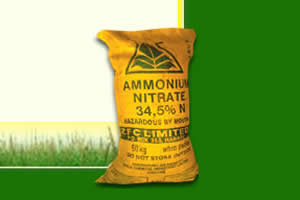
buy.
Many farmers are preparing for the summer cropping season, but there has not been any meaningful change in the uptake of fertiliser.
Fertiliser sales peak as the farming season draws near but this time this has not been the situation on the ground.
Fertiliser industry representative, Mr Herbert Chakanyuka, said farmers were failing to buy fertiliser because they did not have money.
“The Government through its various input schemes has become our sole customer. Besides Government, there is no significant moving of stocks of fertilisers,” he said.
Mr Chakanyuka said the industry used to export excess fertiliser to Zambia and Malawi.
“Malawi used to be the major buyer but that country’s budget is donor funded and this year they do not have funds to buy the fertilisers,” he said.
He said the industry could only make profits if the fertiliser was sold in huge volumes.
Mr Chakanyuka said fertiliser companies have credit schemes for trusted farmers. However, these farmers need bank guarantees for them to benefit from the scheme.
Depending with the soils, a local farmer requires between 300 to 350 kilogrammes (six to seven bags) of compound D fertilisers per hectare and 250kg to 300kgs (five to six bags) of ammonium nitrate, which cost US$416 at most to grow maize.
A 50-kg bag of fertiliser costs between US$28 and US$32.
Regional prices of fertiliser range between US$850 to US$900 per tonne although the fertiliser compounds are different from the local ones.
Windmill chief executive, Mr George Rundogo, said in a normal situation the country required 560 000 tonnes of fertilisers per year. “We cannot talk of shortages at the moment as we are stuck with the available stock. Last year, we faced the same situation and we had to carry over the stocks to the following year,” he said.
Mr Rundogo said fertiliser prices in the region were difficult to compare, as the fertiliser components were different. Most local farmers are failing to buy fertilisers since the introduction of the use of multiple currencies in the economy and now heavily depend on input schemes.
Some farmers have, however, blamed the Grain Marketing Board for failing to pay them their money for the grain delivered on time. GMB takes long to pay farmers as it receives money from Treasury, which only releases the funds for grain already delivered.



 Temba Dube