malvernmugadzikwa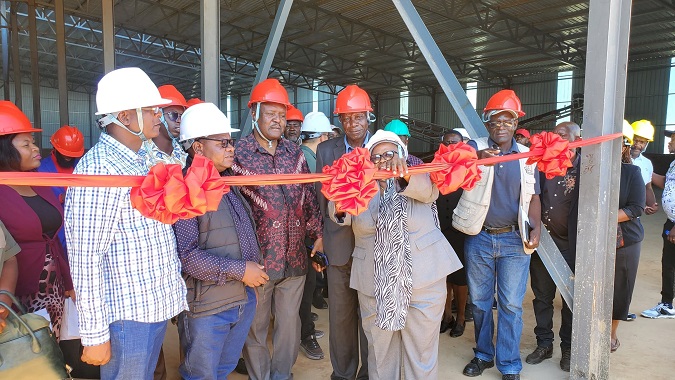
Theseus Shambare
MASHONALAND West province is Zimbabwe’s agricultural powerhouse.
This fertile expanse, comprising seven districts — Kariba, Sanyati, Zvimba, Chegutu, Makonde, Mhondoro-Ngezi and Hurungwe — consistently produces impressive harvests.
Last year, the province led the nation in maize production, cultivating a staggering 485 000 hectares — nearly a quarter of the national total (1,9 million hectares). Winter wheat was another success story, with the province contributing 26 054 hectares, over a third of the total area planted. It was followed by Mashonaland Central province, which managed only 14 316 hectares.
However, despite their success, farmers in the province have grappled with a persistent challenge — lack of access to affordable fertiliser, a crucial agricultural input.
The high cost of transporting fertiliser from Harare, coupled with the recent disruption of imports from Russia due to the conflict in Eastern Europe, had driven prices sky-high.
But there is hope on the horizon.
A fertiliser production plant, Fertop Agriculture, recently broke ground in Norton.
The US$1 million investment marks a significant step towards decentralising fertiliser production and making it more accessible to local farmers. Officiating at the plant’s commissioning,
Mashonaland West Minister of State for Provincial Affairs and Devolution Cde Marian Chombo applauded the farmers for their hard work, which has attracted such investment.
“As you are aware, Mashonaland West is the breadbasket of Zimbabwe, and as we are heading towards wheat planting, this type of investment is a welcome development,” she said.
“The company said they couldn’t be based anywhere else except in this province, and they are ready to meet the required fertiliser demand for the country to be well-fed.
“We thank our hardworking farmers.”
The firm, Minister Chombo said, was set to expand its operations throughout the province.
“We agreed that we will have to give them a large piece of land in Banket, which is central for most farmers.
“With the shortage of fertiliser we have, this is a giant step towards self-sufficiency.”
Agricultural and Rural Development Authority board chairperson Mr Ivan Craig emphasised the importance of domestic fertiliser production.
“The shortage of fertiliser means relying on imports,” he said.
“This has a huge negative impact on our sector.
“It means more costs for production and, in the end, we see consumers feeling the brunt.”
Ms Tariro Madyabere, a farmer from Lion’s Den, said she was happy with the latest development.
“Agriculture has been my source of livelihood since childhood,” she said.
“Without affordable inputs, success is difficult.
“This plant is a positive step.
“Previously, retailers exploited the high number of farmers in our area, inflating prices.
“We need more investments like this.”
Ms Madyabere urged the Government to continue fostering a conducive environment for agricultural growth through devolution.
Commitment to growth, self-sufficiency
The plant was established by Heliconvest Investment Private Limited.
The company’s business development manager, Mr Gordon Tam, said there was commitment to further invest in Zimbabwe’s fertiliser production.
“This plant is a collaboration between Heliconvest and Moreharvest Compound,” he said.
“We have already invested over US$1 million to ensure that we produce at least 300 tonnes of fertilisers per day and more is to be invested.
“For initial operations, we have employed more than 50 people, but going forward, we are expecting to increase the numbers, with people from the local community set to benefit from that.”
The current national demand for fertiliser stands at 630 000 tonnes, including compounds, blends and top-dressing.
Fertop Agriculture plans to manufacture a variety of fertilisers, including Compound S, Compound D, Compound C, Cereal and Cotton Double D Blends, Urea AN and Calcium Nitrate.
As Zimbabwe strives for self-sufficiency in fertiliser production, establishment of the plant is a milestone in the country’s agricultural journey. With every bag of fertiliser produced, Mashonaland West is not just nourishing crops; it is also nurturing a future of agricultural independence, food security and a brighter tomorrow for Zimbabwe.



 Online Reporter