Chronicle Editor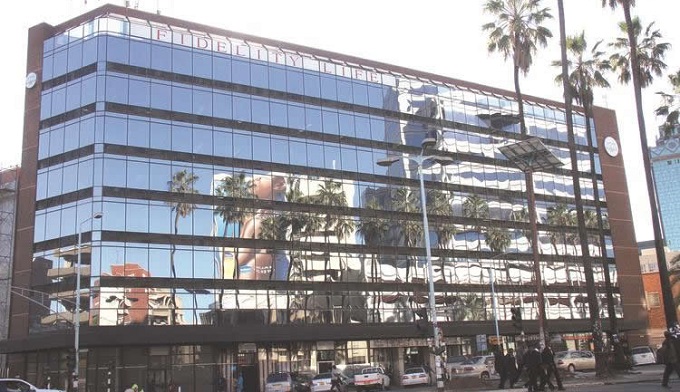
Oliver Kazunga, Senior Business Reporter
ZIMBABWE Stock Exchange-listed company, Fidelity Life Assurance, has reclassified 847 hectares of land to investment property as the group seeks to hedge its assets against inflation.
The 847 hectare-land bank is owned by Fidelity Life Assurance through its subsidiary, Langford Estates.
In a statement accompanying financial results for the year ended December 31, 2019, the ZSE-listed life assurance group said the land bank was a key strategic asset for a number of reasons.
“Viewed against the hyperinflation environment Zimbabwe is in, this asset provides a reasonable match to the group’s inflation linked liabilities due to its inherent inflation protection characteristics.
“During the year, the board of directors resolved to reclassify the land bank from land inventory to investment property, a decision consistent with the long-term strategy of the group,” it said.
Fidelity Life Assurance said its solvency improved significantly in 2019 and this was largely attributable to significant increase in the value of assets relative to the liabilities.
“The increase in assets was mainly attributed to change in valuation treatment of Langford Estates from cost to fair value,” it said.
Insurance companies are now required to hold minimum regulatory capital of $75 million. The company had excess assets of $132,7 million as at December 31, 2019, implying a healthy minimal capital solvency level of 177 percent.
The group’s strategic choice to focus on inflation protection assets and core business resulted in positive results with Fidelity Life Assurance recording profit after tax of $74,1 million on an inflation adjusted basis for the year ended December 31,2019.
Last year’s inflation adjusted total revenue of $503,6 million increased by 52 percent from $332 million in the prior year.
“Revenue was boosted by fair value gains on investment properties, which increased from $3,1 million in 2018 to $371,8 million in 2019.
“The policy change to mono-currency and subsequent depreciation of the Zimbabwe dollar negatively impacted the group’s inflation adjusted expenses, which ended the year at $423,1 million growing by 33 percent from $317,7 million in the previous year,” said the group.
It said the re-rating of investment properties in line with the depreciation of the Zimbabwe dollar was the largest contributor to the increase in insurance and investment contract liabilities, which increased from $43,1 million in 2018 to $123,8 million in 2019.
“Further, the heavy depreciation of Zimbabwe dollar against the United States dollar led to the provision on the Southview water pipeline increasing from $44,3 to $100 million,” said Fidelity Life Assurance. — @okazunga


 Online Reporter