Online Reporter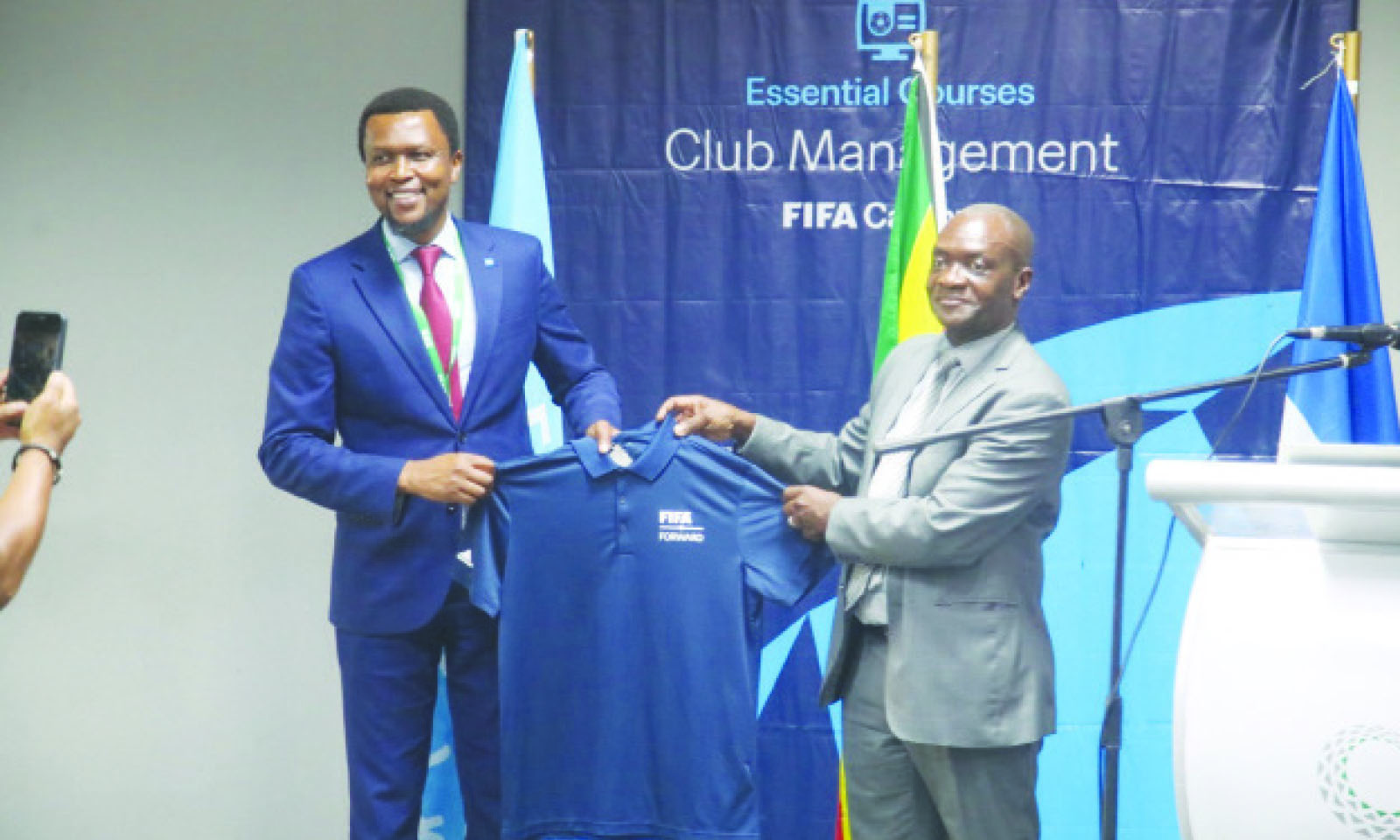
Petros Kausiyo and Eddie Chikamhi
ZIFA’S new leadership have received just the kind of backing they wished for in their arduous turnaround of national football with FIFA committing to fully back the association’s revival of the country’s flagship sport.
FIFA head of development programmes in Africa Solomon Mudege is heading a crew of the world football governing body’s experts for a Club professionalisation and management programme workshop which started in Harare yesterday.
Mudege told Zimpapers Sports Hub that FIFA are behind the efforts by ZIFA to revive the local game and make Zimbabwe competitive again on the global stage. He said the foundation of growth for Zimbabwe’s game rests in establishing solid structures which would be underpinned by the FIFA’s Club Licensing programme.
FIFA, Mudege said, were impressed by the steps being taken by ZIFA president Nqobile Magwizi and his executive committee that was ushered into office on January 25.
Magwizi and his executive have undertaken “a back to basics route’’ with a vision that seeks to revamp the game from the grassroots level. It is against this background that ZIFA, with the backing of FIFA and CAF now have a new and vastly experienced head of development – Burundian – Dominique Niyonzima.
“ZIFA has already started working on the football in schools programme and they’re doing very well in terms of the distribution of footballs,” said Mudege.
“There’s an app (designed by FIFA) that is available to all the teachers to show how they can teach simple football drills.
“Football in schools goes beyond just the football skills but it also teaches things such as respect for the environment, respect for others, gender equality, those are also social aims of the project.
“There’s also the Talent Development Scheme (TDS) which ZIFA is able to benefit from and that looks at how we can give every talent a chance so that we have processes.
“There’s the employment of a new technical director (Dominique Niyonzima), which is something that FIFA has also supported so that he puts in place what is required including the coaching courses that have been missing for quite a long time.
“So, we’re looking at a holistic development and activities that we hope will take ZIFA further because if we do things well, all these other things address themselves by careful planning and us implementing correctly the available programmes,” Mudege said.
The FIFA delegation also includes the Lead FIFA Regional Office for Southern Africa David Fani and FIFA Consultant Marcos Pelegrin from Spain.
The programme has brought together football administrators and club executives from the Premier Soccer League, the Zimbabwe Women’s Football League, as well as representatives from regional Division One leagues.
Key topics under deliberation during the two days include Strategic Planning, Governance, Finance, Club Licensing, and Commercial and Marketing.
However, Mudege acknowledged some concern that Zimbabwe was lagging behind especially in embracing Club Licensing, which is one of FIFA’s blueprints for football development.
The local game has largely implemented the certification of stadiums and coaches but terribly lagged behind all the other key tenets of Club Licencing.
ZIFA, however, now have a Club Licencing manager in place and FIFA have pledged to help capacitate the secretariat’s efforts in monitoring implantation.
“I think Club Licencing plays an important role as do other aspects which are focused on professionalising football. Even getting the licence to play in the CAF Champions League is something where you have to look at the Club Licencing.
“They look at all things such as payables; have you paid all your players as you are supposed to? So, it leads to increased professionalism. Some countries are doing it well and expanding also to women.
“So, I think the uptake of Club Licencing is something that has been understood and even here other aspects linked to which are associated with Club Licencing such as safer stadiums.
“I think you’ve had a workshop here on the safe stadium initiative. Those are also being emphasised, safeguarding and training of people to acknowledge that we need to have a safe football environment for everyone.
“I think we are making progress and we really are interested in having ZIFA catching up and also implementing the same initiatives here,” said Mudege.
ZIFA president Magwizi also stressed the need for robust structures as one of the premises to kick-start revival of Zimbabwean football, which had suffered negatively during the Covid-19 era before a FIFA suspension between 2022 and 2023 exacerbated matters.
“I think when we started as an executive committee in January, one of the key areas of growth that we believed would set us on a path of success was the issue of capacity building because it then speaks to the issue of building a strong institution.
“Institutions are strong because of the people that are running them, and one of the things that we then sought to do as an executive committee was to make sure that we capacitate members of the Congress, starting with the leagues, even going to the provinces, to the regions, making sure that we have a sure footing which can guarantee our success as a football nation,’’ Magwizi said.
“So, you notice with the club professionalisation workshops that FIFA is carrying out today, in Southern Africa, Zimbabwe is the first to receive it, and what they are going to be touching on is issues on Club Licencing, marketing and commercialisation of clubs, the financial aspects, the planning, and of course governance issues.
“The facilitators are well experienced. I mean, they are global facilitators that have been doing this for years.
“They know what works and what doesn’t work, and they are coming at a time when we really need them to ensure that we prepare ourselves for a greater chance of success going into the future,” said Magwizi.
The indaba is a highly interactive workshop with both Fani and Pelegrin imploring the club and league administrators to open up and advise FIFA on areas they feel Zimbabwe’s game needs assistance on at their levels.