admin
admin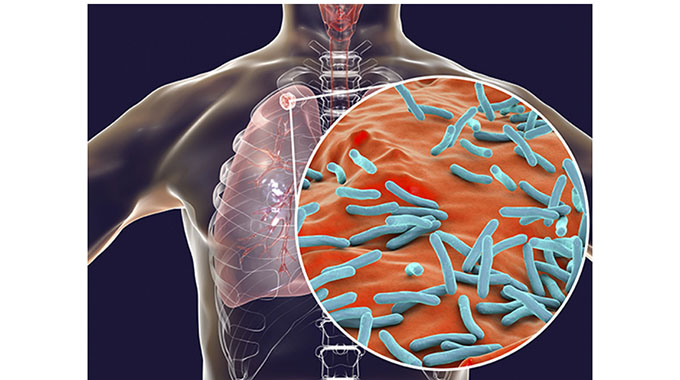
Rumbidzayi Zinyuke Health Buzz
Tuberculosis remains one of the leading killer diseases in Zimbabwe and other African countries.
There were an estimated 2.5 million TB cases in the African Region in 2019, accounting for 25 percent of the global burden.
More than 500 000 African lives are lost to this disease every year.
In Zimbabwe, it is estimated that 29 000 people fell ill of TB in 2019 and about 6 300 of these succumbed to the disease. In the same year, an estimated 1 200 diagnosed TB cases had drug resistant TB.
The country has made significant gains in reducing the number of people who have developed Tuberculosis (TB) since 2015.
As a result, Zimbabwe was moved from the world’s top 30 list of countries heavily burdened by TB, but it remains double burdened with drug resistant TB and TB and HIV co-infections.
But more still needs to be done.
Because while TB treatment and care is free in Zimbabwe, statistics show that more than 80 percent of those in need of TB services face exorbitant costs while accessing them.
The situation was also compounded by the Covid-19 pandemic which disturbed access to health facilities owing to the travel restrictions.
So despite notable milestones in the TB programme, the 2021 Global TB Report findings show that between 2015 and 2020, TB deaths increased by 36 percent compared to 2015.
About 30 000 new TB cases occur every year which translates to one person being affected every minute. There are indications that men bear the biggest burden of TB in the country, mostly within the artisanal mining communities and others and the informal sector. These people are mostly in hard to reach areas hence they are often missed.
The Ministry of Health and Child Care has noted that despite the high occurrence of the new TB cases, the proportion of new TB cases diagnosed and started on treatment decreased from 72 percent in 2019 to 54 percent in 2020, thereby promoting ongoing TB transmission at community level.
This means that there are still programmatic gaps in TB case finding, including missed opportunities along the TB screening-diagnosis-care cascade, sub-optimum treatment outcomes, compounded by patient delays in seeking care and lack of treatment adherence support even though 80 percent of TB patients experience catastrophic costs.
To address these gaps and challenges effectively and efficiently, Government contends that active participation and involvement of all sectors that contribute to health is needed.
This includes finding the 12 520 missing undiagnosed people with TB who have a multiplier effect of each infecting 10 to 15 people annually.
It is worrying that these missing TB cases are within the communities and the longer they take to be identified, the more they risk spreading the disease.
Community involvement therefore becomes a pivotal tool in identifying these people and linking them with care.
Earlier this year, acting director in the AIDS TB Unit within the Ministry, Dr Fungai Kavenga said the communities have played a major role in Zimbabwe’s TB response.
He said at least 12 percent of the notified TB cases were referred by the community for TB services in 2020 alone.
The support groups and awareness campaigns conducted in the communities had seen an increase in early referrals of presumed cases as well as provision of psycho-social and treatment adherence support for patients in care.
But is this enough?
TB spreads in households and communities, within rural villages to urban settings, schools, workplaces and crowded places.
Hence community-oriented efforts can both help prevent the spread of TB and support diagnosis and treatment.
Experts maintain that communities need more education on TB and how it affects them while health workers still need to be educated on how to approach communities, particularly mining communities which might be hostile to new ideas.
With knowledge of how to identify TB symptoms and encouraging the people who might exhibit these to visit the health facilities can reduce the burden of TB in communities and also help to reduce stigma surrounding TB.
Below are some facts about TB that communities should be aware of.
A person with latent, or inactive, TB will have no symptoms. They may still have a TB infection, but the bacteria in the body is not yet causing harm.
Those with active TB can exhibit symptoms that include a cough that lasts more than three weeks, loss of appetite and unintentional weight loss, fever, chills and night sweats. They may experience other symptoms related to the function of a specific organ or system that is affected.
Coughing up blood or mucus is a sign of TB of the lungs. Bone pain may mean that the bacteria have invaded the bones.
Since such symptoms can also occur with other diseases, it is important that people visit a health centre to find out if they have TB.
The disease can be diagnosed using one’s medical history, a physical examination, chest x-ray, and other laboratory tests.
In 2010, Zimbabwe adopted the GeneXpert machine which gives results on samples within two hours and this is one of the best innovations in TB control.
This has led to better diagnosis and treatment of TB and Drug Resistant TB. The country now has 140 GeneXpert machines while mobile trucks have been purchased to access the hard to reach areas.
The move has contributed to decentralisation of TB services at primary health care facilities, to ensure that priority groups have access to services at the closest point possible.
If left untreated, tuberculosis kills. The most common form of TB, known as pulmonary tuberculosis, can cause severe lung damage leading to respiratory complications and eventual death.
In many countries, Zimbabwe included, children are given the BCG vaccine soon after birth to provide immunisation from tuberculosis.
However, it is still important for everyone to take proper precautions to protect themselves from TB, including routine TB screening.
Those who work in healthcare settings or with populations who are at a higher risk for contracting TB should also take necessary precautions to protect themselves.
Knowledge of these things will definitely help communities to fight TB.
Already, the Government is taking a lead in engaging the communities on TB, it is imperative that all partners come on board and help to improve Zimbabwe’s outcomes and End TB by 2030.
Feedback: [email protected]



 Online Reporter