Online Reporter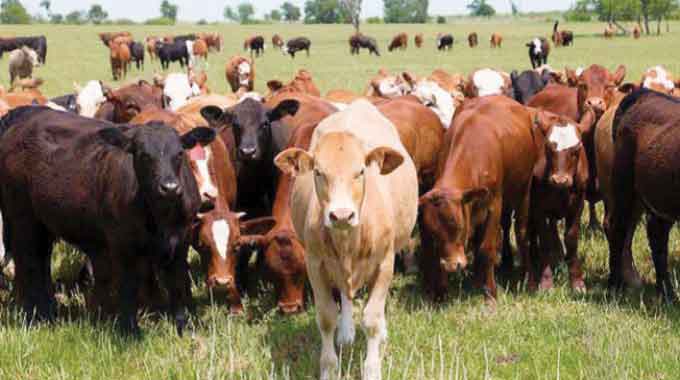
Over the past few weeks, we have been exploring opportunities that farmers can venture into this year.
This week, we want to look at an important symbol of wealth in Zimbabwe: cattle.
For the Zimbabwean farmer, cattle are far more than livestock; they are living banks, a heritage of wealth and the very currency of social and economic standing.
Historically and culturally, cattle have always represented security and prosperity.
Wealth accumulation in African societies was measured in cattle and, even today, their value is deeply ingrained in our traditions.
From the historical kingdoms of Great Zimbabwe to modern-day lobola negotiations, cattle symbolise stability and continuity.
When a woman marries, the bride price is still equated to cattle, a powerful symbol of responsibility and the joining of families.
This deep cultural and economic significance makes the protection of our national herd not just a veterinary issue, but a national economic and market imperative.
As the country moves through the peak of the rainy season, Zimbabwe faces a familiar and serious threat: foot-and-mouth disease (FMD).
While the disease may appear to some farmers as a temporary animal health challenge, its consequences go far beyond the kraal.
FMD is one of the most disruptive livestock diseases, with direct implications for market access, as well as trade and income stability.
FMD: A market threat, not just a farm problem
FMD is a highly contagious viral disease that affects cloven-hoofed animals such as cattle, goats, sheep and pigs.
It spreads rapidly through direct contact, contaminated equipment, the movement of animals and even people moving between farms.
Unlike many other livestock diseases, FMD triggers immediate market consequences.
Once an outbreak is detected, the authorities are compelled to impose strict control measures to prevent further spread. These measures often include:
Restrictions on cattle movement
The closure of livestock markets
The suspension of slaughter activities
Bans on the export of livestock and livestock products.
For farmers, this means animals cannot be sold when needed, prices become uncertain and cash flow is disrupted. Even farmers whose cattle are healthy feel the impact because markets slow down or shut completely.
Government action and shared responsibility
The Government of Zimbabwe continues to work tirelessly to contain FMD outbreaks through surveillance, quarantine measures and coordinated veterinary responses.
These efforts are essential to protect the national herd and maintain market confidence both locally and regionally.
However, no Government programme can succeed without farmer cooperation.Disease control begins and ends at the farm level. Farmers are not just livestock owners; they are custodians of a national asset.
Every farmer has a responsibility to ensure their actions do not expose the broader market to risk.
Thinking beyond the individual herd
It is natural for a farmer to assess disease risk in terms of personal loss: How many cattle will I lose?
Yet FMD demands a wider perspective.
When outbreaks occur:
Livestock movement bans disrupt household income
Buyers withdraw from affected areas
Abattoirs reduce operations
Export markets close instantly
Prices become unpredictable
These market disruptions can last long after the disease itself is contained.
Farmers who might not lose a single animal still lose market access and bargaining power.
This is why FMD must be viewed as a market-destabilising threat, not just a veterinary issue.
Practical actions farmers must take
Preventing the spread of FMD is possible when farmers act decisively and responsibly.
The following measures are critical:
Control animal movement: Avoid moving cattle unnecessarily, especially during outbreaks or when veterinary authorities have issued restrictions.
Do not buy cattle of unknown health status and avoid communal mixing where possible.
Observe biosecurity measures: Limit access to kraals. Disinfect equipment, vehicles and footwear that come into contact with livestock.
Visitors moving between farms can unknowingly spread the virus.
Early detection and reporting: Watch out for symptoms such as excessive salivation, blisters in the mouth, lameness, sores on the hooves and reduced appetite.
Report suspected cases immediately to veterinary officers.
Comply with veterinary directives: Movement controls, quarantines and vaccination programmes are not meant to punish farmers; they are essential tools to restore market stability.
Community cooperation: FMD cannot be controlled by individuals acting alone. Communities must agree on movement controls and grazing arrangements. One weak link puts everyone at risk.
Markets, trade and long-term consequences
From a market perspective, FMD is one of the costliest livestock diseases.
It undermines Zimbabwe’s ability to participate in regional and international trade. Export bans affect foreign currency earnings, reduce processor confidence and weaken value chains.
Domestically, disease outbreaks fuel informal markets as farmers attempt to sell animals before restrictions tighten. This exposes farmers to lower prices and unfair trading practices, a cycle that ultimately harms everyone.
Protecting wealth today and for the future
Cattle remain central to rural resilience. They finance education, support households during emergencies and anchor intergenerational wealth.
Losing market access because of disease is as damaging as losing the animal itself.Protecting cattle from FMD is, therefore, an investment in:
Stable livestock markets
Predictable incomes
Strong value chains
National food security
As farmers, protecting cattle is protecting wealth. As communities, controlling disease is protecting markets. And as a nation, safeguarding animal health is safeguarding economic stability.
FMD thrives where vigilance is weak. Markets thrive where responsibility is shared.
By working together, Zimbabwe can protect its national herd and ensure that livestock markets remain strong, orderly and rewarding for those who depend on them.
Tina Nleya is AMA’s marketing and public relations manager. Contact details: [email protected]. Word From The Market is a column produced by AMA to promote market-driven production.