admin
admin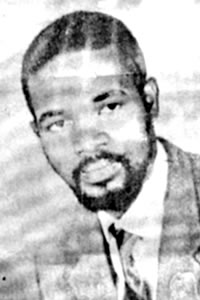
was the young fighter Filipe Samuel Magaia, one of the founders of one of the four nationalist movements, aggregated by Eduardo Mondlane, giving place to the Mozambique Liberation Front (Frelimo).
The first Chief of the Department of Defence and Security of Frelimo (DSD), born on March 7, 1937 in Mocuba District, Zambezia Province, was remembered in November 2006 with the state’s honour.
Filipe died 40 years ago, assassinated with a bullet of an enemy agent who infiltrated the Frelimo ranks, being succeeded in his post by Samora Machel.
The assassin bullet was fired by one of the Front’s guerrillas identified as Lourenco Matola in the plane front of combat in Niassa province.
He died on October 10, 1966.
Described by some of the combatants of the national liberation struggle as being a very demanding, gifted and intelligent man, Filipe was one of the founders of Frelimo, in 1962.
He arrived in Tanganyika (Tanzania) with the hands of UDENAMO, and also in the company of Feliciano Gundama, the Minister of War Veterans Affairs.
After the Frelimo I Congress in 1962, he was integrated into the front delegation, headed by Marcelino dos Santos, to Algeria to negotiate the assistance for the guerrilla’s training for the beginning of the fight in 1964.
Noble son of Mozambique
During the homage that took place at the Joaquim Chissano Conference Centre, the President Armando Guebuza described Filipe as a “noble son of Mozambique”.
President Guebuza narrated the circumstances that led the Frelimo commandant to leave Beira for Dar-es-Salaam.
Magaia made the decision to engage himself in the struggle for the liberation of his country following the changing winds blowing in the world and, particularly in Africa.
Since the preparatory phase of the First Frelimo Congress, Filipe was among, according to the Head of State, of the youth that were defending the Mozambicans and preparing them militarily with guns to expel the colonialists from Mozambique.
Armando Guebuza mentioned the heroism of Filipe and affirmed that celebrating 40 years of his assassination constitutes an sad occasion for Mozambicans.
He said this helps the nation to remember his selflessness.
Filipe Samuel Magaia, son of Samuel Guenguene Magaia and Ana Albino Pereira Magaia, was born on March 7, 1937 in Mocuba, Zambezia Province.
His mother was a housewife while his father was a nurse who was at that time working for the health service.
In December 1941, his father was transferred to ex-Lourenco Marques, taking with him his wife and children, among them Filipe.
In 1943, Filipe enrolled at the Church School Wesleyana de Mavalane, starting his primary school, completing it in 1948, at Missao Sao Roque School, in Matutuine.
When he finished his primary school education, he wrote exams for technical learning in the then Lourenco Marques.
Then he attended a Commercial School Dr Azvedo e Silva, the actual Escola Comercial de Maputo in Lourenco Marques finishing Form 4 during his mandatory army service in 1958.
On completion of his army service training at Boane Army Camp, he was posted to Nampula, where he remained until 1960.
Still in the army, and worried about his future, he decided to apply for a post with the Mozambican Railways.
But he could only take up the post after the completion of his army service in 1960 when he returned to Lourenco Marques.
In 1961, he was transferred to Beira City, where he was jailed by PIDE-DGS for three months, following allegations that he had subversive ideas.
Not happy with the oppression, humiliation and brutality in his own country and attentive to changes in the world and particularly in Africa, Filipe, took the courageous decision to fight for liberation in the company of other comrades, such as Feliciano Salomao Gungana and Marcelino dos Santos.
They went to Tanganyika, arriving in Dar-es-Salam, on March 15, 1962, through UDENAMO, at a time when efforts were intensified to constitute a single Fight Front resulting from the fusion of the three nationalist organisation namely, UDENAMO, to which he was a member, the MANU and the UNAMI.
They operated the fusion that originated Frelimo and on June 25, 1962 failed the negotiations to bring Mozambique to Independence through a pacific way.
The struggle was seen as the only way possible for the attainment of national independence, an important conclusion reached at the Frelimo’s First Congress, Congress of National Unity.
Thus, soon after the Congress’ realisation, Filipe Samuel Magaia joined Frelimo’s delegation headed by Marcelino dos Santos to Algeria.
Their intention was to negotiate for assistance in the military formation, taking into consideration that the Algerian Liberation Front had pledged to help all African Liberation movements.
After returning to Dar-es-Salaam and due to his NATO military qualifications, the Frelimo board conferred on him the mission to head the first group sent to Algeria where they were submitted to military instruction for six months.
In July 1963, in recognition of his brilliant performance, the duty of organising the military command was given to him within DSD, controlled then by Frelimo’s presidency.
It was his duty to prepare everything necessary for the implementation of Frelimo’s National Liberation War programme because it could not be seen by any Portuguese authorities, leading to pacific negotiations to reach our sovereignty.
It was in this way that they conceived political-military formation plans in friendly countries, particularly the progressive and socialist.
Still in this formation and taking into account that the Government of Tanganyika had recommended that the installation of the liberation movements’ military bases be placed out of towns, Magaia participated in the identification of Bagamoio, Kongwa and Nachingweia as camps of political military training of Frelimo guerillas.
He recommended to his collaborators that, during his absence, they had to learn strategies and tactics of their enemies.
It was necessary to know the level of vigilance of the British authorities that were still dominating in Northern and Southern Rhodesia as well as Nyasaland.
While some were advancing to the Soviet Union and Egypt, between May and October 1964, he was sent to the People’s Republic of China, heading one more group of comrades to increase political and military knowledge, taking into account that the country had a very rich experience in this field.
He had to interrupt the programme to attend an emergency situation as some of the population had manifested acute intolerance, threatening to start with violent actions against Frelimo’s command.
As such on September 24 1964, the general armed insurrection of the Mozambican people begun against the Portuguese colonialism, with particular incidence in the Province of Cabo Delgado, Niassa, Tete and Zambezia.
It is highlighted that with the beginning of the liberators’ fight, the number of combatants considerably increased so did the demand for new forms of its command’s organisation.
It was in this context that the Mozambique Liberation Popular Force (FPLM) was created, with its respective organ of command of the various services.
It was due to these efforts that in October 1966, he headed the Cadres Detachment, with the mission of leading the dynamic theatre of the military operations at Niassa Front.
This was to allow the elements that were going to assume the various posts to gain the vision on the complexity of the military situation at the front.
The article was first published in Portuguese in a Mozambican newspaper Nachingweya and was translated by Hamida Abdul.


 Online Reporter