Online Reporter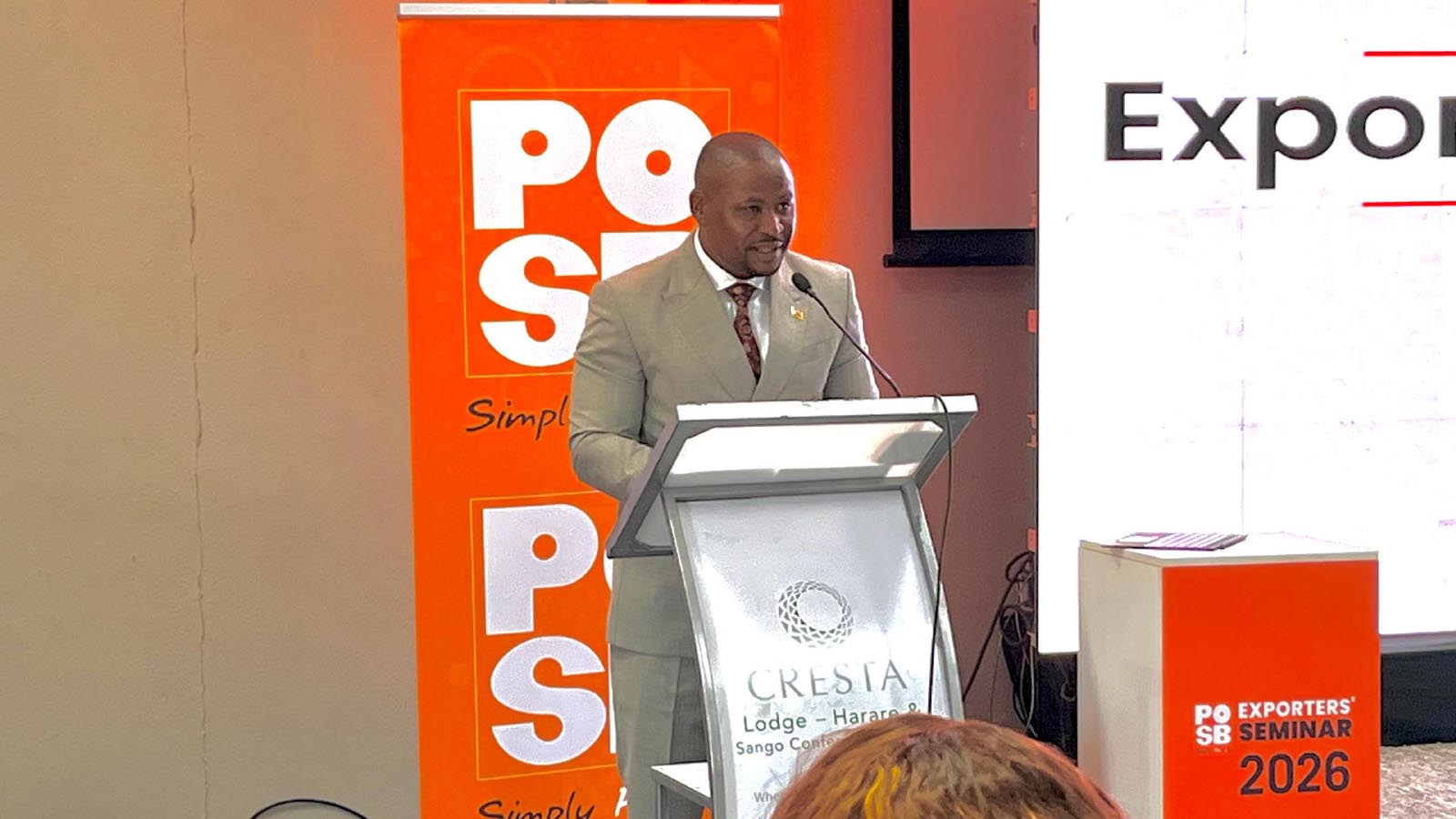
Michael Tome
Business Reporter
THE Government has called on banks and other financial institutions to broaden access to export finance, stressing the need to support established exporters and those looking to build capacity to compete in regional and international markets.
In a speech delivered on his behalf by ZimTrade chief executive officer Mr Allan Majuru at the third edition of the POSB Exporters Seminar yesterday, Foreign Affairs and International Trade Minister Professor Amon Murwira said financial institutions had a critical role to play in turning Zimbabwe’s production potential into export performance.
He urged financial institutions like POSB to widen access to finance for enterprises seeking to transition from local production to regional and international markets.
Minister Murwira challenged financial institutions and the private sector to move beyond dialogue and identify and remove barriers preventing viable enterprises from accessing finance.
According to the Minister, finance should not merely follow production, but should help create the productive capacity required to generate exports.
The seminar, held under the theme “Accessible Export Finance: Powering Businesses Beyond Borders,” brought together Government, financial institutions and the private sector to deliberate on financing production and building enterprises capable of competing beyond Zimbabwe’s borders.
Minister Murwira indicated that attention should be given to micro, small and medium enterprises (MSMEs), which remain an important source of entrepreneurship, innovation, employment and production but continue to face difficulties accessing suitable financing.
“An export order without financing is an opportunity deferred. We must therefore ensure that export finance does not only support established exporters, but also helps viable enterprises become productive, competitive and export-ready.
“We need appropriate instruments, including working capital, equipment finance, trade finance, invoice financing, export guarantees and other innovative solutions,” Minister Murwira said.
POSB chief executive Mr Garainashe Changunda said the bank was positioning itself as a long-term financial partner for businesses seeking to enter and expand in export markets.
“As POSB, our commitment is to be more than a transaction-processing bank. We aim to be a dependable financial partner that understands the export cycle and provides solutions that help viable businesses grow beyond Zimbabwe’s borders,” Changunda said.
He said POSB had lined up various funding solutions for existing exporters and businesses seeking to venture into export markets.
Of significance is a US$10 million line of credit secured from Afreximbank to support qualifying SMEs operating within the export value chain.
The facility is expected to expand funding available to businesses already exporting or demonstrably linked to export activities.
POSB has also secured a separate US$10 million trade finance facility from Afreximbank to support qualifying import, export and other trade-related transactions.
The facility provides structured working-capital finance through instruments such as letters of credit and international guarantees, enabling businesses to meet time-sensitive payment obligations while maintaining operational and supply-chain continuity.
The Afreximbank facilities complement POSB’s traditional lending products, including pre- and post-shipment finance, working-capital facilities and asset finance.
Pre-shipment finance can assist exporters in purchasing inputs and preparing consignments, while post-shipment finance helps bridge the cash-flow gap between the dispatch of goods and receipt of payment.
The push for wider export finance comes as Zimbabwe seeks to increase the value and sophistication of its exports, with greater emphasis being placed on value addition, industrialisation and the development of competitive domestic enterprises.
The POSB seminar is part of efforts to strengthen Zimbabwe’s export-led industrial growth and supports the objectives of the National Development Strategy 2 (NDS2), which identifies exports as a key driver of foreign currency generation, industrialisation, employment creation and sustainable economic growth.
Under NDS2, Zimbabwe seeks to reduce its reliance on raw commodity exports by increasing the contribution of manufactured and value-added products to total exports from 5,5 percent in 2025 to 18,4 percent by 2030.