Chronicle Editor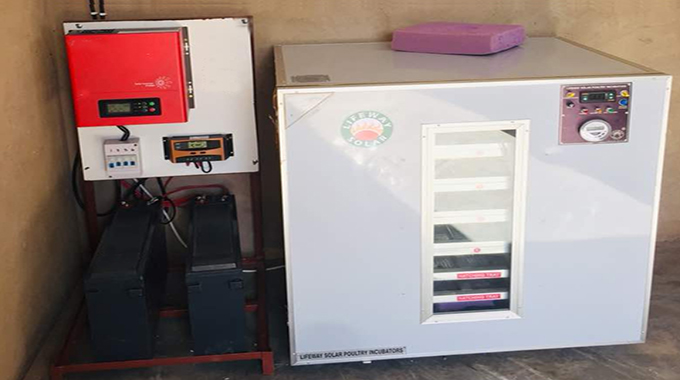
Pamenus Tuso
ROAD runner breeders in rural areas are set to benefit from automatic solar powered incubators recently designed and manufactured by a local company.
The solar powered machines were introduced by a Harare-based company, Victors Chickens, in February this year and enable smallholder farmers to be 10 times productive when compared to other traditional ways of hatching chicks.
Managing director Mr Anesu Kwaramba said they decided to design the solar powered incubators as a way of empowering smallholder farmers to generate income as well as attain food security.
“In coming up with this machine, we are trying to empower every person to have something to do in life. We have a machine for every class of people ranging from the lowest paid worker to big commercial farmers. We are targeting this solar powered machine for rural farmers,” said Kwaramba in an interview.
The innovative machines have so far been successfully introduced in Mwenezi, Muzarabani and some parts of Mutasa District in Manicaland province.
“We are receiving an overwhelming response from the farmers since the introduction of the machines. A lot of farmers in rural areas cannot venture into commercial road runner production business because they do not have electricity,” said Mr Kwaramba.
“It is good that when a farmer has 10 to 15 hens laying eggs at a particular time, it is more efficient to use a machine because leaving those eggs for the hens to sit on is no longer effective anymore.”
The solar incubators use solar battery without using an inventor. All the machines can run with solar.
The smallest machine, which costs RTGS$400, has got the capacity to accommodate 180 eggs while the largest solar incubator can accommodate 288 eggs.
“The machine’s efficiency is the same as any other machine, which uses electricity. One simply takes the eggs and put them into the machine and then put a wet cloth into the incubator as one of the essential elements needed,” said the managing director.
After connecting to the battery, the machine runs for 21 days.
During the day, the machine will be using energy from the sun directly while also charging the battery. During the night when there is no more sun the machine automatically changes over from obtaining power directly from the sun and uses the battery.
According to Mr Kwaramba an average 200kw battery can last for at least 36 hours running continuously assuming that there will be no sunshine.
“We recommend that users of these machines should at least have two batteries in case there is no sunshine. When the process of hatching starts it has to go on for 21 days uninterrupted,” said the managing director.
During the incubation period the eggs are manually tilted.
“Nature requires that the eggs be tilted to a certain angle every 3 to 4 hours. The incubators have got 90 to 96 hatch rate. This high hatch rate means that the farmer has more chicks that he or she can sell,” said Mr Kwaramba.
The company is also training rural farmers on how to take care of the eggs before they are taken to the hatchery.



 Online Reporter