

 admin
admin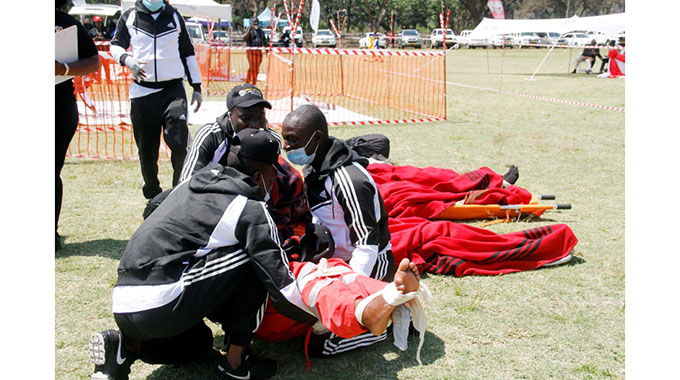
Herald Reporter
First Aid remains an integral part of the broader development approach within the Zimbabwe Red Cross Society (ZRCS) with the primary aim of reducing the impact of disasters, the number of deaths and illnesses.
This was said by the ZRCS secretary general Mr Elias Hwenga during the belated commemorations of World First Aid Day held over the weekend in Gweru.
“This year’s theme ‘Lifelong First Aid Learning’ is testimony that First Aid knowledge should be available to everyone because we are all capable of saving lives. As Red Cross, our first port of call and the heart of our mission is dissemination of first aid education and practices to make communities more self-reliant, safe and resilient,” said Mr Hwenga.
He said the ZRCS works closely with communities to build a safer world through the use of first aid with expertise and humility while promoting its accessibility and knowledge.
“First Aid started over 160 years ago after a young Swiss business man Henry Dunant saw the devastating consequences of the Battle of Solferino in northern Italy. Forty thousand men lay dead while others lay wounded without any medical help. He then mobilised communities to render first aid to the wounded, initiating advocacy for humanitarian aid. Thus, the idea of Red Cross was born,” said Mr Hwenga.
Guest of honour Mr Munesuishe Munodawafa, who is the Traffic Safety Council of Zimbabwe managing director told the gathering that the increasing number of deaths from road traffic accidents heightens the need for the public to be trained in First Aid.
“First Aid becomes critical because every second counts in a crisis and professional medical help may not always be immediately available after a road traffic accident. By taking action through effective first aid, many lives can be saved and the impact of injuries lessened,” he said.
ZRCS national president Mr Edson Mlambo said in an emergency, 90 percent of lives are saved by providing first aid.
“First Aid used to be recognised as the domain of medical or para-medical personnel, but today, all experts recognise that the general public must be trained in First Aid because it is an effective way of saving lives, improving chances of survival and minimising the consequences of a road traffic accident.
Ten first aid teams drawn from the country’s provinces competed in rendering first aid in a simulated traffic accident.



 Online Reporter