

 admin
admin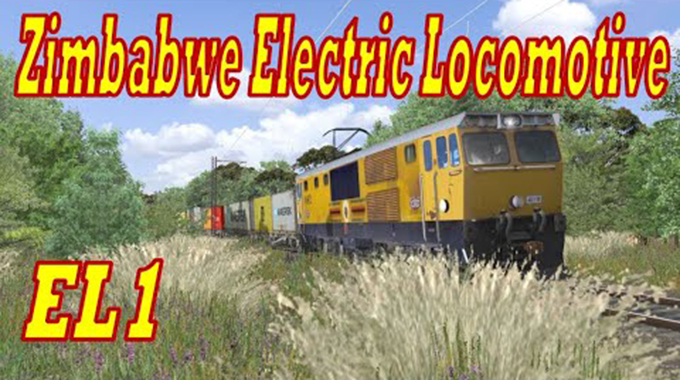
Business Herald,
November 1, 1979
THE first electric train in the country should be running within the next two months, climaxing the Government’s intensive programme to build 22km test track outside Gwelo.
Work has finished on building the line and the Secretary for Transport and Power, Mr P. G. H. Lamport-Stokes, says the project “has gone very successfully. It all went according to plan and there were no real problems.”
Once the locomotive tests have been conducted — and it is not expected that they should present any major obstacles — the green light will have been given from technical side for electrification of the line from Salisbury to Gwelo. It will be a question of available money that will decide when this starts.
The main hurdle that had to be overcome is interference with telephone lines.
The huge currents needed to drive the trains cause considerable problems, but the Post and Telecommunications Corporation has found a way to beat this. Everything about the project so far has been a success story for the country.
The $1,4 million budget was maintained with a few thousand dollars and the contract timetable went according to plan, with the April election causing a slight delay.
Foreign currency was kept to a minimum — less than $300 000. Locally made materials were used in all major aspects of the line, which is running from concrete pylons.
Metal contacts and copper wire, specially drawn, had to be imported, but even the latter may be made here once demand calls for large volumes to be produced.
The country’s electrification programme is according to the five-year plan published earlier this year. It has provided for $61 million to be spent thereafter, on the Salisbury to Malvernia and Beitbridge line.
The Salisbury to Gwelo section should be finished by the fourth year, when the rest of work will start.
The total expenditure on all aspects of the railways in that time will be $191 000, of which foreign exchange will take up $79 million. An extra six-year period is planned which will take up another $130 million.
LESSONS FOR BACK
- Although the first electric locomotive was developed in the late 19th century, it wasn’t until 1983 that the Dabuka electric train was commissioned.
- This was a giant leap in the development of Zimbabwe’s transport system. In fact, the single most significant event since the arrival of the railway itself was made in 1983 with the electrification of the busy mainline, 305km between Harare and Dabuka marshalling yard near Gweru in the Midlands Province.
- The inaugural train ran on October 22, 1983 after the successful electrification programme was completed in a time-scale of two years. The electrification project was commissioned with pomp and ceremony.
- The introduction of the Dabuka electric train was good news in boosting the economy considering that infrastructure development remains a key component in economic growth.
- The electric locomotives have since been suspended after the overhead wires were vandalised.
- Deterrent penalties should be imposed on economic saboteurs like those that vandalise the network infrastructure.
- Interesting times lie ahead of Zimbabwe and the region’s transportation industry. Technological advancements, innovation and climate change are forcing vehicle makers to switch from fuel-powered vehicles to electric and battery-powered ones.


 Online Reporter