admin
admin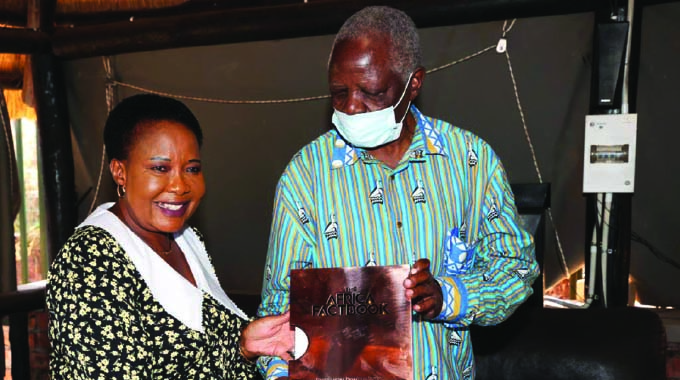
Tendai Rupapa
Senior Reporter
ZIMBABWEANS from all walks of life, especially school children, must take advantage of the Museum of African Liberation which is under construction in Harare, to get a deeper understanding of the country’s history and appreciate its food and culture and that of other African nations, First Lady Dr Auxillia Mnangagwa has said.
She made the remarks during a tour of the museum and the heritage village during which she planted trees, a symbol of life.
In addition to the historic and educational value, the First Lady said, the museum had vast potential to lure tourists and earn the country foreign currency.
The mother of the nation saw the late Zanla Commander General Josiah Magama Tongogara’s regalia, which was gifted to the museum by his family, a trunk used by the late Cde Leopold Takawira, a television set which belonged to the late Father Emmanuel Riberio, which was said to be the only television set in Highfield.
Liberation war fighters would reportedly meet at his home to strategise under the guise of watching television.
The late Vice President Joshua Nkomo’s personal effects like crown, gun, phone, and walking stick were also on display. Also in the museum was the late Vice President Simon Muzenda’s bow, walking stick, carpentry tools and other paraphernalia that was gifted to the museum by his family.
There were also ornaments from other countries.
The museum’s chief executive officer, Ambassador Kwame Muzawazi, told the First Lady that they were collecting artefacts from Zimbabwe and around Africa so that Zimbabwe could house them at the museum.
The First Lady was shown a recording studio where war veterans use to explain various phases of the liberation struggle.
As Environment and Tourism patron, Dr Mnangagwa planted a Mukamba tree before heading to the heritage village.
At the heritage village, there is an Afrocentric dining where themed dinners from various countries will be served.
There are national cubicles where various nationalities of various African states will showcase their traditions.
There is also a place at the centre for women to sell traditional artefacts.
Dr Mnangagwa could not hide her delight during the tour and pointed to the huge tourism benefits and learning opportunities the museum will unlock for the country.
“I am happy to have come to this place which is being built to preserve the history of our nation,” she said. “I want to thank the thought that was brought by Zimbabwe so that we realise where we came from. To be Zimbabwe today, how did it come about? I also want to thank other countries that were fought for to have the freedom they enjoy today. I saw there are some ornaments they brought.
“There are other countries that encouraged our war heroes and heroines to keep on fighting as they helped with food, transport and clothing at the time so that we could be free as we are today. I am also happy that the board includes international male and female personalities.
“It is not only Zimbabweans who are in this project, all African countries are represented. As a mother I am grateful that our first heroine was Ambuya Nehanda and we do not stop saying out that name because she was a woman who was not trained but she fought and is our first heroine in the country. I also thank women who followed after her and fought bravely.
“All these, living and late, we thank them greatly for the work that they did. For us to be able to talk about that history today, thanking them wherever they are that they did exceptionally well and we now enjoy peace that was brought about by them.”
Dr Mnangagwa emphasized the need for children to appreciate the history of the nation and value the sacrifices that were made for the country to be free.
“To children who were born after the war of liberation, this is the place for them to come and learn where our country came from, where we are and where we are going with our country,” she said. “Blood was shed and each and every family has a child who went to the war and some failed to come back.
“Therefore, our children must come and learn so that they treasure the history of our nation, Zimbabwe. This is a place where the cultures of various nations will be exhibited. Food from various nations will be prepared at the heritage village. There is a kitchen awaiting to prepare all dishes and embassies representing their countries and nations that may want to come here are free to come and prepare their dishes. We will be able to partake of the dishes from various nations that will be prepared here.
“Outside there are also nations cubicles where countries are free to come and cook their traditional cuisines. This will allow our children and us to learn because some never visited these countries and will see them here. Even their food we shall see it here.
“As a person who is fond of programmes like Gota/Nhanga/Ixhiba, we saw there is a big hut and children from various communities will be coming here as we teach them what morality is as we will be at the exact place of history. I encourage all young children even those in schools to come here to learn.
“All relevant ministries like that of Environment, Climate, Tourism and Hospitality Industry, I say this is their place so I am encouraging that they come and start planning because this will bring us tourists so that our history is known to those who did not know where we came from,” she said emphatically.
Ambassador Muzawazi thanked the First Lady for her visit and said as CEO of the Institute of African Knowledge that is running the Liberation City, he viewed it as a big project.
“It is a project of projects, the Museum of African Liberation, the Defence Forces Exhibition Park, the Recreation Park and the Heritage Village,” he said. “Here it is about bringing Africa together at one place. There are many ways to communicate, not just through politics, but through culture, through heritage and that is what we are pushing for.
“This will be a regional and global hub of African interests and attractions and it was launched by the President when he made the ground-breaking ceremony two years ago and we have gone a long way in the past two years.
“Amai, the First Lady has come to plant trees, a symbol of life represented by a woman and a mother at both the museum and the heritage village. The heritage village is going to be opening on the 26th of May. So it was appropriate that Amai comes now and plants a tree and she has also come to put the motherly touch. You see there is too much machines and construction, but there was a motherly touch that was needed and we want to appreciate the visit of Her Excellency.”
Commenting on the heritage village, Amb Muzawazi said they were going to work with closely with the First Lady’s office for its success.
“Heritage village is about preservation of who we are as a people, our identity, our culture and linking it with where we want to go as Africans,” he said. “Amai is doing a great job and is a champion of these causes in the country leading by example.
“Therefore, the heritage village is complementing her work. So its important that she be part of the process. We also have an area for women empowerment whereby they will be focusing on heritage based merchandise. Amai as a champion of women empowerment, it was of great importance that she visits this place.”



 Online Reporter