Blessings Chidakwa
Senior Reporter
ENVIRONMENT Patron, First Lady Dr Auxillia Mnangagwa yesterday called for cleanliness to become a way of life across Zimbabwe, urging citizens to take responsibility for maintaining a clean, safe and healthy environment every day, beyond the monthly national clean-up exercise.
Dr Mnangagwa said the country must move from treating cleanliness as a scheduled activity to embracing it as a daily lifestyle, with every citizen playing a part in keeping their surroundings clean.
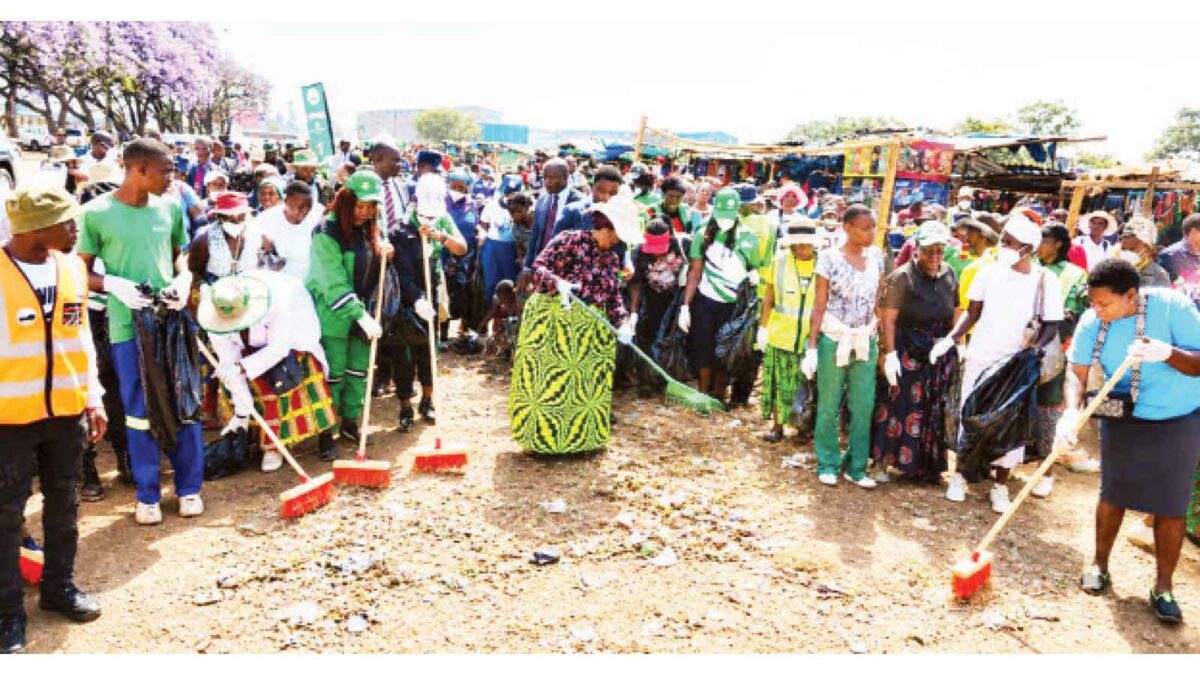
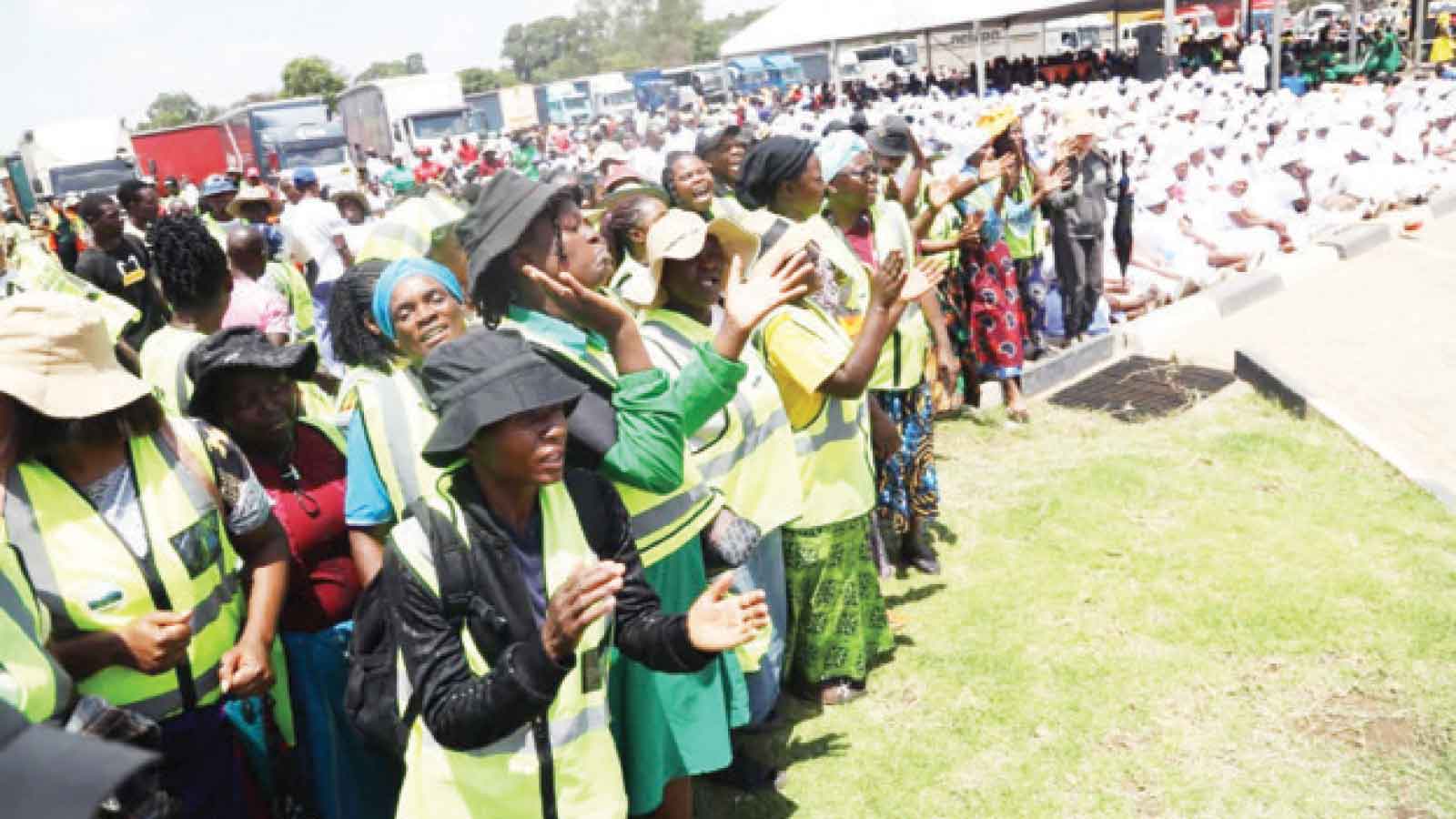
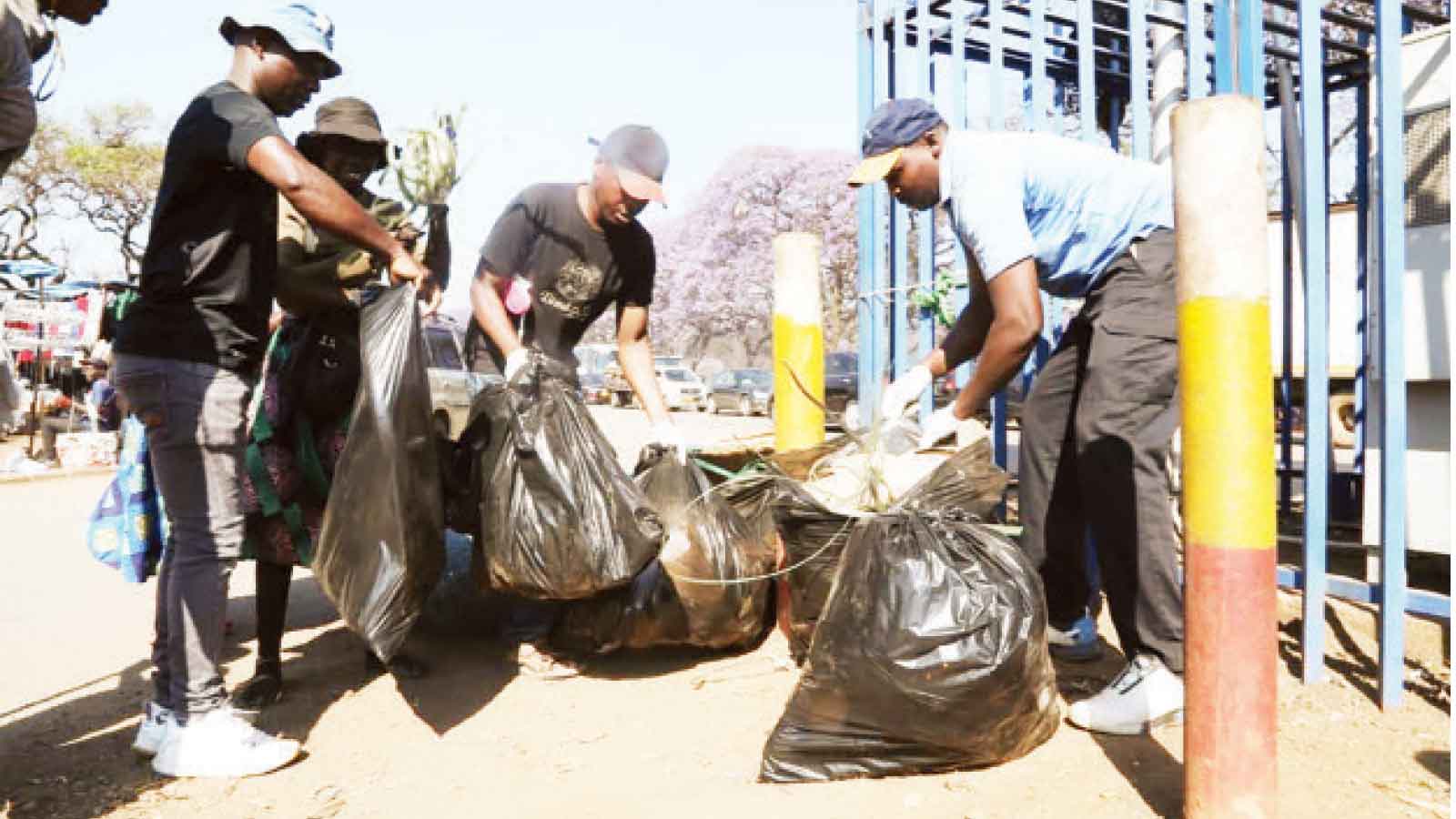
The First Lady made the call while leading a vibrant, oversubscribed clean-up campaign in Mbare, a busy hub of trade, which attracted scores of people who joined hands in clearing litter and creating a cleaner, healthier environment.
The initiative aims to instil a lasting culture of cleanliness, promote good sanitation practices, safeguard public health and encourage communities to dispose of waste responsibly.
Participants included community members, church members from various denominations, including apostolic sects, transport and traders’ associations, learners, the Environmental Management Agency, Harare City Council, Geo Pomona Waste Management, Government officials, and other stakeholders.
The lively clean-up exercise began at the corner of Remembrance Drive and Cripps Road in Mbare, popularly known as Mupedzanhamo.
It proceeded smoothly towards Rufaro Stadium, with residents and other stakeholders joining hands to clean their surroundings and improve the area’s appearance.
Along the way, the First Lady noticed exposed electrical wires and called on the responsible authorities to address the hazard, warning that it posed a danger to the public.
After the clean-up exercise, Dr Mnangagwa addressed the multitudes of people, who welcomed her with cheers and applause, expressing their happiness at being part of the campaign.
The Environment Patron said the progress made since President Mnangagwa declared the first Friday of every month a national clean-up day on December 5, 2018, should be consolidated through sustained individual and collective responsibility.
She reaffirmed her commitment to strengthening the programme’s gains.
Dr Mnangagwa implored citizens to lead by example, saying environmental protection required responsible behaviour and consistent action from everyone.
“We are not simply picking up litter. We are affirming a national value that every Zimbabwean has a responsibility to protect the environment, and that no one is exempt from this responsibility.
“I implore all of you to continue exhibiting this powerful collective commitment to a clean, healthy and dignified Zimbabwe,” she said.
Dr Mnangagwa said the theme, “My Environment, My Responsibility”, underscored the need for every Zimbabwean to take ownership of the country’s cleanliness.
“They say that a clean Zimbabwe is not a gift from Government, nor a favour from councils, nor the work of a few dedicated people, but a daily choice of every household, every vendor, every driver, every factory owner and everyone.
“After all, our mantra teaches us that a country is built by its owners, hence the call for all of us to lead by example by adopting responsible environmental practices,” she said.
Dr Mnangagwa also called for the expansion of the Zero Waste Movement, which promotes waste reduction, recovery, reuse and recycling.
She expressed gratitude for the opportunity to champion the initiative as Environment Patron and help Zimbabwe move beyond traditional waste collection and disposal.
The country’s Environment Patron is a signatory to the Global Zero Waste Goodwill Declaration, which supports sustainable waste management, responsible consumption and environmental responsibility.
“Our national ambition must be to reduce waste at source, recover valuable materials, promote reuse and recycling, and minimise the amount of waste that ends up in our environment.
“The Zero Waste Movement is there to redefine how our society views discarded materials. Every plastic bottle discarded on our streets represents lost economic value. Every tonne of organic waste left to rot in open dumpsites represents lost potential for bio-fertilisers, vermicomposting and renewable bioenergy,” she said.
Dr Mnangagwa also encouraged communities, schools, churches, businesses, manufacturers and local authorities to embrace the Zero Waste philosophy.
“To drive this transformation, we must prioritise waste segregation at source. Households, schools, markets and businesses must separate organic material, plastics, glass, paper and metals at the point of generation.
“It remains the desire of my heart to see our women and youth at the forefront of this green economic transformation,” she said.
A clean environment, Dr Mnangagwa said, should not be viewed as the sole responsibility of Government or local authorities, but as a shared obligation involving households, vendors, transport operators, industries, businesses and communities.
“I come to actively participate in cleaning the environment and to renew our shared resolve towards attaining a clean, safe and healthy environment,” she said.
Dr Mnangagwa said the national clean-up programme extended beyond Harare to all 10 provinces as Zimbabwe worked towards a cleaner, safer and healthier environment.
The First Lady urged citizens to sustain the collective effort, emphasising that lasting change depended on making environmental responsibility part of everyday life.
With the rainy season approaching, Dr Mnangagwa called on local authorities and other stakeholders to clear drains, culverts and waterways of litter, plastics, silt and other debris.
She warned that blocked drainage systems increased the risk of flash floods, infrastructure damage, destruction of property and public health challenges.
Dr Mnangagwa urged residents to stop littering and dumping waste in drainage systems, calling for preventive action before the first major storms.
While acknowledging improvements in the cleanliness of central business districts, Dr Mnangagwa expressed concern over the state of industrial areas, where blocked drains, packaging waste, oil-stained ground and illegal dumping remained visible.
The Environment Patron said cleanliness should not be confined to areas frequented by visitors, but should extend to industrial estates, markets, residential neighbourhoods and communities throughout the country.
“The cleanliness of your premises, your drains and the roads outside your gates is not optional charity. It is part of doing business responsibly,” she said, addressing captains of industry.
Dr Mnangagwa said the state of the environment also shaped Zimbabwe’s First Lady champions a culture of cleanliness
national image, reflecting civic pride, operational efficiency and the country’s readiness to attract investment.
The First Lady acknowledged the contributions of Geo Pomona Waste Management, local authorities and Government ministries, departments and agencies participating in the monthly clean-up programme.
However, she said enforcement alone would not achieve the desired results without responsible citizens, responsive institutions and businesses committed to environmental protection.
“You do not need a title, a budget or a permit to pick up a piece of litter. You do not need to wait for a truck to clear the gutter outside your gate,” she said.
“You need only to decide that this place is yours, and that it is your responsibility.”
Dr Mnangagwa called on transport operators to keep ranks and termini orderly, residents and churches to help unblock street drains, industries to maintain clean premises, and all citizens to discourage littering and illegal dumping.
Amid growing concern over domestic violence, which has claimed lives in some cases, Dr Mnangagwa, as a concerned mother, took a swipe at the scourge in all its forms. She expressed dismay that even mothers, whose role is to bear, nurture, protect and preserve life, could go as far as axing their husbands.
She questioned how anyone could inflict such horrific harm on another person, urging people to embrace dialogue and resolve their differences peacefully rather than resorting to violence.
“This is now the work of Satan. How can a woman, a mother, pick up an axe? You are a woman, a mother. Even if we talk about slaughtering a goat, can you even do it? Yet you find it easy to chop off another person’s head,” she said.
Dr Mnangagwa said she would organise gatherings with communities to discuss the underlying causes of such violence, understand why it was occurring and explore ways of resolving disputes peacefully before they escalated.
Residents and community groups pledged to sustain the cleanliness drive following the clean-up exercise led by the First Lady, saying the initiative had inspired them to take greater responsibility for their surroundings.
They said the exercise reinforced the importance of maintaining clean homes and public spaces, with calls for communities to continue the work beyond organised clean-up campaigns.
A resident, Gloria Mudimu, said the exercise had highlighted that cleanliness should extend beyond the physical environment to personal conduct.
“Just as we strive to keep our bodies clean, our First Lady taught us that we must also keep our hearts and surroundings clean,” she said.
Mrs Mudimu said the exercise had also taught them the importance of identifying and cleaning neglected spaces.
“I came because there are places in our communities that are dirty and are not being cleaned regularly. We must take the initiative to clean these places instead of waiting for someone else to do it,” she said.
Mrs Jennet Muropa said the participation of people from different areas demonstrated the importance of collective action in maintaining clean communities.
She said the initiative had inspired them to continue cleaning their surroundings even after the event.
A Mbare resident, Brighton Simon, said the First Lady’s visit had taught participants valuable lessons they would share with their families and neighbours.
“We will take what we have learnt here back to our homes and teach others the importance of keeping our surroundings clean,” he said.
He welcomed the First Lady’s visit to Mbare, adding that participants appreciated the food provided during the event.
Harare Youth Transporters Association representative Mispa Nyakuengama said working alongside the First Lady had motivated them to keep their surroundings clean.
“We are very happy to work alongside the First Lady in cleaning our environment. We must continue with this work even after today’s event and make cleanliness part of our daily lives,” he said.
Minister of Environment, Climate and Wildlife Dr Evelyn Ndlovu urged Zimbabweans to embrace responsible waste management, saying keeping the country clean required sustained action beyond periodic clean-up campaigns.
Minister Ndlovu urged citizens to take pride in their surroundings and make environmental cleanliness a daily responsibility.
“Let’s take pride in keeping our country clean,” she said.
Minister Ndlovu called on communities to support the Zero Waste Movement championed by First Lady Dr Auxillia Mnangagwa, stressing the importance of responsible waste management in building a clean Zimbabwe.
Minister Ndlovu thanked President Mnangagwa for launching the National Clean-up Programme in December 2018, saying it had provided a platform for sustained national action on environmental cleanliness.
“I would like to thank you all for your unwavering commitment as we drive towards a clean Zimbabwe for all,” she said.
Minister Ndlovu also commended the First Lady, the Patron of the Environment, for championing environmental conservation, recycling initiatives, tree planting and community engagement.
“Your presence here with us today, for this clean-up programme, and your decision to engage personally and directly with us on the adoption of responsible behaviour, is a powerful demonstration of your commitment to ensuring a clean environment and environmental sustainability and development,” she said.
Minister Ndlovu urged Zimbabweans to preserve the environment for future generations, emphasising that protecting the country’s natural heritage was a shared responsibility.
Representing Minister of State for Provincial Affairs and Devolution Senator Charles Tawengwa, Director Mrs Catherine Kampila urged residents, businesses and other stakeholders to take collective responsibility for keeping Harare clean by curbing littering and illegal dumping.
Mrs Kampila urged citizens to move beyond occasional clean-up campaigns and embrace cleanliness as a daily habit.
“Let us move beyond clean-up campaigns and cultivate an everyday culture of cleanliness and pride in our surroundings,” she said.
Mrs Kampila said a clean environment was essential for a healthy, prosperous and dignified society, adding that preserving it was a shared responsibility and a legacy for future generations.
Mrs Kampila said maintaining a clean environment was particularly important as Harare prepared to host the 25th COMESA Heads of State and Government Summit on October 22.
“All eyes of the continent will be on our beautiful country and Harare in particular. Our visitors will judge us not only by our conference facilities and our hotels but by the cleanliness of our streets,” she said.
Mrs Kampila called on stakeholders, including the City of Harare and the business community, to intensify efforts to prevent littering, eliminate illegal dumpsites and beautify public spaces.
“As residents of Harare, we need to maintain the prevailing state of cleanliness by preventing littering,” she said.
Harare Mayor Councillor Jacob Mafume, represented by Councillor Temani Utete, thanked the First Lady for leading by example, saying her clean-up initiative went beyond improving the physical environment to encouraging people to reflect on their attitudes towards cleanliness.
He said Dr Mnangagwa had walked more than five kilometres collecting litter, setting an example for everyone to take responsibility for keeping their surroundings clean.
Zimbabwe National Organisation of Associations and Residents Trust chairperson Mr Shalva Chikomba underscored the importance of the clean-up campaign, saying it promoted collective responsibility and encouraged residents to take an active role in maintaining clean and healthy communities.
He said sustained participation by residents, businesses and other stakeholders was essential to ensuring that cleanliness became a daily practice rather than an activity confined to the monthly national clean-up exercise.
The initiative comes as Dr Mnangagwa continues to work with Government and various organisations to promote responsible waste management and a cleaner environment.
The event underscored the need for communities to complement national clean-up efforts through responsible waste disposal and sustained environmental stewardship.