admin
admin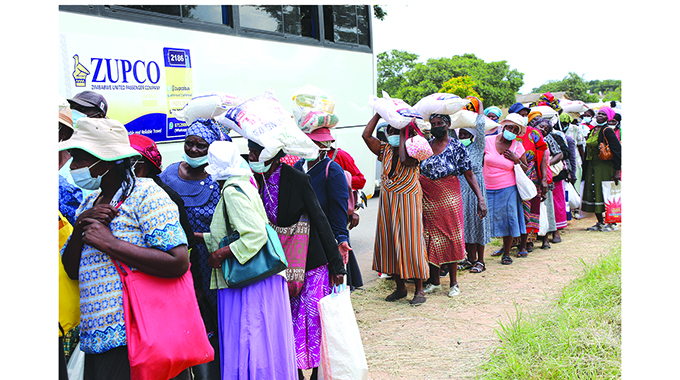
Tendai Rupapa in BULAWAYO
HUNDREDS of Bulawayo residents from all walks of life were yesterday left with smiles courtesy of First Lady Auxillia Mnangagwa, who held an educative and lively interactive session with the elderly, young couples and youths as she leads the search for solutions to problems affecting society today.
The discussion came at a time when society is facing many social challenges including rifts among in-laws, drug abuse, prostitution, indecent dressing, domestic violence and teenage pregnancies, among others.
Mothers-in-law, fathers-in-law, daughters-in-law, sons-in-law, pastors and children were all given a chance to highlight the challenges they were facing in their homes, families and communities.
The First Lady described the elderly as a fortress of knowledge who had answers and solutions to most of the social challenges.
She urged the younger generation to tap from their wisdom.
The mother of the nation used the platform to educate people about Covid-19, domestic violence and promote love and unity in communities.

The elderly temporarily threw away their walking sticks for a dance thanking the First Lady for coming up with the platform and for giving them food hampers and toiletries.
Discussants were awestruck by the First Lady’s depth in analysing issues and left the venue positive that things would change in their homes as a result of the teachings they had received.
“Today we have come kuti tifare tiri mumba medu pamwechete nana gogo nana sekuru tichiumbiridza mhuri dzedu, misha yedu igove nemagariro akanaka. I want to let you know that I have also come to give you groceries through my Angel of Hope Foundation, goodies that I am given by well-wishers and those who support the work I do through my foundation.
“I love the elderly because they are a fortress of knowledge. As I talk to them, I urge the youths to listen attentively because they are getting lost. Looking at courtship, how did you go about it during your time? Grandfather, when you proposed to grandmother, what had you seen?”
In response, Sekuru Njabulo Mtsinze said: “While growing up, we would first learn the character of the girl unlike today when people fall in love instantly like rat poison which kills instantly. We would not even come nearer the gate to their family home out of respect, but this new generation has gone rogue. If you counsel them, you are told off.”
The same view was shared by Gogo Sitholozile Sithole who said back then boys and girls would swim together without fear of anything bad going on.
“While growing up we would go swimming with boys but nothing would happen, but the same does not happen today. Girls in the olden days would never visit a boy’s house, but these days, young girls spend the day locked in the boy’s bedroom. When a boy proposed love under a tree during our time, the trees would lose leaves as the boy told his story but not so these days. People are running into relationships without background checks. Girls are now even proposing love to boys,” she said.
Amai Mnangagwa also spoke about dressing and asked whether the dressing by girls of today dress was the same as that of yesteryear.
“Is the way children are dressing today the same way you did?”
Gogo Stella Moyo shook her head and said in the olden days, people dressed with dignity.
“In the olden days we would dress with dignity covering our whole body, but nowadays children are literally walking in the nude. We would perform all household chores and our mothers would not toil in our presence, but it’s not the case these days.

“You actually cook and wash dishes while your daughter is seated. They cannot even do laundry because of long artificial nails they put on and you wonder what they will do when they get married,” she said.
The First Lady also asked the elderly if they were still playing their traditional roles of counselling the youths.
In response, Gogo Sphumile Ndlovu said they wished to play their roles diligently, but were being prevented by daughters-in-law.
“We will be willing kudzidzisa vazukuru tsika, but our daughters-in-law do not want with their children. They do not want our grandchildren to come during holidays yet that is the time when we can teach them. Life has become unbearable with these children. Even aunts no longer have the powers to counsel their brothers’ children yet in the olden days we would be sent to our grandmothers or aunts each time we closed school. Takakura tine hunhu isu nekuti taidzidziswa tichinzwa,” she said.
In his contribution, Sekuru Philani Khumalo said while growing up, boys were not allowed to sit in the kitchen but at the dare where they were imparted with wisdom and taught what was expected of them. We want to thank you Amai for your educative Nhanga/Gota/Ixiba programme which is bringing back our culture,” he said.
Commenting on children’s mischief, one woman said their neighbour has a naughty teenage granddaughter who is into many love relations.
She said the girl was heard reportedly plotting to get her grandfather arrested on false rape allegations so that she would have “freedom” in his absence.
Amai Mnangagwa pleaded with the elderly women from that area to sit with the child and counsel her before it’s too late.
She further asked whether mothers-in-law and their daughters-in-law enjoyed cordial relations.
“My mother-in-law was cruel and she completely hated me. As someone who was well groomed I would show her love despite and bath her during her sickness. As in-laws, I ask that we live in peace and love. Vana mai please treat us the way you treat your daughters and we will do the same,” one young woman told the gathering.
Another woman added: “I want to respond to gogo who said as daughters-in-law we do not want to send our children to their homes. Usually if my mother-in-law hates me, automatically she also hates my children therefore, how can she counsel the child whom she hates. We are grateful that Amai you have come to help us make peace with our in-laws,” she said.
A pastor spoke on the need for people to have tolerance, peace and love at all times.
“God instructed us to love one another. Let us learn to live with each other peacefully so that we can have a solid nation. Love must lead in all we do,” she said.
She added that the way children dressed sometimes gave an indication of the homes they came from.
“On behalf of the church, we teach these children the best way to dress but at times they even attend church with body-hugging costumes showing that the problem is in their homes,” she said.
Another young woman said her mother-in-law hated her for failing to conceive prompting the First Lady to teach the gathering about infertility which also affects men.
“Sons-in-law its now your turn, when you visit the in-laws what are you bringing them and are you visiting them while properly dressed?” asked the First Lady.
One man rose and said: “When I got married, I agreed with my wife that she would look after my parents while I looked after hers. That way, no one would accuse the other of favouring one side and it reduces domestic violence,” he said.
He also poured his heart out and indicated that there were some in-laws who favoured rich sons-in-law and giving attitude to the one of little means.
In closing, Amai Mnangagwa thanked the gathering for the discussions which brought out issues that tore families apart.
“We have built our home today and set the foundation for a better life. Let’s now go back and live in peace,” she said. The elderly and those with disabilities thanked the First Lady for the food hampers and toiletries saying they had come at a time when most of them were facing food shortages.
Gogo Sithembiso Moyo said out of the 12 children she gave birth to, eight passed on leaving her to cater for the needs of her grand-children.
She said she was finding it hard to put food on the table.
“Following the deaths of my children, I was left with their children whom I fend for. My husband passed on in 2004 so I rely on piece jobs to sustain the family. I am happy Amai has come to lighten the burden for me. I can still grow vegetables and tomatoes for consumption and sale but my health is now failing me. I was recently diagnosed with a heart condition. I am grateful for the food and toiletries I was given, the hamper will go a long way in sustaining us,” she said.
A similar tale was shared by Gogo Sibanda (68) who stays alone because she never had children.
“I never had children and I stay alone following the death of my husband many years ago.
“There is no one to help me cope with the challenges of life, so today I was glad because the First Lady remembered us. My vision is blurred while I have hearing challenges. I am grateful for what the First Lady has done for me and others. May God bless her,” she said.
83-year-old Gogo Rebecca Bhebhe broke into song and dance saying the heavens had smiled upon her with the First Lady’s visit.
She gave a harrowing tale of loneliness, neglect and poverty.
“I gave birth to six children, but four passed on. My remaining children left for South Africa and I have not heard from them since. In fact, one of them sent me a child who was six-months-old and I kept the grandchild who has since written his Ordinary Level examinations.”
Gogo Bhebhe said she lives with her husband who repairs old umbrellas and they barely realise income enough to cover their basic needs, including food, but was upbeat that yesterday she would enjoy a balanced hot meal together with her husband, courtesy of the First Lady. The event was held in strict adherence to protocols of Covid-19 prevention and people were being tested for the virus before entry.


 Online Reporter