Blessings Chidakwa-Senior Reporter
FIRST Lady Dr Auxillia Mnangagwa has launched a new, oversubscribed flagship initiative dubbed Dakariso na Amai, aimed at promoting the dignified upbringing of morally upright and disciplined girls, preparing them for the responsibilities of womanhood and restoring cultural values.
Rooted in Zimbabwe’s traditional Nhanga and Ixhiba mentorship spaces, the programme, which attracted an overwhelming response, goes beyond conventional learning by equipping girls with practical life skills, promoting self-reliance and nurturing their confidence to navigate the challenges of adolescence and womanhood.
Through the new initiative, the First Lady is seeking to strengthen the role of families and communities in raising confident, responsible and culturally grounded young women who can contribute meaningfully to Zimbabwe’s development.
The new programme will cover an array of issues, including personal hygiene and menstrual health, equipping girls with knowledge about cleanliness, menstrual care and looking after their bodies as they transition into adolescence.
They will also learn personal grooming, appropriate dressing and the importance of presenting themselves neatly and with dignity. Lessons on household management will cover bed-making, organising personal belongings and maintaining cleanliness in their surroundings.
Cooking and food preparation will form another key component, with lessons covering the preparation of nutritious meals, food safety and proper food handling. The girls will also acquire menu-planning and budgeting skills, learning how to plan meals, calculate food costs and avoid unnecessary wastage.
Other practical lessons will include washing, drying, ironing and caring for clothes, as well as gardening and environmental conservation. Through gardening, they will appreciate the importance of growing food, conserving available resources and understanding the effects of climate change.
Interactive sessions and practical workshops will also develop their communication, public speaking and self-confidence, enabling them to express themselves freely and responsibly.
The programme begins with girls who have just completed their Grade Seven examinations, placing its mentorship activities at a critical stage as they prepare to transition into secondary education and adolescence.
The session was characterised by overwhelming excitement and gratitude, with some participants breaking into ululations and sparking a light-hearted contest as they enthusiastically thanked Dr Mnangagwa for the initiative.
Addressing jubilant multitudes of parents and guardians at the launch in Harare yesterday, Dr Mnangagwa said the initiative was a response to the growing need to strengthen traditional values and guide young girls in an increasingly complex and rapidly changing world.
The Culture and Heritage Ambassador said the initiative was anchored in the philosophy of Ubuntu/Hunhu, which emphasises humanity, compassion and collective responsibility.
She said these values would help girls appreciate that their success was not measured solely by academic qualifications, but also by how they conducted themselves and contributed to society.
“Ubuntu teaches our daughters empathy, dignity, self-control and responsibility towards their neighbours and community. It reminds them that true success is measured not merely by certificates on a wall, but by how respectfully one carries oneself and uplifts others,” she said.
Dr Mnangagwa said good character was cultivated from an early age and required deliberate guidance from parents and the wider community.
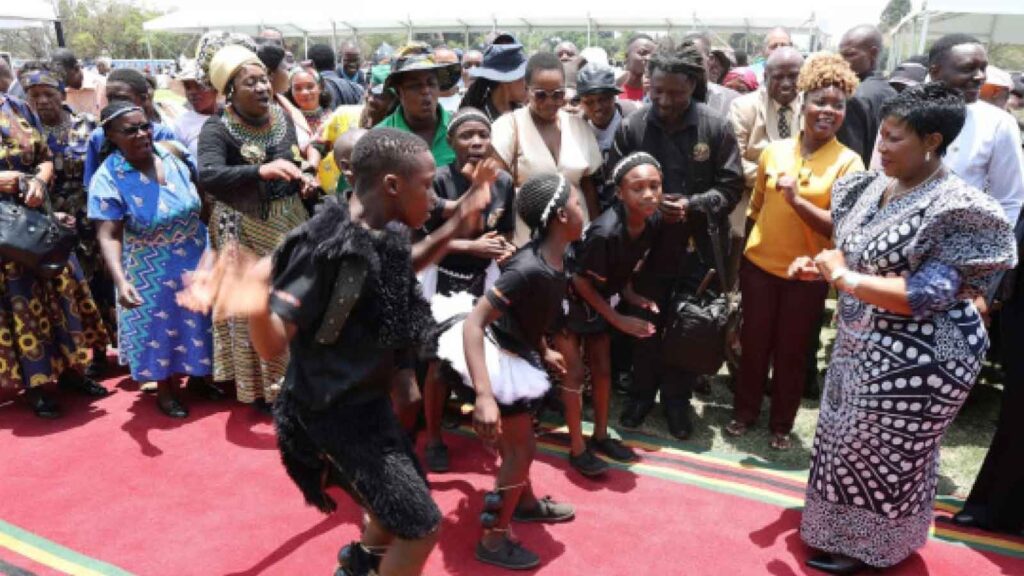
First Lady Dr Auxillia Mnangagwa joins learners in celebrating during performances at the launch of the Dakariso na Amai programme in Harare yesterday.
“As our elders wisely say, ‘Mbudzi kudya mufenje hufana nyina.’ Character is not built overnight when a child is already grown; rather, it is shaped early. Our daughters have just completed Grade Seven and are standing at the threshold of adolescence and secondary school. This transition stage is critical,” she said.
The First Lady said the programme would expose girls to lessons in self-respect, personal hygiene, hard work, humility, financial literacy, domestic skills and respect for elders.
“When we nurture a girl child properly, we are not just raising one individual; we are raising a future mother, a leader, an entrepreneur and the moral backbone of an entire nation,” she said.
Under the programme, Dr Mnangagwa said girls would receive mentorship in a secure and supportive environment, guided by experienced aunties, elders and professionals.
The Culture and Heritage Ambassador said the traditional mentorship approach was expected to provide girls with an opportunity to discuss issues affecting their growth and development while receiving guidance on personal conduct, relationships, responsibility and the importance of education.
Dr Mnangagwa said that while modern education and technology had opened new opportunities for children, there was an urgent need to revive cultural values, not to take girls backwards, but to anchor them firmly in their identity as proud Zimbabwean women.
“As we are living in a rapidly changing world, there is an urgent need for a resurgence in cultural values. While modern education and technology have opened wonderful doors for our children, we cannot ignore the erosion of the very cultural values that once held our families and communities together,” she said.
Dr Mnangagwa expressed concern over the challenges confronting young girls, including negative peer pressure, early child marriages, substance abuse and the unguided influence of social media.
She said children who grew up disconnected from their culture, identity and heritage were more vulnerable to negative influences.
“When a tree loses its roots, even a gentle wind can bring it down. In the same way, when our children lose touch with their culture, identity and heritage, they become vulnerable to every passing storm,” she said.
The First Lady said Dakariso na Amai was therefore intended to anchor girls in their Zimbabwean identity while equipping them with values and life skills to navigate the challenges of adolescence.
She said the transition from primary to secondary education was particularly important, making it necessary to guide girls before they entered a new phase of their lives.
Dr Mnangagwa said the programme was not intended to replace formal education, but to complement it by addressing aspects of upbringing that were equally important in shaping responsible citizens.
The First Lady emphasised that parents and guardians remained central to the success of the initiative, saying the upbringing of children was a shared responsibility involving families, communities and the nation.
Quoting the Shona proverb, “Rume rimwe harikombi churu”, she said no single individual could successfully raise a child without the support of others.
“Raising a child is a shared partnership between the home, the community and the nation,” she said.
Dr Mnangagwa said the launch also provided an opportunity to celebrate the girls who had completed their Grade Seven examinations, describing the milestone as an important step in their academic journeys.
The Culture and Heritage Ambassador thanked parents and guardians for bringing their daughters forward to participate in the initiative, saying their presence demonstrated a commitment to shaping not only the girls’ academic futures, but also their character and moral values.
Dakariso na Amai adds to Dr Mnangagwa’s longstanding efforts to revive traditional mentorship spaces through the Nhanga/Ixhiba programmes and interactive Boys and Girls Camps, which provide platforms for transmitting cultural knowledge, life skills and values to younger generations.
Dr Mnangagwa also humbly appealed to parents and guardians to allow their children to participate in the initiative, which is scheduled to be held in Mashonaland Central Province. The appeal was readily embraced, with some parents calling on her to extend the programme to their respective communities.
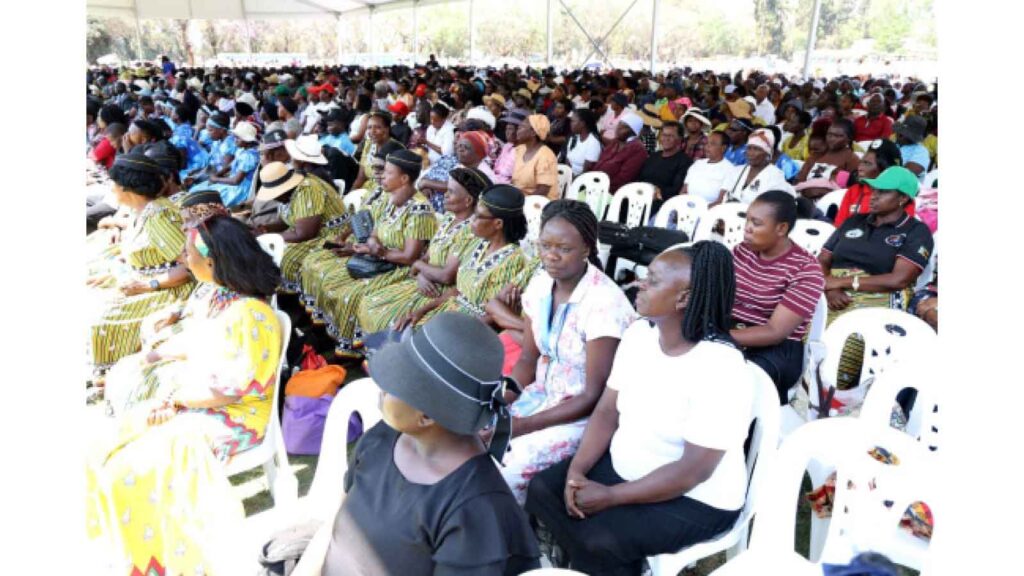
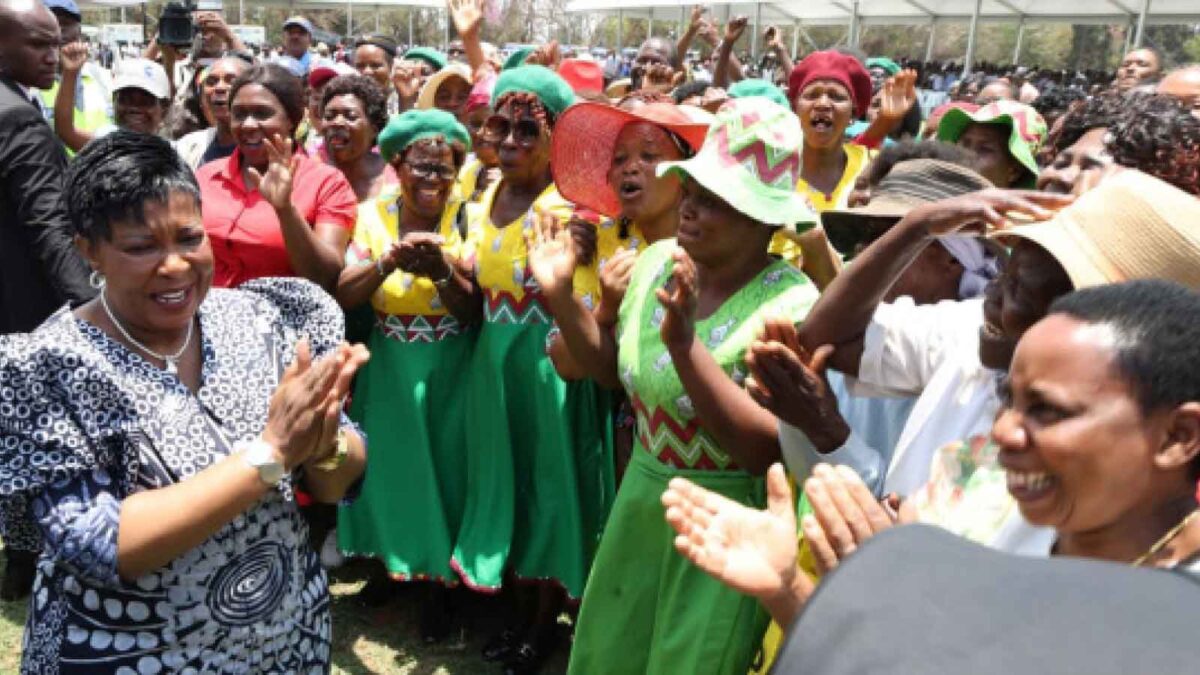
Parents and guardians follow proceedings during the launch of the oversubscribed Dakariso na Amai programme in Harare yesterday.
Boys will also undergo mentorship sessions at the same venue, aimed at guiding them through adolescence, instilling discipline and promoting responsible behaviour as they navigate this important stage of their lives.
The First Lady encouraged parents to actively engage with the programme, leading an interactive session in which she urged them to ask questions and share their concerns to ensure that it met their daughters’ needs.
An elderly woman broke into ululations, expressing her joy and gratitude to the First Lady for reviving traditional values and giving children an opportunity to reconnect with their cultural roots.
She said the programme had renewed hope that the values which once guided families and communities would be passed on to younger generations.
“We thank you for bringing back our culture. I feel so relieved and happy, and my heart is filled with pride. Mother of the nation, our traditions are coming back, and you have taken it upon yourself to teach our children what we had almost lost and failed to pass on.
“We are happy that our children will once again learn our cultural values. I believe they will return home with renewed respect for their mothers and fathers and learn to conduct themselves properly, even if they had previously been influenced by negative behaviours, including drug and substance abuse,” she said.
A man said the programme had given fathers an opportunity to express their concerns about their children’s upbringing, welcoming the First Lady’s initiative and expressing hope that mothers would learn from her example.
“At home, we are increasingly finding it difficult to guide and discipline our girl children, particularly when it comes to their dressing.
“Some girls wear indecent clothing, including very short shorts (bum shorts) and tight gym leggings, and even go into the city centre dressed that way. We thank you for this programme and hope it will help address such issues,” he said.
A woman also said the programme was necessary for some families, where wives were enduring difficult circumstances because of husbands who returned home intoxicated and caused distress. She said such men were also in need of the guidance and values being promoted through Dakariso na Amai.
An elderly woman said the Dakariso na Amai programme had taken her back to the traditional mentorship sessions they experienced growing up, when they visited their aunties during every school holiday for guidance on important aspects of life.
“Personally, I would travel all the way from Guruve to Chiweshe to spend time with my aunties, who taught us traditional values and matters we could not openly discuss elsewhere. They guided us on many things, including household responsibilities and everyday chores such as fetching water.
“We would be told to go and spend time with our grandmothers in the village. Sadly, these important traditions have gradually disappeared, yet they played a significant role in shaping our upbringing. Thank you for bringing them back,” she said.
Harare Metropolitan Province Minister of State for Provincial Affairs and Devolution Senator Charles Tawengwa, represented by the Permanent Secretary in his office Dr Shingirai Mushamba, commended the First Lady for introducing Dakariso na Amai, saying it would help nurture responsible and culturally grounded young women.
He said the initiative drew on the wisdom of traditional mentorship in preparing girls for the challenges of adolescence and adulthood.
Dr Mushamba also congratulated Dr Mnangagwa on receiving the International Women Icon Award 2026 from Malaysia’s Binary University Centre for Women in Leadership.
He said the recognition reflected her humanitarian work through the Angel of Hope Foundation, particularly in supporting vulnerable families and communities.
“It is a source of pride for Zimbabwe that work rooted in our communities has earned recognition beyond our borders,” he said.
Director Provincial Coordinator Mrs Catherine Kampila said Dakariso na Amai was a timely intervention that would help restore the traditional values and guidance needed to shape responsible young women.
She said Dr Mnangagwa’s longstanding engagement with children, parents and communities through the Angel of Hope Foundation had given her a deep understanding of the challenges facing families.
Mrs Kampila said the First Lady’s work had consistently emphasised the importance of nurturing children, strengthening families and equipping young people with values to guide their lives.
“She has always been there for our children and communities, guiding, teaching and demonstrating the values that help shape responsible members of society,” she said.
Mrs Kampila said Dakariso na Amai would provide an important platform for passing cultural knowledge, life skills and moral values to the girl child.
Amid growing moral decay, including rising drug and substance abuse and the erosion of cultural values that threaten young people and tear families apart, Dr Mnangagwa continues to champion initiatives to restore moral values and safeguard the country’s future generations.