Rutendo Nyeve-Victoria Falls Reporter
THE expansion of Hwange Power Station has triggered fresh economic activity across mining, manufacturing and transport, with the 600-megawatt project creating demand for coal, limestone and rail freight while supplying industrial by-products to cement and fertiliser manufacturers.
The ripple effects of Units 7 and 8 are extending beyond electricity generation, linking mining operations in Hwange and Mberengwa with limestone suppliers in Colleen Bawn and freight transport networks in the southern region.
The broader economic benefits were outlined by Hwange Electricity Supply Company (HESCO) director Engineer Wellington Maphosa this week during a presentation at the 2026 Zimbabwe Institute of Strategic Thinking (ZIST) annual conference.
HESCO, a joint venture between ZESA Private Limited and Sinohydro (Mauritius) Private Limited, operates the two 335-megawatt units.
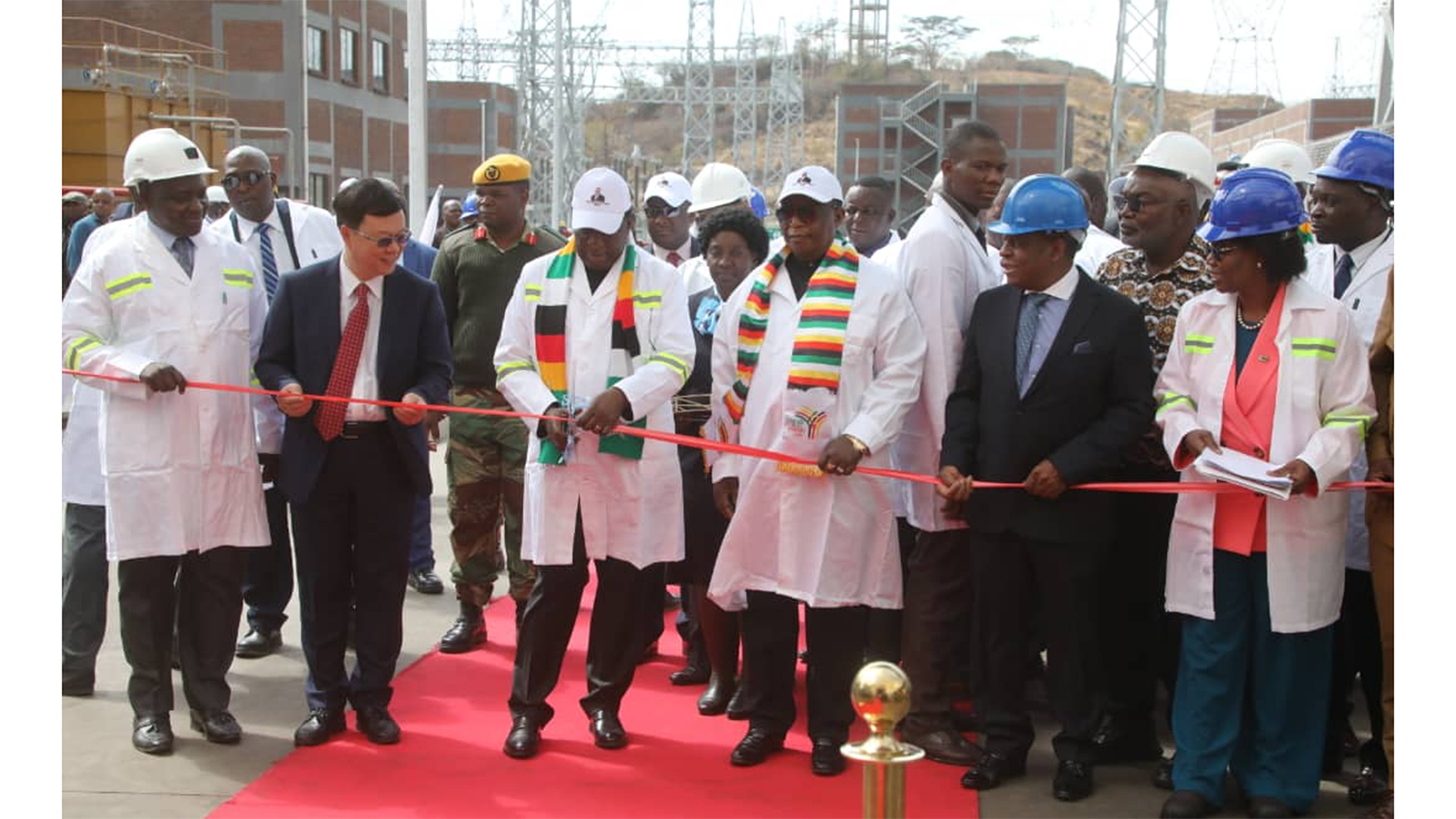
Commissioned in August 2023 by President Mnangagwa, the expansion project represents an investment of US$1,489 billion, funded by ZESA and China Exim Bank.
As a baseload power station, the expanded facility has strengthened electricity generation, supplying more than 50 percent of the local grid’s energy in 2024 and maintaining a load factor of approximately 93 percent.
Eng Maphosa said the project’s contribution should also be measured by the economic activity generated across other sectors.
“Infrastructure is the foundation upon which the economy of a nation is built. This landmark infrastructure investment was a resounding success, with benefits accruing to many sectors of the economy. It had high impact, visible and tangible results for the nation as a whole,” he said.
One of the biggest beneficiaries has been the coal mining industry, with the power station requiring about 6 000 tonnes of coal daily to sustain operations.
The demand has supported Hwange Colliery Company Limited, while the opening of Turbo Mine in Hwange has added another source of coal specifically supplying HESCO.
The increased demand has also stimulated local commerce and employment in the coal-mining town.
The benefits have extended to limestone mining, with HESCO requiring the mineral as part of its emissions-control processes.
Eng Maphosa said the demand had contributed to the opening of a new limestone mine in Mberengwa, while the company also sources supplies from PPC at Colleen Bawn.
Transporting limestone from Zvishavane and Colleen Bawn has created additional business for railway operators, supporting freight movement along routes in the southern region.
The plant’s industrial contribution also extends to manufacturing through the use of gypsum generated as a by-product of its operations.
“We are producing gypsum as a by-product, which is being utilised by cement and fertiliser companies,” said Eng Maphosa.
Beyond its contribution to industrial activity, HESCO has also become a significant contributor to Government revenue through Value Added Tax (VAT), which Eng Maphosa said had made the company Zimbabwe’s biggest VAT client.
The project has also created employment, with HESCO directly employing 89 Zimbabweans, while its partner, Sinohydro Gansu, employs a further 457 workers, the majority of whom are locals.
The expansion was implemented under the National Development Strategy 1 (NDS1) and is regarded as one of the major infrastructure investments supporting the country’s Vision 2030 development aspirations.
Eng Maphosa said the performance of Units 7 and 8 demonstrated the value of well-planned infrastructure investment.
“Hwange Units 7 and 8 represent one of the best-performing power plants in the world today, operating at very high reliability,” he said.
“A well-planned and well-executed infrastructure investment is good not only for us, but for our children’s children.”