

 Online Reporter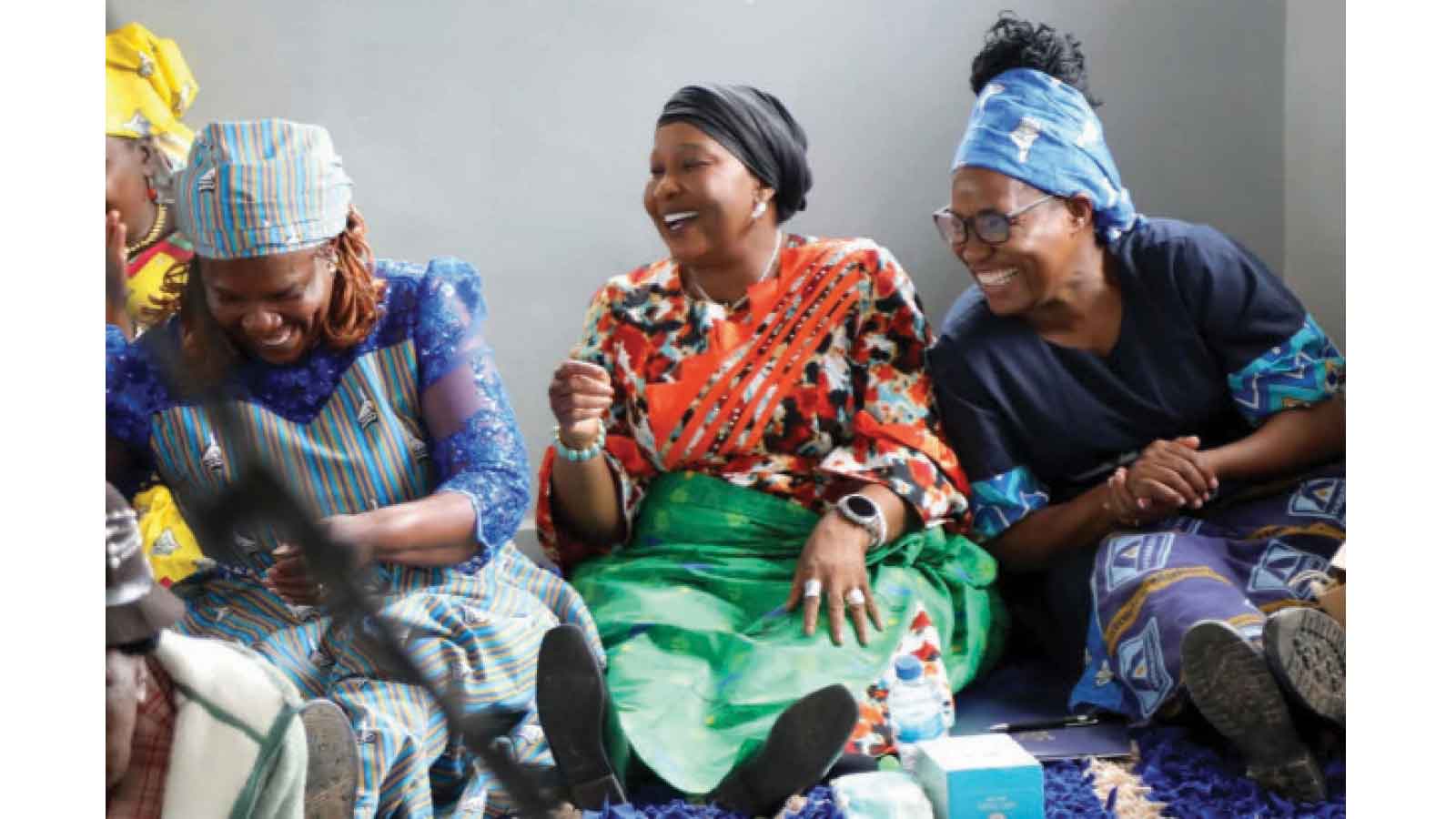
Blessings Chidakwa-Senior Reporter
CULTURE and Heritage Ambassador, First Lady Dr Auxillia Mnangagwa, continued with her engaging, lively Dare initiative, taking it to Chief Seke’s traditional court in Mashonaland East Province, where a sea of people gathered to witness how traditional courts handle community disputes.
Despite the chilly weather on Monday, villagers braved the cold and gathered in their multitudes, eager to witness justice delivered through the traditional court system.
What unfolded was more than a court session. It became a deeply moving experience of pain, reflection, forgiveness and healing as families laid bare their grievances before the traditional leadership.
Chief Seke’s traditional court heard several emotionally charged cases that exposed deep-rooted family disputes and social challenges affecting communities, including one of a man who claimed “Kusungwa pabonde” (failing to indulge in sexual activities) after being sexually bound by his wife over attempts to marry a second wife.
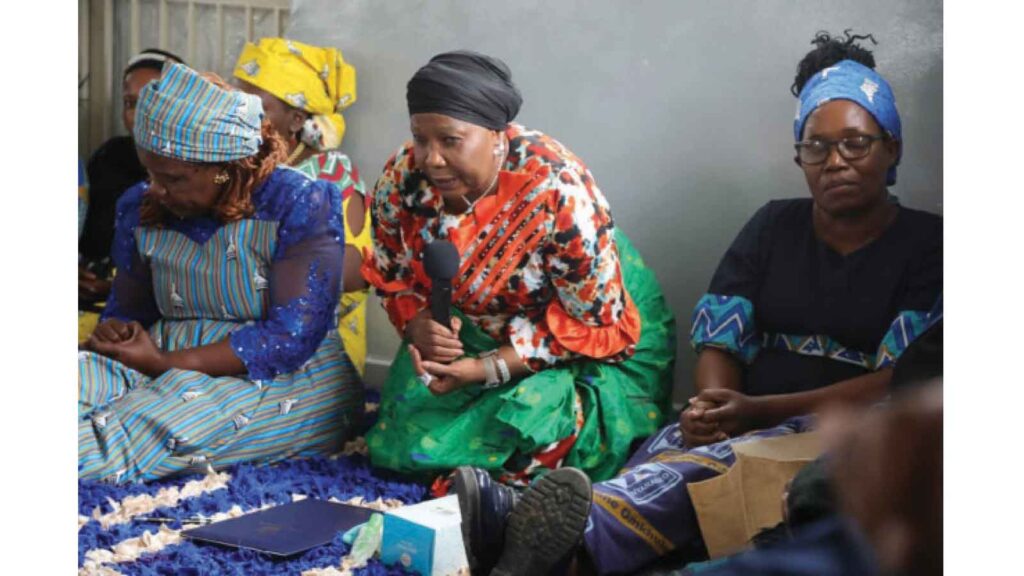
Culture and Heritage Ambassador Dr Auxillia Mnangagwa speaks after being invited by Chief Seke to unpack her Dare initiative.
Other cases involved those of kuromba (occult rituals), witchcraft, wizardry, inheritance and land disputes, among several others.
Many of the cases handled reflect similar concerns that continue to emerge through the First Lady’s toll-free Gender-Based Violence hotline, 575, which receives several calls from across the country.
The Dare initiative has already been rolled out in several provinces, including Mashonaland East, Mashonaland Central, Manicaland, Masvingo and Midlands, where communities have welcomed the opportunity to learn how traditional courts resolve disputes.
As tradition dictates, Chief Seke, accompanied by his council, sat at the front of the court facing attendees.
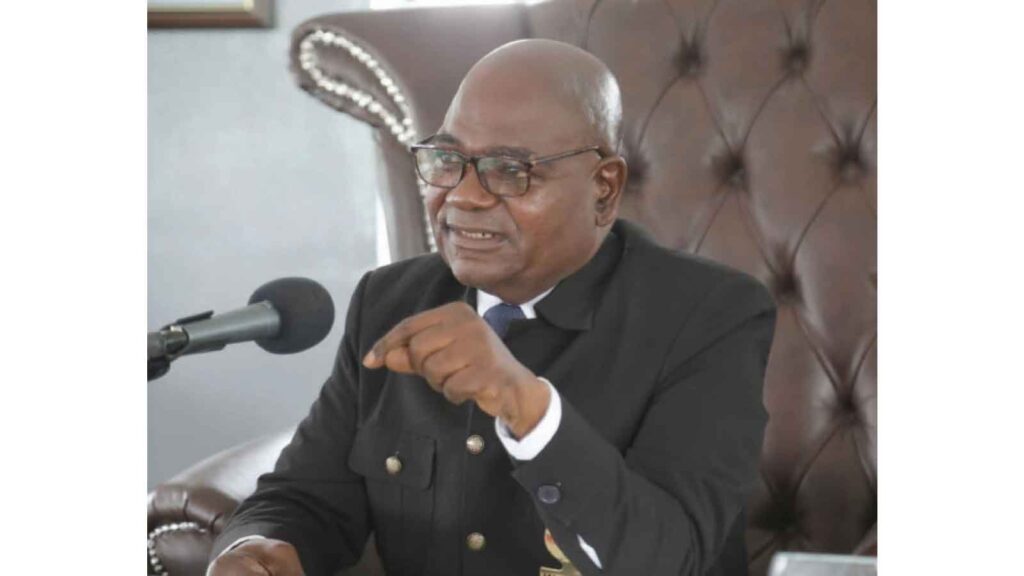
Chief Seke presides over a traditional court session in Seke.
Complainants and the accused, together with their witnesses, sat on benches in front, taking turns to speak after being given the opportunity by the Chief.
All women, including the First Lady, sat humbly on reed mats on the left side while men occupied chairs on the right side, a powerful symbol of respect embedded in traditional court proceedings.
One of the cases handled included a family dispute between Tanaka Chirume (27), who claimed abuse by her husband, Tendai Madzima (32), who, in turn, also complained of being sexually bound by his wife over attempts to marry a second wife.
Mrs Madzima brought the case, accusing her husband of assault, chasing her away from their matrimonial home to bring a girlfriend, bringing pants soiled with blood from other women and forcing her to wash them, taking her belongings and introducing other women into their home.
She explained that their marriage began in 2015, but problems worsened over the years, particularly after she became pregnant with their third child last year, when he reportedly started seeing a girlfriend.
When Chief Seke asked about the issue of girlfriends surfacing for the first time, the wife responded, “PaSecond born vaitawo sevamwe varume zvaiva nani asi pa third born zvanyanya.”
Madzima admitted to having relationships with other women, citing personal and marital difficulties.
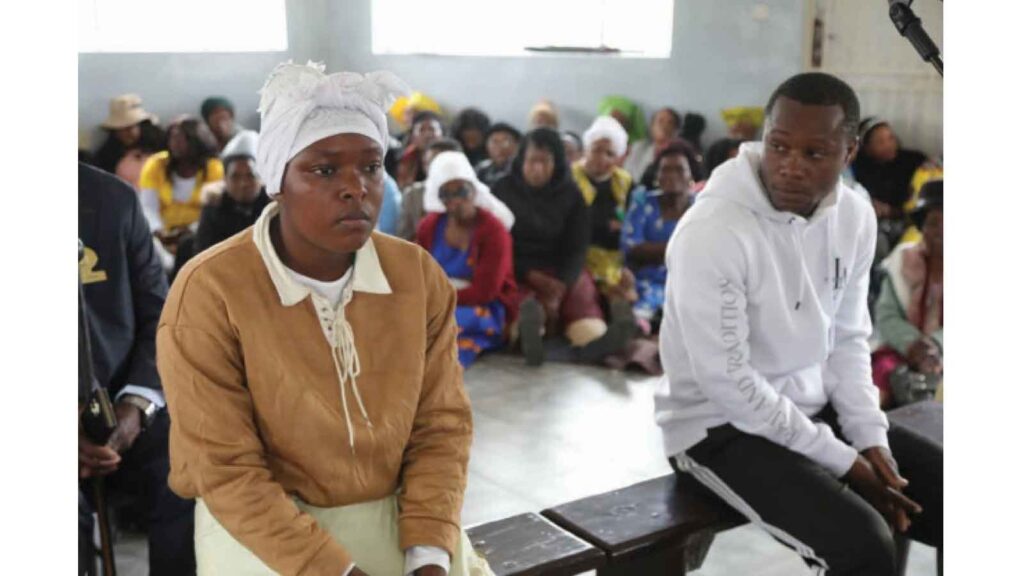
Tendai Madzima and his wife Tanaka Chirume appear before Chief Seke during a traditional court session in Seke.
He said that a major challenge was that his wife refused to allow him to marry a second wife, whom he claimed was hard to divorce since they had been dating for the past two years.
He left the court in laughter when he added, “Mukadzi arikuramba kuti nditore second wife. Akandisunga pabonde. Handichaita bonde kugirlfriend nekumba zvese. Ndokumbirawo kusunungurwa.”
Chief Seke advised him to consult a medical doctor, suggesting it might be a medical condition.
Madzima also denied intentionally harming his wife but acknowledged some of her claims, such as taking clothes and restricting her access to parts of the house.
Chief Seke listened carefully to both sides and reminded the parties of the importance of respecting family customs. He stated that, in their tradition, while men may be allowed to have more than one woman, proper procedures and traditions must be followed, guided by respect, honesty and proper conduct.
In his ruling, Chief Seke fined Madzima five goats to be given to his wife as compensation for ill-treatment, and one goat to him for wasting the court’s time.
He also advised Madzima to return home and reconcile with his wife, ensuring that household responsibilities and care of the children are restored to proper order.
Chief Seke also said culturally it was a disgrace that Madzima is yet to pay lobola for his wife, with whom he has sired three children, after having only paid Tsvakirai kuno.
The court also ruled that clothes taken by the girlfriend should remain with her, as taking them back could bring bad omen, given that they may have been tampered with through magic or juju.
Chief Seke emphasised that this was a corrective measure, not punishment, reminding both parties that the goal of the traditional court is reconciliation, respect for cultural values and maintaining peace within the family.
Regarding Mrs Madzima, who admitted to burning her husband’s girlfriend’s clothes, the Chief condemned such acts, stating that even when angry, clothes should be handed to a relative to serve as proof of promiscuity rather than being destroyed.
Another case involved a land dispute, which has been a thorn in the flesh in the peri-urban area. The case involved Robson Shonhiwa, who accused Themba Nzounhenda of invading his family’s communal land.

Environment Patron First Lady Dr Auxillia Mnangagwa, deposits fingerlings into a fish pond at Chief Seke’s homestead.
Robson alleged that despite attempts at negotiation to resolve the issue amicably, Themba refused to vacate the land, even bringing a lorry and erecting fences and a structure that was almost at window level, prompting him to report the case to Chief Seke.
Themba, from Chief Marange’s area in Manicaland Province, admitted occupying the land in 2021 after paying cash to Robson’s father’s brother, John, but only began developing it later.
In the court, it was heard that John has become notorious in the area for selling State land illegally, making him a known figure in such disputes.
After reviewing the matter, Chief Seke ruled that the land was communal State land, belonging to the President, and that neither Themba nor Robson had the right to sell it.
He emphasised that all actions taken were unprocedural and illegal.
The Chief explained that a village head has no right to settle anyone but can only officially accept a person in their area after recommending the matter to the ward assembly, in which the Chief also participates.
Chief Seke ordered Themba to demolish his structures and vacate the land immediately within two weeks, returning it to Robson so it could be managed under proper customary and legal channels.
Failure to comply would result in the Chief sending his messengers, together with council officials, to carry out the demolitions.
He also fined Themba a beast, to be paid by the end of March, as a strong message against those who abuse financial power to encroach on State land by bribing desperate individuals.
The Chief reminded both parties that traditional leaders act as custodians, not owners of land, and emphasised that State land must be respected in accordance with both law and custom.
Robson expressed gratitude for the Chief’s intervention, while Themba accepted the ruling and requested leniency regarding his punishment.
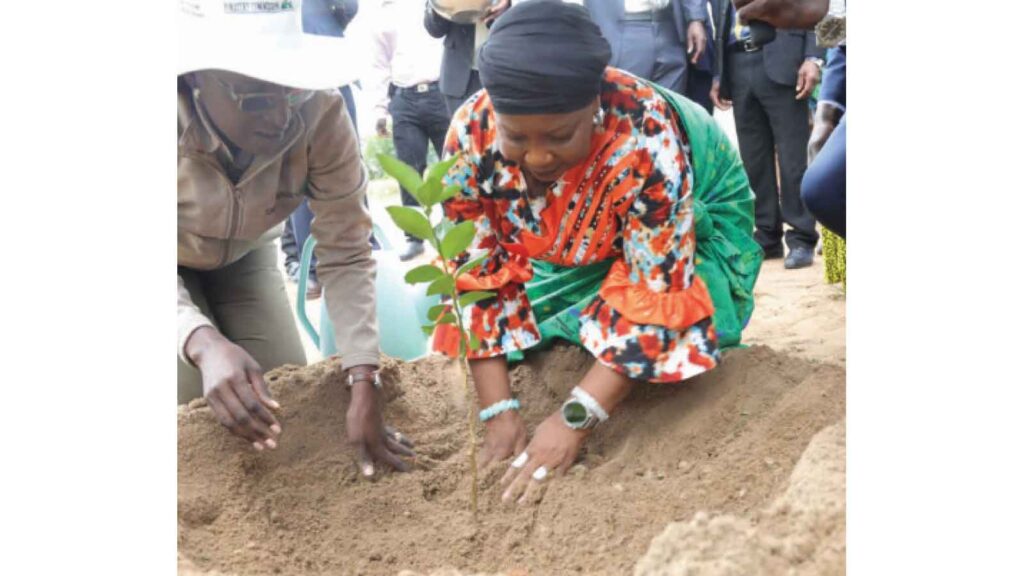
Environment Patron First Lady Dr Auxillia Mnangagwa plants a tree at Chief Seke’s homestead in Seke.
After the court proceedings, Chief Seke invited the Culture and Heritage Ambassador, Dr Mnangagwa, who had sat among the women throughout the session listening attentively, to unpack her Dare initiative.
Dr Mnangagwa thanked Chief Seke, together with all the country’s traditional leaders, for preserving the country’s cultural heritage, saying the erosion of traditional values has contributed to moral decay in society.
“I would like to thank you for the way you administer and govern matters here. The aim is for families to understand and uphold the traditional leadership and cultural values of our nation. Let us value our culture because if we do not value it ourselves, no one else will,” she said.
Dr Mnangagwa explained that the Dare engagements are meant to reconnect communities with their roots and recognise the role played by traditional leaders in resolving disputes since time immemorial.
The First Lady said the initiative also helps communities understand how cases are handled traditionally and the proper procedures to follow when such disputes arise.
“I appeal to all of us to return to our values and culture. We must respect our traditional leaders and know the proper way of handling community matters,” she said.
The Culture and Heritage Ambassador said that some matters are handled in both statutory and traditional courts, hence the need to be acquainted with proper knowledge of the traditional court systems.
“There is the modern court governance system, but we also have our own. Some issues are tried twice. For example, the issue of ngozi (avenging spirits) can cause suffering in families.
“When someone is murdered, the consequences follow us where we live, yet such matters are not addressed in the modern court systems. These are issues that are traditionally handled by our chiefs,” she said.
Dr Mnangagwa also talked about one of the most pressing issues of inheritance, saying when parents die, families are sometimes stripped of everything, even the smallest possessions such as a chicken or a plough.
She said culturally traditional courts are key in clarifying who is entitled to inherit what.
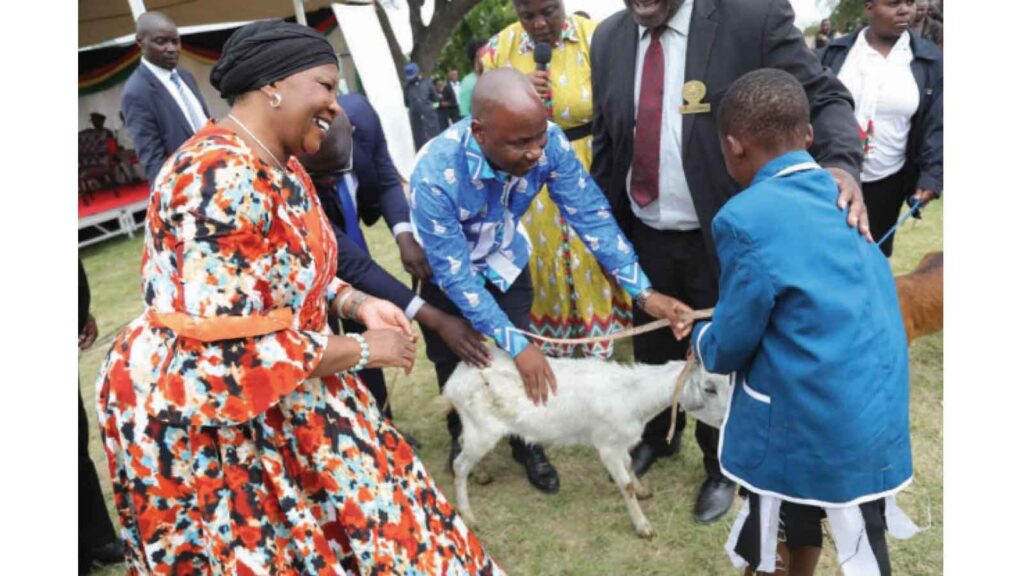
First lady Dr Auxillia Mnangagwa assisted by Minister of State for Mashonaland East Provincial Affairs and Devolution Itayi Ndudzo hand over a goat to a learner for goat pass on scheme in Seke.
Dr Mnangagwa also said chiefs’ wives should continue to take a leading role in mentoring girls while chiefs guide boys so that young people understand the country’s cultural values and responsibilities.
The First Lady also urged communities to confront social challenges such as child marriages, gender-based violence, prostitution, divorce and drug and substance abuse.
Addressing women ahead of Women’s Month, the First Lady encouraged them to be role models, practice good values and educate others in their communities.
Dr Mnangagwa urged parents and grandparents to teach the younger generation to live with integrity and embrace good manners.
The First Lady also highlighted the importance of mutual respect, appreciation and the elimination of gender-based violence.
After the dare session, Environment Patron Dr Mnangagwa had a busy schedule as she first placed fingerlings in a local pond before planting an orange tree alongside Chief Seke and Minister of State Itayi Ndudzo.
The tree planting initiative is part of the nationwide campaign to encourage tree planting as a way of life, a practice that improves air quality, prevents soil erosion, provides shade and supports food security.
Community members, including the elderly and people with disabilities, also benefited from the goat pass-on project launched by the First Lady in 2019.
The initiative provided goats to households, enabling them to start income-generating ventures and improve livelihoods.
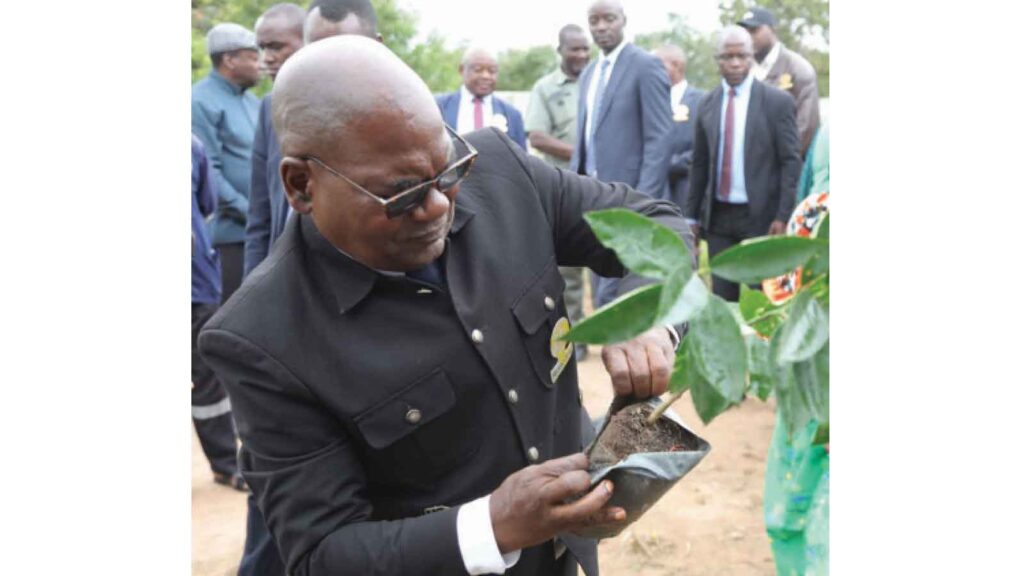
Chief Seke prepares to plant a tree at his homestead in Seke.
The First Lady also came face to face with another fruit of her project to female parliamentarians after being given tomatoes.
Mashonaland East Province Chiefs Council chairperson, Senator Chief Nechombo, thanked the First Lady for giving traditional courts the respect they deserve and emphasised the importance of preserving cultural practices.
He urged communities to strengthen governance by upholding the authority of local courts, saying protecting these institutions ensures justice is delivered fairly and transparently.
Chief Seke also applauded the First Lady for bringing the Dare initiative to his community and pledged to continue promoting cultural restoration.
He also acknowledged several empowerment initiatives championed by the First Lady, including the goat pass-on scheme, which seeks to uplift people economically.



