Blessings Chidakwa-Senior Reporter
FIRST LADY Dr Auxillia Mnangagwa took her flagship Doek Drive to Manicaland, turning the province into a vibrant living gallery of culture, dignity, respect and womanhood, as elderly women donned colourful doeks and neatly wrapped zambias.
After its popular launch in Shamva, Mashonaland Central province, the initiative moved to Manicaland, where multitudes gathered to witness the growing movement that is placing the traditional doek and zambia at the centre of African womanhood.
The doek and zambia — more than just attire — stood out as enduring symbols of African pride, a reminder of values rooted in modesty, honour and self-respect, and a firm declaration that Zimbabwean culture remains alive and cherished. This initiative, which is steadily spreading across the country, continues to promote pride, identity and respectable dressing among women while uplifting the vulnerable through practical support.
All the elderly women in attendance received brand-new doeks, wrappers, women’s innerwear, blankets and groceries, sparking joy and emotion as the traditional headgear, long regarded as a mark of respect, honour and womanhood, took centre stage.
In the spirit of celebrating the cultural month, many attendees at Rowa Primary School, under the Mutare Rural District Council, also wore the national fabric, adding flair and elegance to the lively gathering, which became a true festival of heritage.
Pregnant women were also not left out, as they received preparation kits, bringing smiles and renewed hope as the First Lady extended her warm hand of support to mothers-to-be.
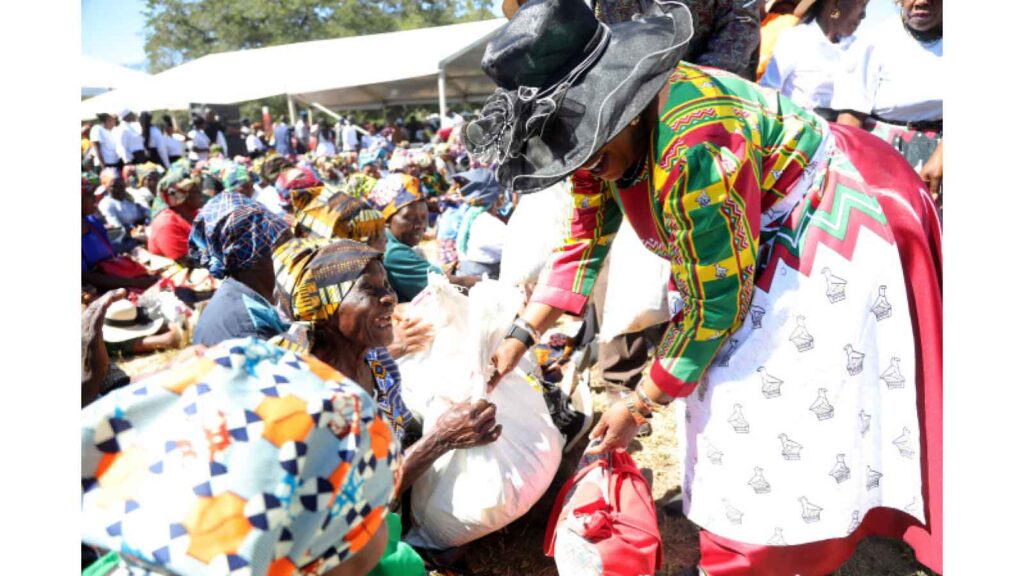
First Lady Dr Auxillia Mnangagwa hands over food hampers to elderly women during her Doek Drive in Zimunya.
In a complementary gesture that went beyond clothing to uplift the vulnerable, attendees went home with goodies including blankets, groceries, mealie meal and brand-new clothes.
Speaking at the highly packed event, Dr Mnangagwa said the Doek Drive was inspired by the need to restore and safeguard the dignity of women, emphasising that the doek and zambia are not merely garments but important symbols that carry deep meaning in the lives of women.
“I have come with the Doek Drive, an initiative that symbolises modesty and promotes confidence, self-respect and dignity among women. It also helps to shape good character and encourages respectful conduct. When a woman carries herself with pride, decency and honour, she commands respect and silences those who may wish to speak ill of her,” she said.
The message from the First Lady was clear: Dignity must be protected and every woman deserves to stand tall, wrapped in pride and supported with love.
“Our way of dressing, speaking and the manner in which we conduct ourselves even at gatherings must reflect that we are mothers. We must return to proper standards and remain grounded as women.
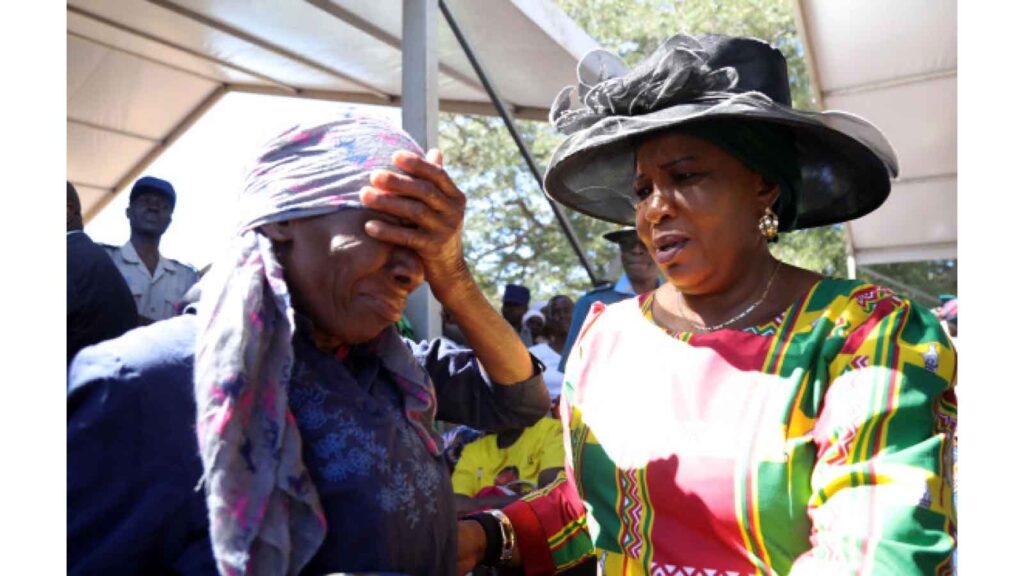
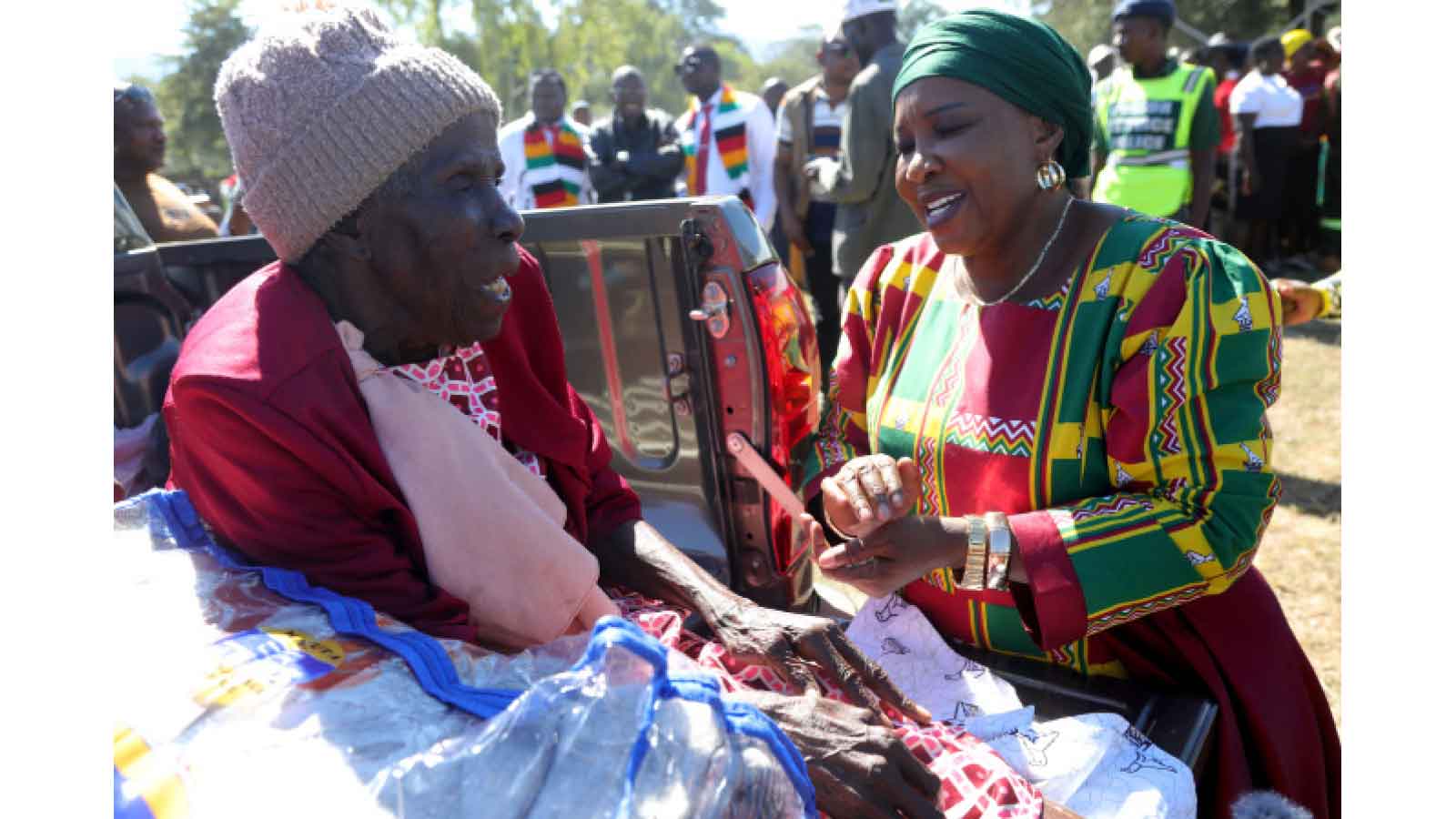
First Lady Dr Mnangagwa listens attentively as an elderly woman sheds tears of joy at the Doek Drive in Zimunya.
“I have come with the First Lady’s Doek Drive to dress our elderly women so that they may lead by example and remind us how these garments are properly worn, as a symbol of dignity in a woman,” she said.
Dr Mnangagwa, who also wished the women a belated Happy Mother’s Day, warned against social ills, urging communities to uphold discipline and good morals.
Mother Zimbabwe said misbehaving often damages one’s standing in society. During an interactive session, she invited the audience to share some of the nicknames people earn as a result of their behaviour.
Among the answers were “Network or Booster (munhu ane nyaya dzemunhu wose)”, “One Gig (munhu wokuti akanzwa chinhu anoremerwa)” and “Todyirepi (munhu anongosvika nguva yekudya chete).”
Other names mentioned were “Thermometer (munhu anogara nekasaga muhapwa kekukumbira)”, “Chengedama or Mafikizolo (munhu akangwarisa)”, “Social media and Carrier, or Ndaremerwa (munhu ane makuhwa)”.
Dr Mnangagwa urged women to reflect on their lives, leaving behind past practices and embracing a better way of living, saying that some of the names currently being used are not appropriate and should be phased out within communities.
The Culture and Heritage Ambassador highlighted that during Culture Month, emphasis should be placed on promoting cultural identity while reflecting on culture holistically, including the wearing of the national fabric, traditional cuisine and gastronomy as key expressions of heritage.
Mother Zimbabwe also encouraged young people to take their academic pursuits seriously and to conduct themselves responsibly, while inviting them to reflect on the qualities they would value in a future life partner.
Among responses from girls that left the crowd in stitches were: “Handidi mukomana akaboora nzeve, anopfeka mhete nedurag or bandana”, “Handidi anorukwa musoro”, “Handidi mukomana anopfeka drip”; “Ndoda anopfeka formal”, “Handidi mukomana anopfeka bvaru-bvaru” and “Handidi anopfeka mabhurukwa five asingagezwi”.
Responses from boys were: “Handidi musikana ane tint mumusoro, ane mohawk, achipfeka short nevest inobudisa mukaka” and “Ini ndoda musikana akarongeka, ane unhu, anogadzirisa zvinhu asingamiriri kuudzwa”.
Dr Mnangagwa further encouraged women to raise and nurture well-rounded girls, noting with concern that some young girls were struggling to perform basic household duties.
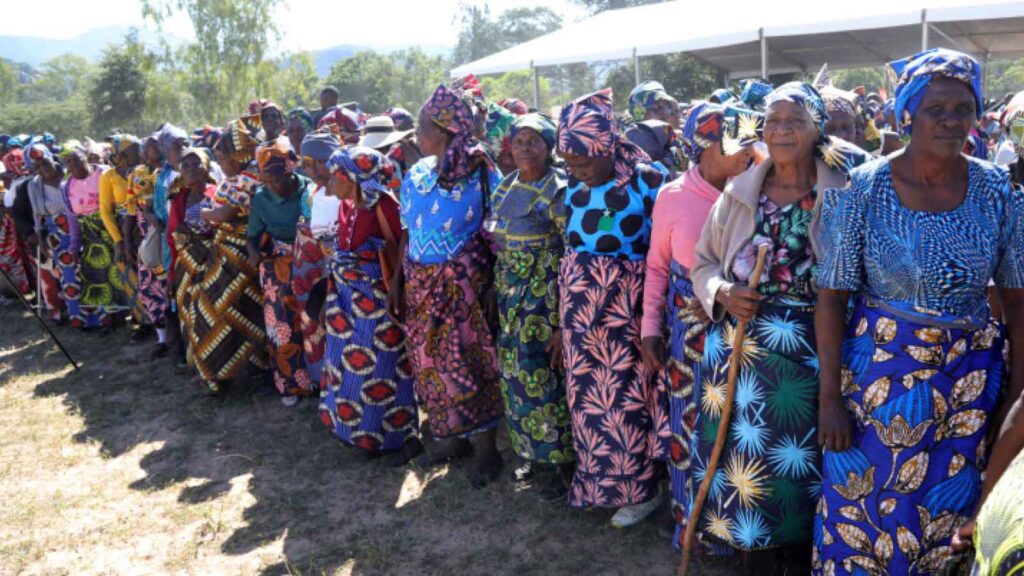
Elderly women proudly pose in their doeks and wrappers received from First Lady Dr Mnangagwa during the Doek Drive in Manicaland.
“If a young girl is unable to prepare traditional meals such as sadza, it is a matter of concern. We must return to the practice of teaching our children essential life skills, including how to cook, how to care for themselves and how to conduct themselves with dignity and responsibility.”
The First Lady also provided women from the community and various churches with an opportunity to teach fellow community members on key issues, including cultural values, the importance of eating traditional foods, gender-based violence and the need for hard work in supporting their families.
The women, including Mrs Margaret Parirenyatwa, Mrs Mushakavanhu, Mrs Zimunya and Mrs Razunguzwa, built on the First Lady’s teachings, emphasising the importance of restoring cultural values. They highlighted modest dressing, the proper use of doeks and zambias, and maintaining cleanliness and respect in the home as key to preserving dignity, strengthening marriages and reducing gender-based violence, while urging families to embrace peace, responsibility and hard work.
They also encouraged the promotion of traditional foods and decent dressing that reflects respect and identity. In addition, they urged women and young people to be hardworking, start small businesses and projects, and become self-reliant, while expressing concern over rising cases of divorce and abuse in families.
Energetic, popular Evangelist Nelly Gwatidzo emphasised the importance of decent dressing, saying it reflects discipline and respect.
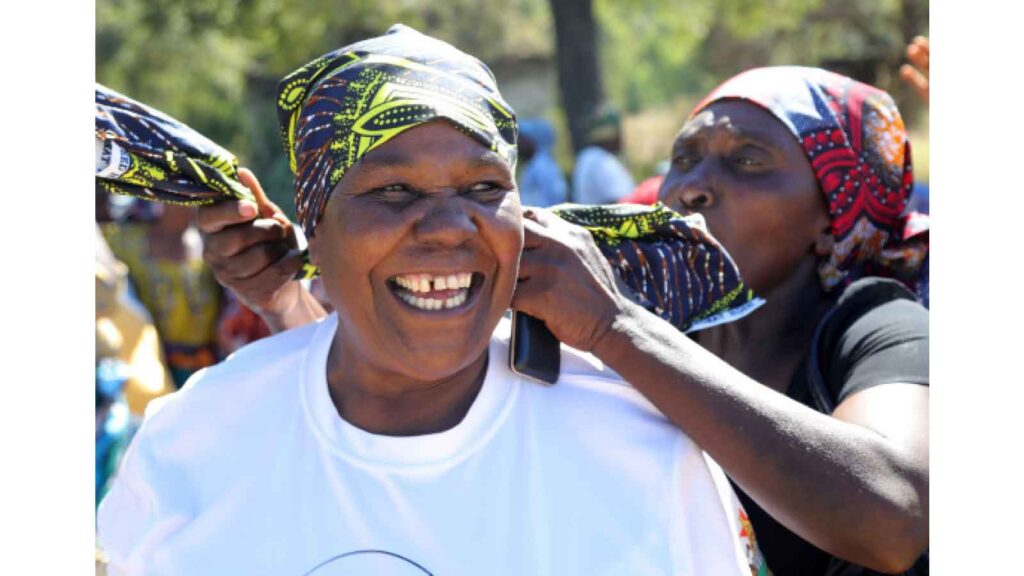
An elderly woman smiles as she is assisted to tie her doek in Manicaland.
“The First Lady is saying that indecent dressing is not acceptable. When you are indecently dressed, it does not mean you are fashionable or attractive: You are exposing yourself unnecessarily, and what is exposed can easily attract temptation. She is also saying: Tie your doek properly. A doek is like a number plate; it identifies a respectful and dignified woman. This is even supported in the Bible, in the church and in our communities.”
Evangelist Gwatidzo said even in churches, pastors sometimes find it difficult to maintain focus due to indecent dressing by some women, hence the need for a zambia and doek.
“The First Lady is saying we must not cause our brethren to stumble before God. Dressing must reflect our culture, dignity and values. Also, young men should wear trousers that fit properly.”
For the beneficiaries, the donations meant far more than clothing and groceries, as many described them as a restoration of dignity and renewed confidence.
Gogo Nelia Chesa said the items they received had restored their dignity and respect as elderly women.
“The First Lady gave us blankets, zambias, doeks and innerwear. We are very happy because these items bring us respect and make us feel dignified as older women. The doek is important because it covers the head and signifies respect for a woman in society,” she said. “Zambias ensure that a woman’s body is properly covered and respected.”
Gogo Sekai Tigere said she was grateful and felt honoured.
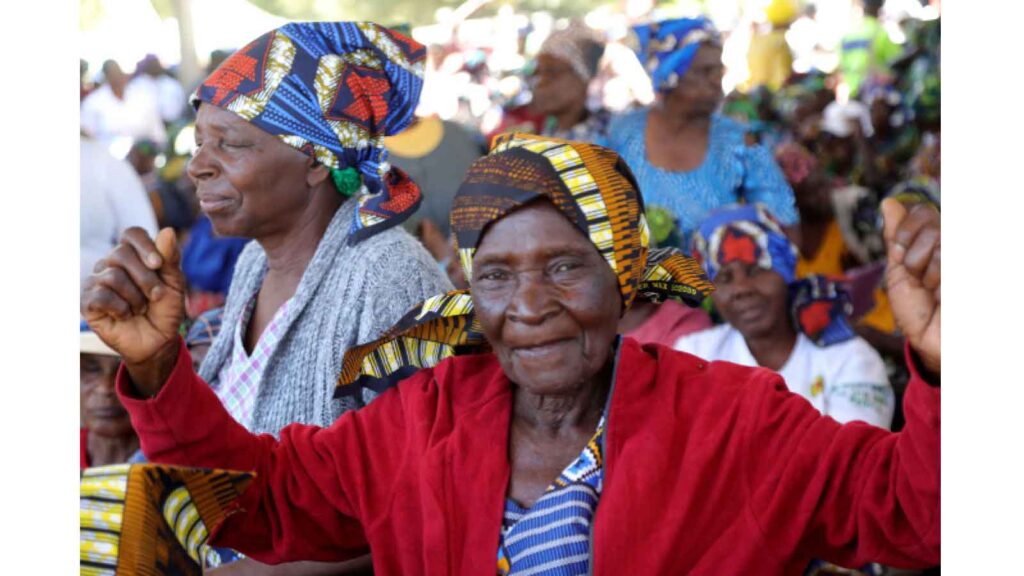
Elderly women beam with pride while posing in doeks during the Doek Drive in Manicaland.
“I am very happy and I thank our First Lady from the bottom of my heart. The doeks and innerwear make me feel respected and honoured as an elderly woman,” she said.
“This support shows true care. I am proud to be part of this initiative. It shows that we are still valued in society.”
Gogo Clara Khumalo said she was deeply grateful, especially as winter approaches.
“We are very thankful for the blankets. Winter is coming and these blankets will keep us warm during the cold days. Even the food, we do not have enough words to express our gratitude to our First Lady,” she said.
Gogo Enny Grace Nyabeze said the gesture had also warmed their hearts.
“We are very grateful for the blankets because winter is near and they will help us keep warm. The First Lady has done a good thing for us. We feel loved and remembered,” she said.
Expectant mothers were also delighted after receiving preparation kits to support them.
Mrs Melisa Mapani expressed gratitude, saying the assistance had brought relief and comfort during pregnancy.
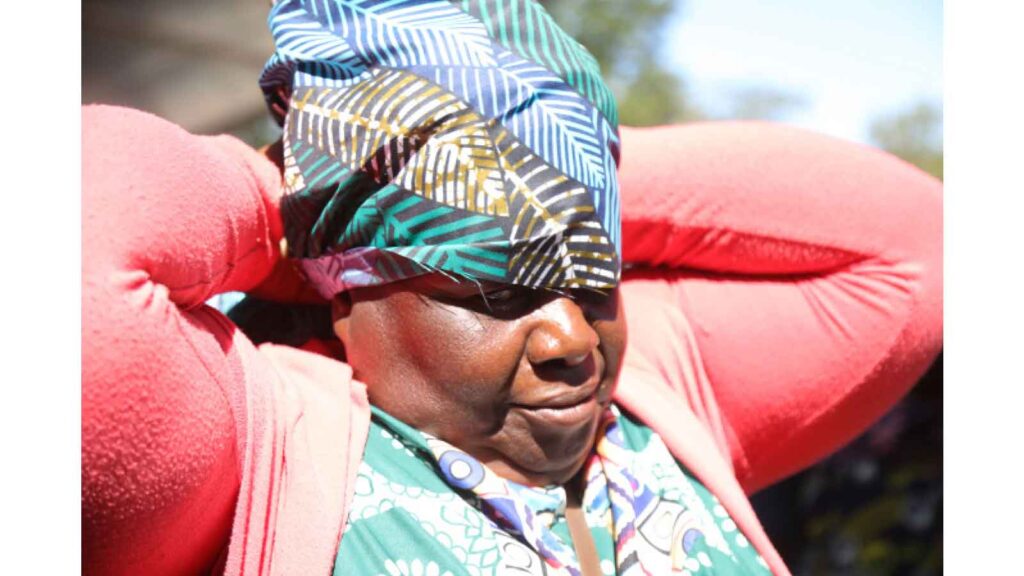
A woman adjusts her doek during the Doek Drive in Manicaland.
“I am truly thankful for the baby preparation kit. It has helped me a lot as I prepare to become a mother. This kindness has made me feel valued and strong as I wait for my baby,” she said.
Mrs Patience Chikwatu said she was overjoyed to receive the baby preparation kit.
“I am very happy and thankful for this support. As an expecting mother, these items have helped me prepare for my baby with peace in my heart. I feel remembered and cared for,” she said. “This gift has reduced my worries. I now feel more ready to welcome my child.”
Manicaland Minister of State for Provincial Affairs and Devolution Advocate Mugadza said the Doek Drive carries deep cultural and symbolic significance, describing it as a programme that strengthens identity and values.
“We recognise that social cohesion and cultural pride are the foundation of meaningful economic progress. A woman who is respected and empowered remains the pillar of a strong household and, by extension, a thriving province. You are not a visitor to our province, but a partner in its development,” he said.
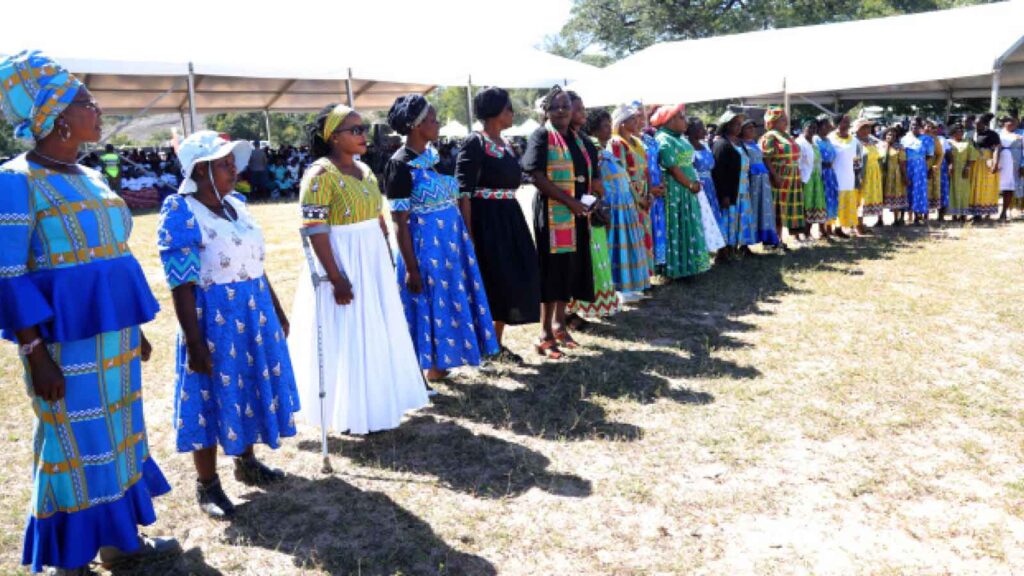
Women showcase the national dress during the Doek Drive in Manicaland.
“In our Zimbabwean culture, the doek is more than just a piece of cloth. It is a crown of respect, a symbol of womanhood and a mark of the dignity that our mothers and sisters carry with them each day.”
Primary and Secondary Education Deputy Minister Angeline Gata said the initiative strongly resonates with the country’s rich cultural heritage and moral foundation.
“Thank you for the lesson you have given us, our First Lady. We have learnt that the doek is a symbol of dignity and respect, and it helps remove negative labels that are sometimes placed on women. When a woman wears it, she carries herself with dignity, as symbolised by both the doek and the zambia. Let us honour and celebrate the women who are shining in our communities,” she said.
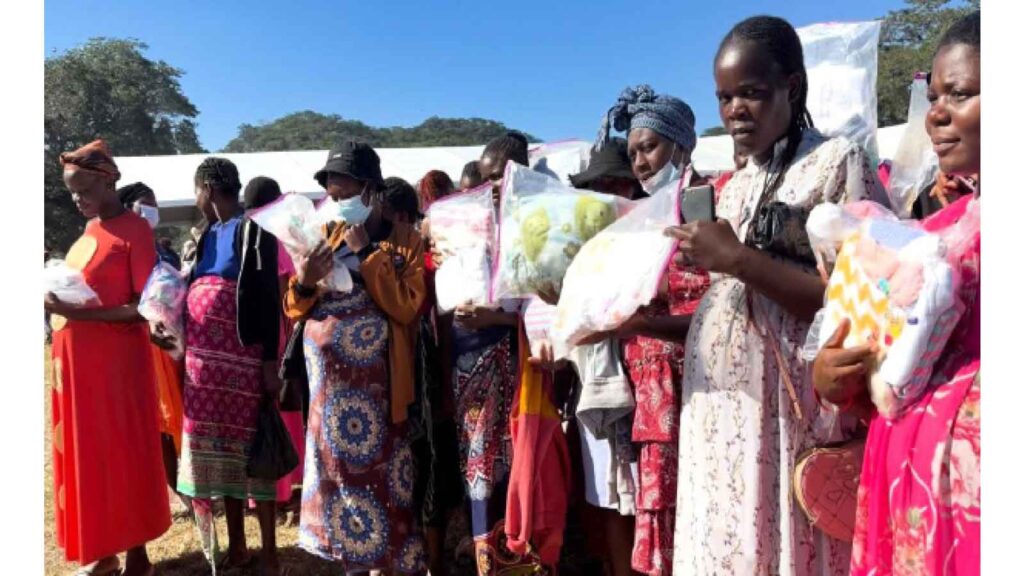
Expectant mothers carry baby preparation kits they received from First Lady Dr Mnangagwa in Zimunya. — Pictures: Justin Mutenda.
The community, including the Church, hailed the First Lady’s programme, saying it speaks directly to the everyday challenges faced by women, while offering a culturally grounded intervention that celebrates womanhood and restores self-worth.
Johanne the 5th of Africa International Church, led by Archbishop Dr Andby Makururu, said the initiative being spearheaded by the First Lady is playing a pivotal role in cultural restoration.
“This is a good initiative. A doek and a zambia give a woman a proper identity and restore dignity. This also gives our country a good standing. Our Ubuntu and Christianity work hand in hand,” he said. “We were delighted to witness our elderly women being remembered by our First Lady. This shows that our mother loves this country wholeheartedly. This initiative unites Zimbabweans and, as the Church, it also makes our worship easier and more meaningful.”
Launched in Mashonaland Central province earlier this month, the First Lady’s Doek Drive is expected to be rolled out across the country.