Online Reporter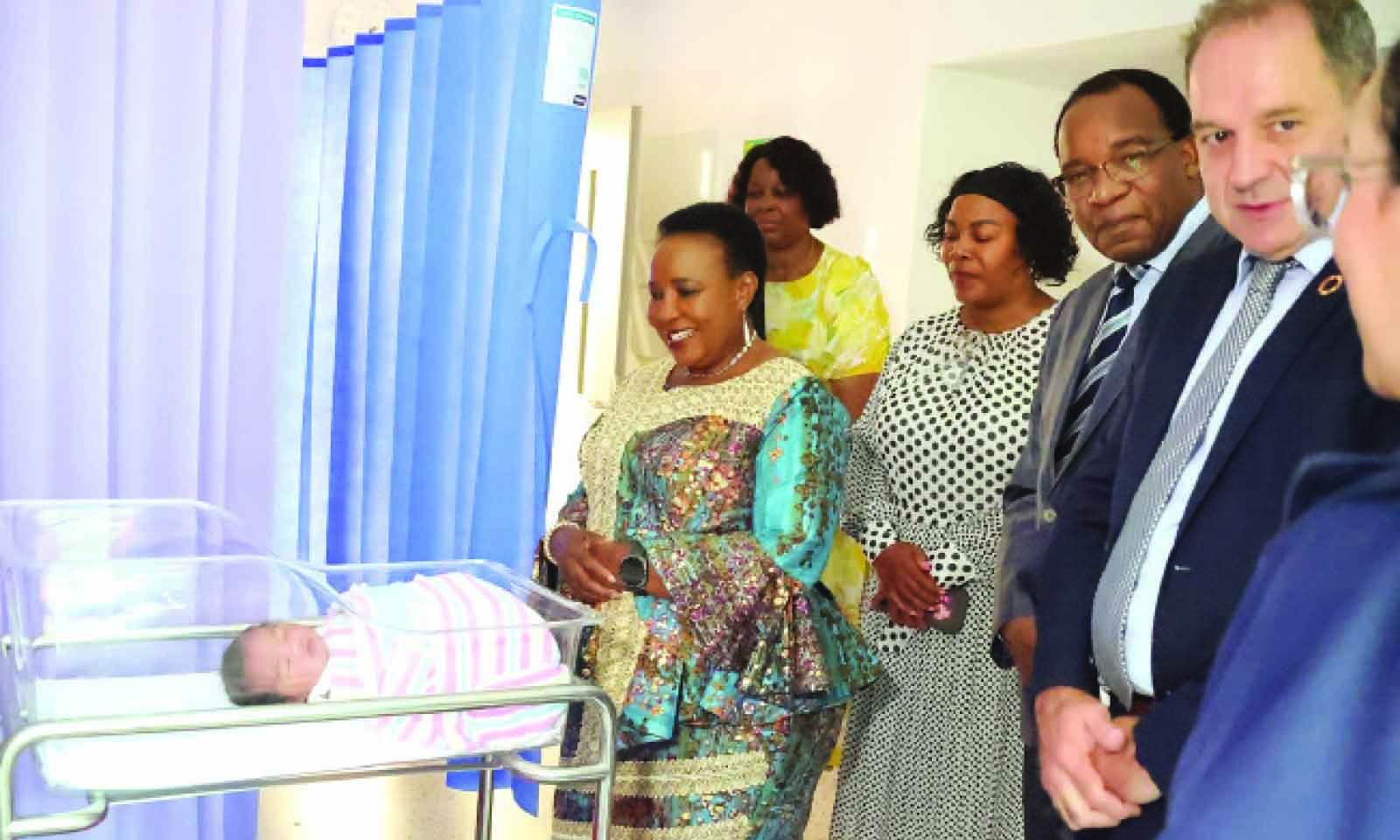
Tendai Rupapa-Senior Reporter
THE country’s Health and Child Care ambassador, Dr Auxillia Mnangagwa, who is also the Angel of Hope Foundation (AoHF) patron, yesterday toured Blacktown Hospital in Western Sydney, Australia.
She visited its maternity and children’s wards, radiation oncology department and the diabetic outpatient unit, among other units, to appreciate their operations and assess areas of possible partnership with Zimbabwe.
Amai Mnangagwa, a philanthropist-par-excellence, was invited to Australia to receive medical equipment from charity and healthcare organisations. Amai Mnangagwa’s delegation includes a medical practitioner.
Other issues discussed include staff exchange and skills transfer between Blacktown’s medical staff and Zimbabwe’s nurses and doctors.
Blacktown Hospital expressed a lot of interest in twinning with Zimbabwean hospitals, particularly in terms of decommissioned equipment, which they can donate to Zimbabwe.
Back home, the First Lady works with hospitals and clinics around the country, mobilising resources and equipment for them through her foundation and its partners.
She believes access to healthcare services, especially for women and children, is critical, hence ensuring their well-being is her main goal.
Blacktown Hospital offers a comprehensive bouquet of healthcare services, including emergency care, as well as surgical, medical, maternity, paediatric, mental health, rehabilitation, imaging and diagnostic services.
They have been following the First Lady’s work through her foundation that is benefitting the elderly, children, youths, women, girls and people with disabilities, among others.
The AoHF’s partnership with other international organisations has in the past yielded specialist training opportunities for Zimbabwean nurses and doctors.
Hundreds of Zimbabwean doctors have so far trained in women’s health, which includes reproductive and sexual care and fertility care capacity, thanks to her philanthropic work.
Amai Mnangagwa is also constructing Mother and Child Hospital in Harare, as well as Maria Theresa Hospital in Chiweshe, through her foundation, for the benefit of vulnerable communities.
Blacktown Hospital also expressed interest in collaborating with her Mother and Child Hospital. The two hospitals will have a lot in common in terms of maternal and child care.
Amai Mnangagwa was roundly praised by officials at the hospital for her tireless efforts in easing the health burden on women and children through her AoHF’s medical outreach programmes.
During the tour, Dr Mnangagwa was taken through the maternity ward, where issues pertaining to neonatal and postnatal care were discussed. Clinical midwifery consultant (infant feeding, maternity wards) Ms Lisa White took Amai Mnangagwa and her delegation through some of the initiatives they have embarked on to ensure the safety of new-born babies and their mothers.
“We did some fantastic research with Western City University and developed a tool for women in the anti-natal room for the midwives to get to the women to then talk about what’s going on after their babies are home so they can prepare and think about what they might need after the birth. “So, women can scan the QR code and it takes them to a series of seven animations that we made like welcome to Blacktown Hospital, these are the people they might need, this is what the midwives would do, this is what the obstetrician might do and it talks about here once they go home and what their partner could do, baby behaviour, how to tell their babies well because some women come to Blacktown Hospital as a first experience,” she said. The First Lady described the initiative as excellent, saying it mainly helps new mothers on how to take care of their babies.
Dr Andrew Mataruse, who is part of the First Lady’s delegation, asked how the hospital handles post-natal depression in mothers.
Ms White responded saying any woman who is considered to be at risk, particularly in the antenatal period, will be closely monitored and well-supported.
“In the post-natal period, we would be keeping a close eye, sometimes we will have women stay for five days if they are particularly at risk.
“So, we provide care in the hospital in the first few days, generally five days to two weeks after the birth with midwifery care and then there is a transition to child and family health in the community, and all women are offered a home visit, and after that, they can go to the child and family health clinic until the baby is five-years-old.
“They will monitor and follow up to know any woman with mental health issues and we do see a lot of women with anxiety and depression. So, we have quite a focus on supporting those women,” she said.
Dr Mnangagwa, who embraced the idea of following up on mothers and their new-born babies at their homes, highlighted her desire to replicate it back at home, saying it is key in reducing cases of neonatal mortality.
“So, we have learned that they do home visits for the women who would have just delivered or just checking and giving care to women who will be pregnant. In our country, some women shun hospitals and give birth at home. So, I always encourage them to visit hospitals and not do risky home deliveries, which might lead to deaths. Both the mother and the child must be protected, hence giving birth at clinics and hospitals is crucial. also makes it easier for midwives to do their follow-ups with the new-borns. Through my Angel of Hope Foundation, I am building mothers waiting shelters across the country so that when their days are nearing, they go and stay near the clinic or hospital,” she said.
Dr Mnangagwa talked about how she encourages people back home, especially pregnant women, on the importance of consuming traditional foods that are highly nutritious and medicinal.
Dr Mataruse weighed in, saying: “What Amai is encouraging women to do, that is avoiding home deliveries, is very important. Our neonatal mortality is quite high, so taking care of babies is important. The environment of the deliveries should be clean. Proper deliveries can never be done at home. We applaud the First Lady for building a mother-and-child hospital which will be a one-stop health centre. On post-delivery, I think we have to introduce a programme where we can support the mothers, maybe by introducing home visits, not to ask them to come back to us after certain days. Some might choose not to come back and it becomes a problem. Maternal care is important.”
Dr Mnangagwa also visited the children’s ward where she was welcomed by Mr Brad Ceely, the general manager of Blacktown and Mount Druitt hospitals.
“In the children’s ward, the way the staff dress is child-friendly. Everyone, including doctors, introduce themselves to the children on first-name basis.
“So, it’s around how you engage in those conversations with the children that provides comfort. We give them a home environment.
“We just try to create an environment where you create safety for the child and really work with the family because when we work with families, we always go by the philosophy that if the parent is telling us something is wrong with their child, then they are generally right. They know their child very well,” he said.
Amai Mnangagwa was also taken to the diabetes outpatient unit for a discussion with Professor Glen Maberly, the director for Western Sydney Diabetes Integrated and Community Health, on micro and macro nutrition.
Prof Maberly, who once worked in Zimbabwe, highlighted that diabetes is the biggest health problem they have in their area, with 18 percent of people who come into their emergency department having the chronic health condition.
He did appreciate the role of gastronomy and the role the First Lady is already playing in terms of nutritional support and making sure that people go more for traditional grain patterns.
“Diabetes is the biggest burden of disease that we have. Let me just tell you that of the people who are coming to our emergency department, 18 percent of them have diabetes. Thirty percent have pre-diabetes. So, over 50 percent have got abnormalities that are consistent with diabetes.
“We connected those that were positive to the 2kg reduction challenge and at the moment we’re getting about 40 or 50 a week signing up from our hospital to the challenge. They go to a website they click on and there is an eight-week programme where bundles of information are sent out.
It’s not the one-on-one, it’s using mass media but targeted messaging. And then there are coaching programmes they can join which are one-on-one engaging people,” he said.
Speaking to Mr Graeme Loy, the chief executive of Western Sydney Local Health District, Zimbabwe’s Ambassador to Australia and New Zealand, Mr Joe Tapera Mhishi, asked whether the issue of skills transfer with certain operations of specialised skills and equipment was possible.
“Yes, we do it,” he responded.
“We have doctors who come from many other countries. We also have universities that can enrol them to advance their skills. We have lots and lots of programmes where we engage doctors to harness their skills.”
Dr Mataruse then added: “So, when we sit down with the First Lady and put in the technical plan and strategy, we will consult with you. Our thinking is that once we have international training, it becomes the beacon of excellence in terms of training. Those trained will also transfer the skills. It would be a welcome strategy in terms of growth.”
In conclusion, the First Lady said the tour was an eye-opener.
“Thank you very much, we have seen and learnt a lot from you and we are going to take this back home. There are some areas that we were lagging behind which we have noted. Life is important and should be safeguarded. Your profession as health personnel is a calling because what you see on day-to-day basis, what you receive, be it accident victims or death, is not easy. Most people do not have that heart,” she said.
Speaking after the tour, Dr Mataruse welcomed the skills transfer programme.
“Touring of the Blacktown Hospital was a critical component of this major trip to Australia in terms of sourcing medical equipment. We are quite happy that Blacktown Hospital wants to twin and has expressed a lot of interest of twinning with Zimbabwean hospitals, particularly in terms of equipment that is going to be decommissioned, which they can donate to Zimbabwe,” he said.
“Another component that they also highlighted is the skills transfer, where they can actually have personnel from Zimbabwe coming over to Blacktown Hospital for specific special training in that regard.
“This can involve nurses as well as the doctors. What is also critical, which has also come up, is the involvement of staff coming from Australia to Zimbabwe to actually try to do skills transfer.
“This is a very important key component as well. It was also important for us to know the benchmarking services that can be offered in some of these hospitals that have started small and have grown over time to actually offer the service for the people of Australia.”
He said the hospital’s commitment to get involved in promoting healthcare in Zimbabwe was a welcome development.
Also, he commented on the diabetic outpatient unit tour.
“Dr Glenn expressed that Zimbabwe has already been advanced in terms of fortification of food. But importantly, he did appreciate the role of gastronomy and the role that the First Lady is already playing with the AoHF in terms of nutritional support. We also appreciated the interventions that are low cost. For instance, they challenged the community to a 2kg challenge where they say that if you lose by 2kg, which is weight reduction, it can actually reduce the chances of diabetes by almost 30 percent.
“We think that’s a very important innovative pattern and I think obviously it would require more coordination as we go forward. In the paediatric unit, we also appreciated that there is a therapy for kids when they are actually in the hospital,” he said.