admin
admin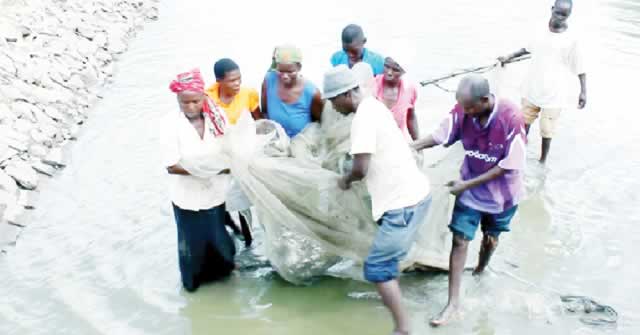

Tapfuma Machakaire
IS there light at the end of the tunnel for communities that were adventurous to take up fish farming introduced three years ago in three provinces of Zimbabwe under the European Commission (EC) funded integrated and sustainable fisheries and aquaculture production project?
If comments by an aquaculture scientist from New Zealand, Kevin Heisman, are anything to go by, then certainly there is every reason to believe that the project is transforming the lives of thousands of vulnerable households.
Heisman, who has been assessing progress in the project, says unlike similar projects that he has inspected in other African countries, communities that embarked on the integrated fisheries and aquaculture production experiment in Zimbabwe have transformed the work into viable business ventures, improving their dietary diversity and ability to generate income.
“In most African countries that I have assessed similar projects, the communities have tended to overly rely on donors resulting in the projects not becoming sustainable. I was impressed by the manner in which the communities working on the projects in Zimbabwe articulate the intricacies of aquaculture,” said Heisman.
He said most of the groups he visited had not waited for donors to provide all the required resources for the projects to take off.
“The people I have been talking to were telling me how they put together their meagre resources to ensure the success of the projects and what they got from donors and the government was mostly technical support through training and advice. That to me is proof that the groups will be able to sustain the projects when the donor has pulled out.”
The breakthrough in the seemingly uncharted waters came with the introduction of the programme in eight districts that include Binga and Hwange in Matabelaland North province, Insiza, Beitbridge and Umzingwane in Matabeleland South, Mwenezi and Masvingo rural in Masvingo province and Kariba in Mashonaland West province.
The programme kicked off after three non-governmental organisations Basilizwe Trust, Aquaculture Zimbabwe and World Vision were commissioned by the EC to introduce the projects in the three provinces.
Sibonginkosi Mugoni, the project coordinator, says the overall objective of the project is to, “create an environment that enables vulnerable households to improve their food security through sustainable fish capture, aquaculture fish production, efficient processing, nutrition planning, improved policy inclusion and improved marketing.”
Mugoni says the project, which was introduced in areas with reliable sources of water such as Lake Kariba, irrigation schemes and wetlands, is progressing well with various groups now having raised thousands of dollars from the sale of fish.
Government departments that include the Livestock Production department (LPD), Agritex, Environmental Management Agency (EMA), National Parks and Wild Life Management and local authorities have been playing a crucial role in providing the necessary technical support to the fish capture and fish farming groups.
To promote the project at inception, the implementers partnered with a community-based arts group, ZIYA arts of the Sabhuku Vhara Zipi fame, which recorded a video that was used to conscientise communities on the benefits of the project and discourage fish poaching and environmental degradation.
Among the projects that Heisman visited was the Deketa Collective Cooperative in Ward 30 of Masvingo rural district where he witnessed the group harvesting and marketing fish.
The Deketa project, with 193 members who include women and youths, relies on water from a wetland. The project began in July 2014 with communities digging two fish ponds under a food for work programme.
The group has had three harvests each with an average of 300 kilogrammes of fish from which they have raised about $3, 000.
Heisman, who was accompanied on his tour by local experts from the implementing organisations, visited projects that include the Kushinga Fishing Cooperative at Renco mine in Masvingo’s ward 35 where a group of 20 members of a support group of people living with HIV have expanded the project to include breeding of fingerlings.
Project chairperson, David Magwiroto, told the visitors that the group is selling fingerlings to groups that are embarking on fish farming projects across the country.
Magwiroto said his group is grateful to mine officials who are proving them with free water and dregs as supplementary feed given the high cost of fish feed.
Meanwhile, the University of Zimbabwe’s aquaculture research project in Kariba meant to produce cheap fish feed from locally produced grains is said to be at an advanced stage thus enhancing chances of the success of the project. Along the shores of Lake Kariba, the project has facilitated the introduction of cooperatives where communities rear fish in cages in the lake. The group used plastic containers as floats for the cages and has signed an agreement with a local commercial fish producer Lake harvest which buys their produce for export to neighbouring countries.
Vurayayi Zvarevashe, a senior projects officer with aquaculture Zimbabwe, expressed concern at the late rains which has led to dwindling water levels in major dams forcing desperate hungry communities to resort to negative coping methods such as using mosquito nets for fishing.
“Water in large dams such as Mutirikwi is going down every day and some communities have resorted to using fishing nets to catch fingerlings and fray from hatcheries which will result in the dwindling of fish resources in dams,” said Zvarevashe.
He, however, said fishermen who had been trained under the sustainable fisheries and aquaculture project were enlisting the services of the department of national parks and wild life management to prevent fish poaching.
“We have witnessed a marked improvement in relations between fishermen who have undergone training in areas around Manyuchi dam who are now inviting parks officials to help prevent fish poaching,” said Zvarevashe.
In September last year, the Deputy Minister of Agriculture Mechanisation and Irrigation Development, Paddy Zhanda, commissioned the Zhulube Fish production and Marketing Cooperative Ltd in Insiza District of Matabeleland South province.
According to a business plan unveiled by the group at the ceremony, the project, comprising of 40 members 17 women and 23 men, would “enhance crops and Livestock linkages at the Zhulube Irrigation Scheme and seek to provide a holistic diet within the same production zones while enhancing household income and food security.”
The project would also focus on environment management to ensure the sustainability of the irrigation scheme.
Other diversification options that would go along with fish production and marketing were a dairy, broiler production and marketing and an orchard.
The group states in its plan that the linkage between the broilers, fish and cropping enterprises has some significant benefits. Broilers produce chicken waste which supply fish with nutrients in dissolved state, fish on the other hand produce offal at slaughter which is feed to broilers. Crop residues are feed to fish, in turn, waste water from fish ponds can be used to irrigate crops and orchards.
The integrated fisheries and aquaculture production project is poised to create an environment that is conducive to reducing the dependency on humanitarian assistance. It will increase resilience to shocks and is in line with the Zim-Asset’s food security and nutrition cluster. The cluster programmes are aligned to and informed by the comprehensive African agricultural development programme, draft comprehensive agriculture policy framework, the food and nutrition security policy and the Zimbabwe agriculture investment plan.


 derick.khumalo