admin
admin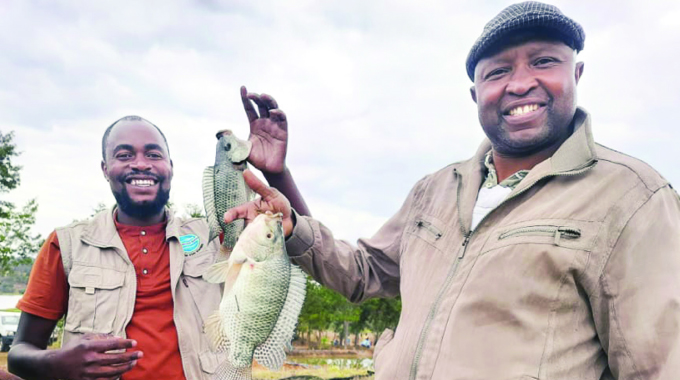
Fungai Lupande Mash Central Bureau
When serious farming is talked about in Zimbabwe, many people are quick to dismiss communal farmers and think of commercial farmers.
But in Chinehasha Village, Chiweshe communal lands, one man has changed the narrative.
Mr Misheck Shamu has become a major fish farmer providing local people and those from beyond with alternative source of protein. He has also created employment by engaging local people.
In an area where the cattle herd was decimated by Theileriosis popularly known as January Disease, leaving villagers with limited beef, Mr Shamu has come to the rescue of many who now enjoy fish meat from his project.
“This fish farm is close to the school and our learners can visit for educational purposes. We see this project growing such that people all over the country can come here for learning purposes,” he said.
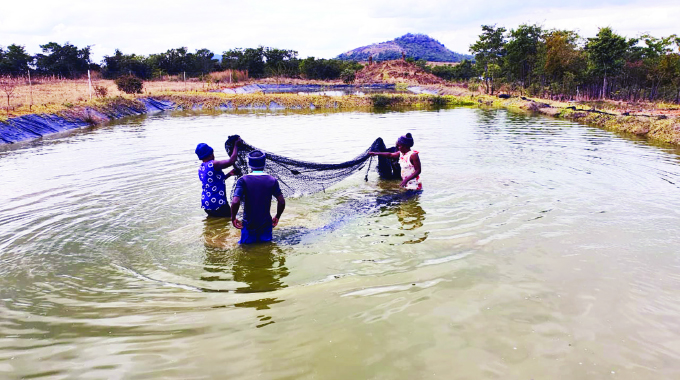
The farmer adopted the smart agriculture technique and is relying on water from Lilstock Dam.
From two giant grower fish ponds, six smaller breeder and nursery ponds at the outskirts of Lilstock Dam, Mr Shamu is operating one of the most productive fish farms in Mashonaland Central.
One of the challenges faced by fish farmers is fish eating birds as these could cause great economic loss and lead to reduction in stocks if not taken care of.
Mr Shamu had to introduce bird protection netting to save the fish from the menacing birds.
His intentions are to construct two more big ponds to increase capacity.
He has called anyone interested in a joint venture to contact him so as to grow the potential of the place.
His fish farm has become a learning centre for the nearby Chinehasha Secondary School, the community and people travelling from as far as Norton.
Mr Mushari Jaison from Chinehasha Secondary School said the new curriculum has a fisheries component.
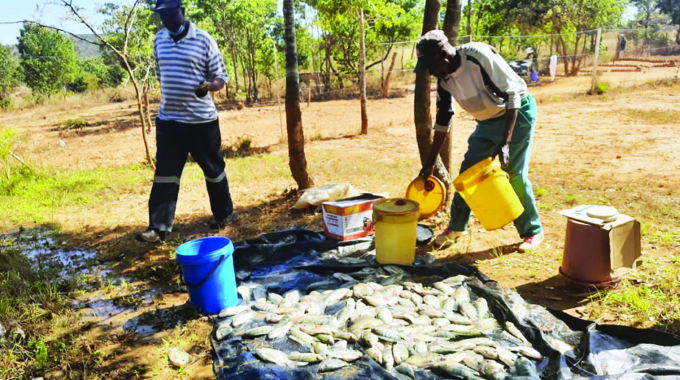
The farmer supplies Chiweshe, and the business has become so lucrative that he is now also supplying Harare and failing to meet the huge demand.
Mr Shamu said he started the fish project early 2020.
“At first we brought refrigerators here for storage of the fish but now the project is well known in Chiweshe. The demand is high and I am failing to meet that demand with some people hoarding for resale,” he said.
“At one point I was asked to supply a tonne per day and I could not bear the demand. My plans are to increase the number of ponds so that we can harvest every week.
“The market is available and I urge other farmers to try fish farming. When I bought this land, the soil was not good for crops and I engaged experts in fish farming.
“I went through training together with my employees and community members.”
One grower pond is 20 by 30 metres in size.
The place has also become a learning and demonstration centre whereby people can come and learn about fish farming.
Village head Mr Phidias Chinehasha said inland fish farming was taking people away from Lilstock Dam, where fish poachers are at risk of crocodile attacks or drowning.
He said the village was left with no cattle after Theileriosis (January disease) affected all their cattle last year and they have turned to fish as a protein source.
“Our community has been greatly assisted by this fish project in terms of nutrition,” he said.
“The prices are affordable and those re-selling are making decent profit. This is a good project,” he added.
A community member Ms Plaxedes Munzveramiti who came to buy fish for resale said she had benefited from Mr Shamu’s project and she now had a good source of income.
“I also feed my family for household nutritional needs. Those still poaching in the dam are dicing with death,” she said.
Another villager Mr Felix Murisa called on investors to come and partner with locals in establishing fisheries and resort centres.
“This dam is so big and has plenty of water. A number of activities can also be undertaken to boost income from the natural resource and the proceeds can be used for other community development projects.
“The dam has capacity to carry the biggest fish cages for those interested in doing fish farming in the dam. Two big streams, Ruya and Chiraire, flow into the dam.
“We are trying to do developmental projects but the scale is slow. We are calling upon partners to team up with locals and bring the best out of this place.”
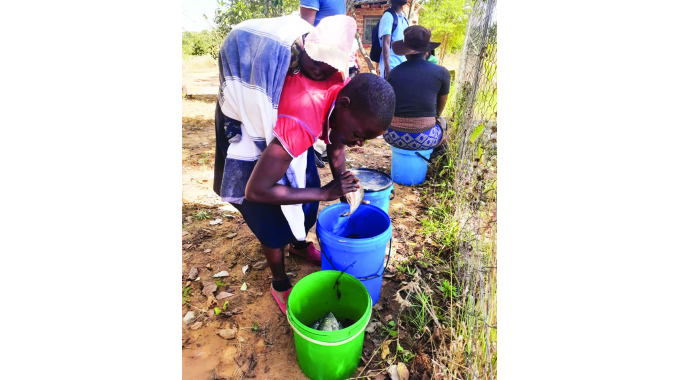
Mr Crispin Mujakachi from Norton said he came to learn so that he can start fish farming in his community.
“I have learnt a lot and I will implement this project in Norton. I see this project assisting me and others in my community in terms of food security and stable livelihood,” he said.
“There is a lot of demand for fish and I have come here to see, learn, copy and what I can implement in Norton.”
Government is promoting fish farming as part of effort to ensure household food and national food and nutrition security.
This is one of the transformational vision of achieving a prosperous and empowered upper-middle-income society by 2030 that leaves no one and no place behind.
The strategy is pegged on development that leaves no household and no village behind.
This is anchored on the Agriculture and Food Systems Transformation Strategy and National Development Strategy 1.



 Online Reporter