
Theseus Mauruki Shambare
ZIMBABWE’S aquaculture sector recorded a 64,68 percent increase in production during the 2024/25 season, driven by rising investment, Government support programmes and growing adoption of commercial fish farming models across the country.
Latest figures from the Fisheries and Aquaculture Resources Production Department (FARD) annual report indicates that total aquaculture output rose from 4 986,03 tonnes in 2023/24 to 8 211,05 tonnes in 2024/25, marking one of the strongest growth performances in recent years.
The expansion was largely anchored on increased production of Nile tilapia and African catfish, reflecting both improved farming systems and growing investor confidence in the sector.
Livestock and Fisheries Production director, Mr Milton Makumbe, said the growth underscored aquaculture’s rising role in Zimbabwe’s agricultural transformation agenda.
“The aquaculture sector recorded remarkable growth during the 2024/25 production season, with total production increasing by 64,68 percent from 4 986,03 tonnes to 8 211,05 tonnes,” said Mr Makumbe.
“This growth reflects the combined efforts of the Government, the private sector and farming communities in expanding fish production.”
Nile tilapia remained the dominant farmed species, with output increasing by 49,7 percent from 4 272,2 tonnes to 6 395,99 tonnes.
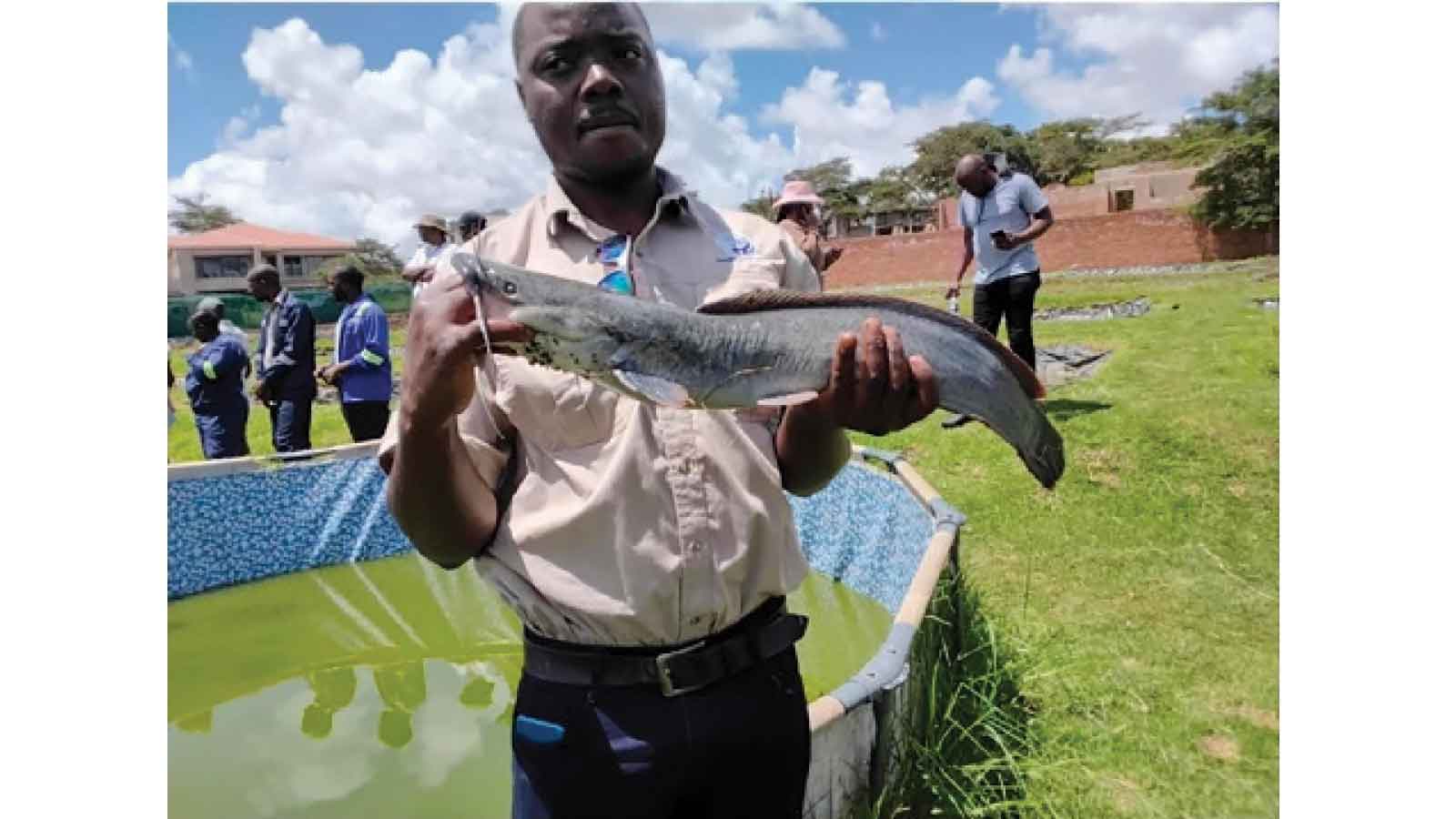
African catfish posted the fastest growth trajectory, surging by 139,57 percent from 713,83 tonnes to 1 710,07 tonnes, driven by its resilience, fast growth rate and adaptability to diverse production systems.
Mr Makumbe said the sector’s performance was being reinforced by Government interventions aimed at expanding aquaculture infrastructure, improving access to quality fingerlings and supporting smallholder and commercial producers.
“The impressive growth demonstrates the increasing adoption of aquaculture as a viable commercial enterprise and an important contributor to food and nutrition security, employment creation and rural incomes,” he said.
The report notes that expansion was also supported by the Presidential Community Fisheries Scheme, which continues to boost production at the community level through fish stocking and capacity building.
During the year, the Government stocked 3 138 870 fingerlings in 34 dams and 1 688 fish ponds nationwide as part of efforts to strengthen rural livelihoods and improve household nutrition.
Beneficiary communities also received training in fish production, harvesting, processing and marketing to enhance sustainability.
Zimbabwe Fish Producers Association chairperson, Mr Garikai Munatsirei, said the output growth should now be matched with stronger post-harvest systems to minimise losses and maximise value.
“We are encouraged by the growth in production across the sector, but the next critical frontier is post-harvest handling and value addition.
“Without adequate cold chain systems, storage facilities and processing infrastructure, we risk losing value that should accrue to producers and the wider economy,” he said.
He said improved investment in processing and preservation infrastructure would strengthen market access for fish farmers and enhance the sector’s contribution to food security and incomes.
National and Southern African Regional chairperson for the African Women Fish Processors and Traders Network Zimbabwe (AWFISHNET-ZIM), Ms Tendai Rugare, said the rise in catfish production was a positive development in the context of climate change, as the species is more resilient under fluctuating environmental conditions.
“We are seeing encouraging growth in catfish production, which is very important in the face of climate change,” said Ms Rugare.
“Catfish is hardy, adaptable and better suited to withstand changing water temperatures and irregular rainfall patterns, making it a reliable species for both smallholder and commercial producers.”
She said increased participation of women in fish processing and trade was also strengthening value chains and improving household incomes in rural communities.
Despite the strong performance, the report highlighted shortages of quality fingerlings as a major constraint to further expansion.
National demand is estimated at 39,1 million fingerlings per year against a production capacity of about 33,1 million, leaving a deficit of roughly six million fingerlings.
The Government is now scaling up hatchery rehabilitation and establishing new breeding centres to close the gap.
This is being achieved through sustained investment, innovation and supportive policies.
The Government, according to the report, is finalising a Fisheries and Aquaculture Bill aimed at modernising the regulatory framework, attracting investment and accelerating the growth of the sector as Zimbabwe advances towards a US$2,37 billion blue economy target.