Online Reporter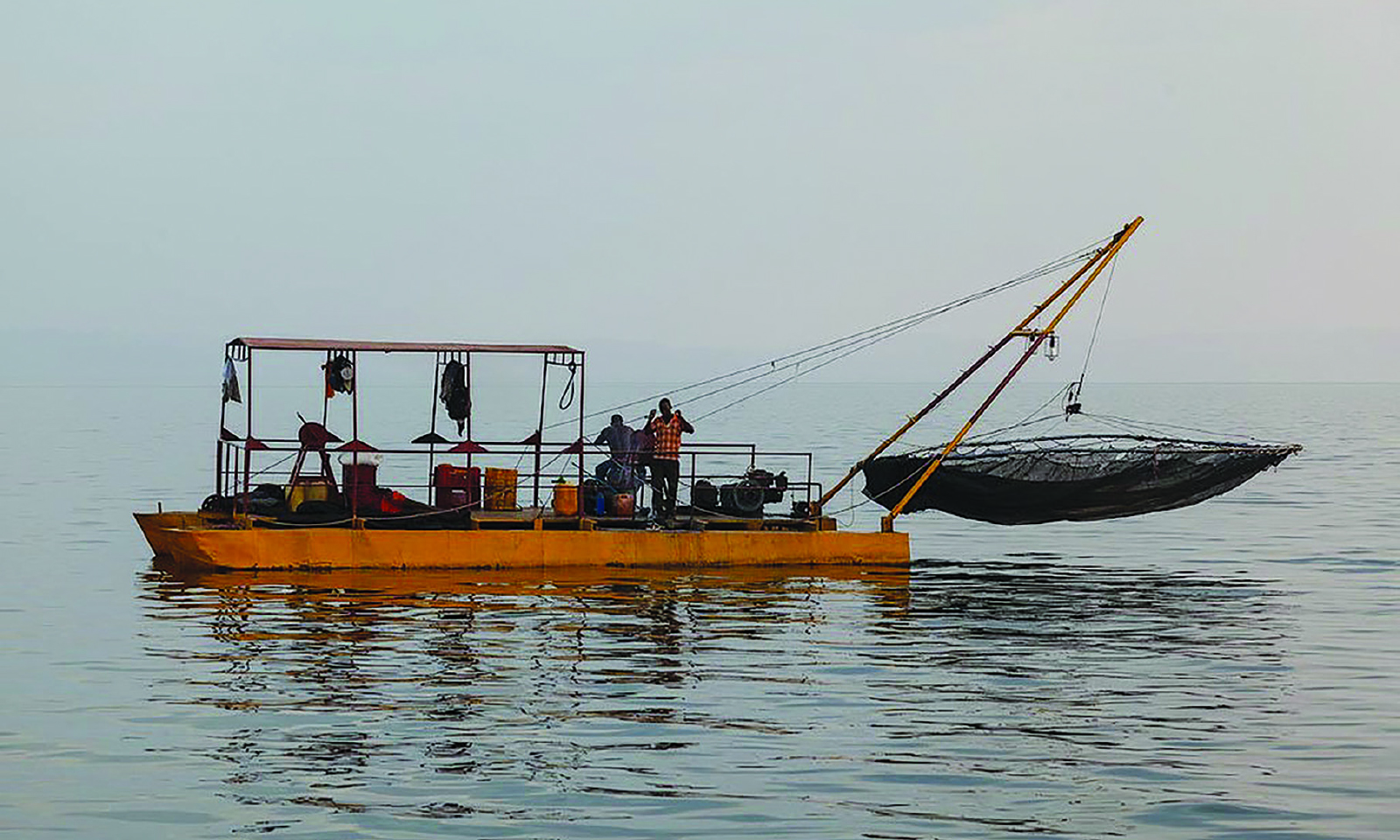
Edgar Vhera
KAPENTA fishers have called on the Zimbabwe National Parks and Wildlife Management Authority (ZimParks) to extend the reprieve for the minimum allowable fishing depth of 17 metres to a future date.
The minimum allowable fishing depth ended yesterday (June 30).
The Zimbabwe Kapenta Producers Association (ZKPA), said they wanted a reprieve to fish at 17 metres to continue, as there had not been a significant change in the water levels.
ZKPA chairperson, Mr Chatwell Tanga, said they held a meeting to discuss the end of the amnesty to fish at 17 metres on June 30 and that they were all agreeable that the decision was too early.
“It seems too early to return to the normal 20 metre depth, as our usual fishing grounds are still shallow despite the rise in inflow.
“The fishing basins have not experienced significant change, so for a holistic approach, we suggest an economic survey of the entire lake to ascertain the actual fishing ground depths,” he said.
ZKPA vice chairman, Mr Bernard Munsaka, said ZimParks should consider two or more months to the acquittal as some basins were still experiencing the challenge of a lack of fishing grounds due to decline in water levels now than in the past.
In a notice to kapenta fishing operators on Lake Kariba recently, ZimParks director general, Professor Edison Gandiwa, said fishing in normal 20 metre fishing depth would start today (July 1) while cross-basin fishing had been repealed.
“ZimParks has been actively monitoring lake levels and is pleased to report a significant improvement in the water levels of Lake Kariba. As a result, the authority has resolved to normalise kapenta fishing conditions effective July 1, 2025,” he said.
“However, to ensure a smooth transition and continued sustainability of the fishery, effective July 1, 2025 the minimum fishing depth will revert to 20 metres in line with the projected peak lake levels.
“Only fishers from Basin 1 (Mlibizi) will be allowed to operate Basin 2 (Binga) and Basin 3 (Sengwa) from July 1, 2025,” he added.
ZimParks warns all kapenta fishers to adhere to the terms and conditions outlined in their fishing permits and comply with all other applicable regulations.
Since November last year to June this year, ZimParks has allowed fishers to fish at 17 metres depth down from 20 metres due to reduction in water levels in Lake Kariba as a result of the El Nino-induced drought.
Statistics show that kapenta catches have plummeted from 30 000 tonnes in the 1990s to just 5 175 tonnes in 2023, an 83 percent drop.
More recent data from the 2024 Fisheries and Aquaculture Resources Department (FARD) annual report shows a steady decline over the past four years: from 5 950 tonnes in 2020-2021 to 5 333 tonnes in 2021-2022, then to 5 231 tonnes in 2022-2023, and finally to 5 175 tonnes in 2023-2024, chiefly attributed to overfishing.
A protocol for the economic and technical co-operation between Zimbabwe and Zambia concerning the management and development of fisheries on Lake Kariba was adopted which gave fishing effort entitlement in Lake Kariba on the basis of the proportion of the surface area of the lake allocated to each of the riparian countries with 55 percent for Zimbabwe and 45 percent for Zambia.
A 2018 survey conducted in Lake Kariba showed that Zambia had over 60 percent fishing effort with Zimbabwe on 40.
This follows from the realisation that by 2017 Zimbabwe had issued 539 licences while an aerial survey of the Zambian waters in 2011 indicated close to 1 000 boats.


 Bongani Ndlovu