Online Reporter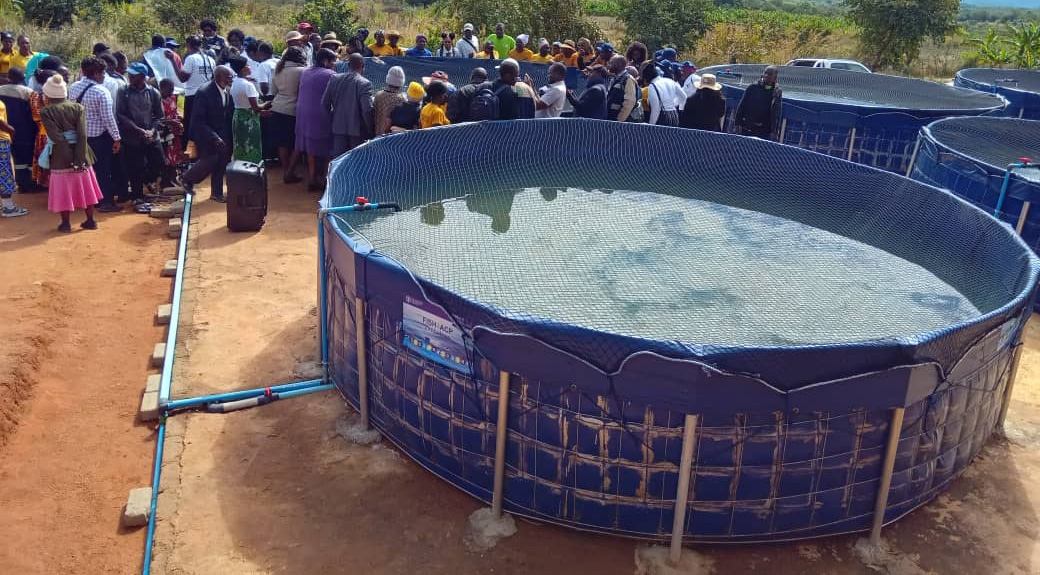
Lovemore Kadzura
Post Reporter
IN a ground-breaking initiative, 13 women from Ward Eight in Mutasa District have embarked on a fish farming venture – defying traditional gender roles and achieving remarkable success.
Under Headman Sahumani – the women have transformed their project from a modest start with 3 000 fingerlings to a thriving hub, now boasting 40 000 fingerlings.
Their hard work and determination have caught the attention of the Food and Agriculture Organisation (FAO) and other organisations, which have provided substantial support.
Recently, the women received seven tent tanks – each with a 60 000-fingerling capacity, significantly boosting their production capacity.
In an interview, the cooperative’s treasurer, Mrs Loice Nyakurimwa said the fish hub has empowered them, and they now have a bright future, building a viable economic venture that will uplift their financial well-being and social standing.
“We started this cooperative in 2023 with 13 women. Unfortunately, our eldest member passed away aged 94, and was replaced by her grandson. We are now selling our fish in surrounding villages and Hauna Growth Point,” said Mrs Nyakurimwa, further highlighting the cooperative’s success.
“There is huge potential in fish farming. Our lives have changed for the better since we started. We used to rear broilers, but fish farming is less complicated and more profitable.”
The cooperative has made significant progress, harvesting 2 400 fish and preparing for their second harvest.
Their success has inspired other villagers to start individual ponds, and they are now supplying fingerlings to these farmers.
Mrs Nyakurimwa emphasises the group’s unity and focus: “As women, we are not finding it difficult to work together. We respect each other and share a common goal. Besides the hub, members have individual ponds at their homesteads, stocking between 500 and 1 000 fish.”
Their ambition is to supply the entire Mutasa District with fingerlings, promoting fish farming and empowering their community.
Agricultural and Rural Development Advisory Services Manicaland Provincial Director, Mr Nhamo Madada hailed the fish farming project in Mutasa as a model for rural development.
He said the project fits perfectly into Government’s Rural Development 8.0 Model, accelerating villagers out of poverty through viable enterprises.
Mr Madada said the project bridges the gap between fingerling suppliers and local fish farming communities, reducing costs and promoting food security.
The Sahumani project, according to Mr Mudada will propel Mutasa as a fish producing hub of the province, and such models will be replicated in Manicaland.
“The idea of doing fish farming as a business has become viral, prompting these 13 women to form a community women-led cooperative in Mutasa District’s Ward Eight, under Headman Sahumani. The women dug a 25.5m x 113.5m fish pond themselves, making contributions to purchase a pond liner for construction. Their initial stock of 3 000 fish generated enough income to buy pipes worth US$1 100 and cover daily expenses, such as food and school fees. The cooperative received support from FAO, including seven tent tanks with a 60 000-fingerling capacity and 40 000 fingerlings. The farmers receive training from Agritex and Aquaculture Zimbabwe. They have since purchased 68 000 fingerlings for the current off-season stocking.
“Fingerlings were sourced from Kariba and Bindura. The hub bridges the gap between fingerling suppliers and Honde Valley fish farming communities, reducing costs for bulk orders. The community is working towards Vision 2030, aiming to achieve food security, nutrition, and economic development,” said Mr Mudada.
The initiative aligns with Vision 2030, aiming at achieving food security, nutrition, and economic development.
Zimbabwe’s fisheries sector is growing rapidly, with plans to double fish production from 31 500 metric tonnes to 60 000 metric tonnes by 2026, building a US$1 billion industry.
With maximum utilisation of the country’s water bodies, the target can be easily achieved and surpassed.
Zimbabwe’s National Blue Economy Strategy aims to leverage the country’s water resources for sustainable economic growth, social development and environmental conservation.
It focuses on maximising the value derived from fisheries, aquaculture and other water related activities, while also addressing climate change impacts and promoting community livelihoods.
The strategy is being developed through a participatory approach involving various stakeholders and aims to align with the African Union’s Blue Economy Strategy.
Permanent Secretary in the Ministry of Lands, Agriculture, Fisheries, Water and Rural Development, Professor Obert Jiri expressed optimism about Zimbabwe’s progress towards improving food security and nutrition in the country.
“Zimbabwe’s National Blue Economy Strategy promotes sustainable growth of the fisheries and aquaculture sector, targeting a US$1 billion industry by 2030 through governance, innovation, and community- based aquatic farming” he posted recently on X.