Ranga Mataire, Group Political Editor
ZANU-PF has religiously held its end-of-year review meeting even during times of Covid when it organised one in a hybrid format with the majority of delegates virtually following proceedings in their respective identified provincial areas.
The conferences have followed the same format as prescribed by the party constitution — a Politburo meeting that sets the agenda, followed by a Central Committee meeting to further refine the issues for deliberation.
The President and First Secretary officially opens proceedings at a combined meeting of all delegates from all 10 provinces in their respective structures. The meeting then goes into committees, with identified relevant Ministries giving reports, which will also become matters of discussion by delegates.
While the 23rd Zanu-PF National Annual People’s Conference in Chinhoyi followed the same format as dictated by the party’s constitution, there was something more that happened that showed that the party is not only maturing but is making the Indaba more relevant in leaving an enduring imprint on both delegates and the host province.
l The organisational logistical capacity of Zanu-PF was on display as everything from accommodation, the main plenary room, the dining halls, the parking was minutely documented, with each delegate being easily identifiable. Each hall of residence had a register of the occupants of allocated rooms with details of the province or structure they are representing. The ablution facilities at
the places of residence and at the actual venue of the meeting were top-notch, clearly showing a modern zest in ensuring that every delegate is comfortable.
l The accreditation was digital, with each delegate being scanned at different entrances. This eliminated any gatecrashers or unqualified members intending to attend the meeting for ulterior motives. Unlike before, when there were some minor technological glitches during accreditation, the 2026 Chinhoyi conference did not experience anything of the sort.
l There was a general increase in the number of youthful delegates, particularly those representing different affiliates. This shows that the party is finding attraction even among the younger populace who are finding the revolutionary party’s policies amenable to their aspirations.
l A vibrant democratic culture has been entrenched, with delegates freely expressing their views on the direction the party ought to follow. First the Vice- President and Second Secretary of the party, Cde Chiwenga set the tone when he challenged delegates to not deviate from the party’s mandate of serving the people.
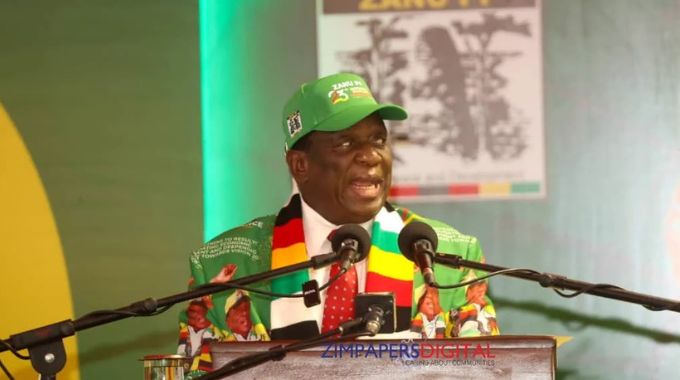
President Mnangagwa then followed by reiterating the same message but went further in telling the delegates to remain united. While acknowledging the hallowed history of the party as a party of liberation, he told delegates that; “Zanu-PF is a futuristic organisation and never a prisoner of past victories,” adding that the party should always strive to deliver prosperity to all citizens.
l Besides attending to the business of the conference, President Mnangagwa also attended to and commissioned a record number of community development and legacy projects on the sidelines of the 23rd Zanu-PF National People’s Conference in Chinhoyi.
Chinhoyi General Hospital: Commissioned a new medical oxygen plant and a 100-kilowatt solar power system.
Chinhoyi University of Technology (CUT): Launched student accommodation blocks, a health hub, and tree-planting activities.
Primary Healthcare: Officially unveiled the Presidential Ward-Based Primary Health-Care Outreach Programme.
Water & Infrastructure: Noted the upgrading of a local water purification plant, the drilling of boreholes at CUT, and new water connections benefiting over 3,000 households in Chinhoyi.
Exhibitions & Engagements: Toured SME and sector exhibition stands alongside First Lady Dr Auxillia Mnangagwa.
Chinhoyi town residents will be gratified by the fact that a total of 16,6km, with some municipal estimates rounding up to 17km of roads were rehabilitated and tarred. These included major trunk and access road sections managed directly by the Ministry of Transport and Infrastructure Development.
While there have been similar projects commissioned by the President during previous conferences, Chinhoyi tops the list in terms of numbers. This shows the party is continuously improving in ensuring that each province benefits from hosting such a big event.
Overall, each facet of life was deliberated. The Super El Niño and its possible impact on food security, the economy in general, infrastructure development, women and youth empowerment, tourism, investment promotion, war veterans’ welfare and the alignment of the party constitution with the National Constitution in relation to the election cycle which has moved from 5 years to seven years.
The Zanu-PF 23rd Conference was different in that it showed a new serve, especially with the increased number of youthful delegates. The party understands one historical truth: a party that does not meet dies. From as far back as 1963 to Chinhoyi in 2026, the method has been the same but the conduct continues to improve- debate, disagreement, dialogue and the collective decision carry the future.