Theseus Shambare in Mid‑Zambezi
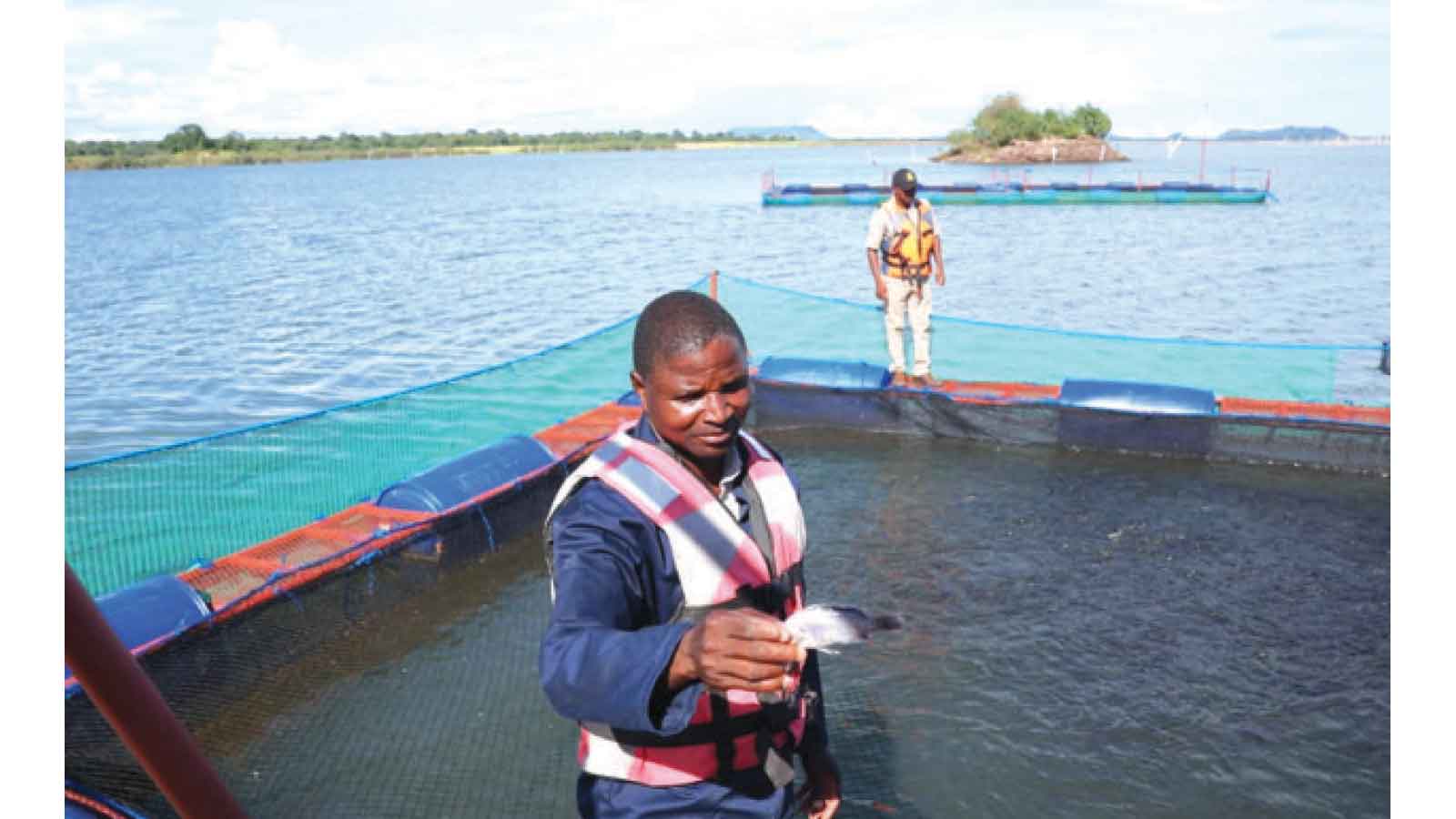
A US$144 000 investment in floating fish cages at the Ume River mouth inside Matusadona National Park on Lake Kariba is anchoring a new aquaculture model aimed at boosting production, protecting endangered fish species and transforming livelihoods for 171 fishing households in the Mid‑Zambezi.
Six floating cages — each valued at approximately US$24 000 — are being installed at Musamba Fishing Camp under Phase Two of the multi‑stakeholder Zimbabwe Resilience Building Fund, a resilience initiative funded by the European Union and Ireland, led and coordinated by UNDP, and technically supported by the Food and Agriculture Organisation of the United Nations.
The programme is strengthened by the Resilience Knowledge Hub (Mercy Corps) through evidence generation and catalytic support.
The project is being implemented in the Mid‑Zambezi region by the Ushingi Consortium, led by DanChurchAid.
Three of the cages are already operational, stocked with more than 73 000 fingerlings, while the remaining three are expected to be installed before April. With an average survival rate of about 80 percent, the fish are projected to reach market weight of approximately 250 grammes within four months. Nearly nine tonnes are expected from the first production cycle alone, with farm‑gate prices projected at around US$3,50 per kilogramme.
Officials say the shift to structured cage farming marks a decisive move away from unregulated net fishing, which has placed pressure on wild stocks — particularly tiger fish that breed near the Ume River mouth inside Matusadona National Park.
ZRBF project coordinator Mr Shupikayi Zimuto said the technology was designed to balance conservation and productivity.
“We have deployed floating cage technology mainly to protect the breeding sites for tiger fish while providing communities with an alternative means of producing fish sustainably,” he said.
Beyond production, the project is introducing science‑based feeding regimes, monitored growth cycles and coordinated marketing systems — replacing unpredictable wild catches with structured aquaculture planning.
UNDP Resident Representative Dr Ayodele Odusola said the investment also addresses safety concerns associated with traditional fishing on the lake.
“One of the objectives is to diversify livelihoods. We want to move communities away from purely traditional fishing practices and provide options like aquaculture, which also reduces the risks associated with fishing in the lake,” he said.
Dr Odusola said the cage model allows fishers to operate within designated zones, significantly lowering exposure to such dangers while improving productivity and income stability.
A cold‑chain facility is also being established to strengthen post‑harvest handling and curb exploitation by middlemen.