Chronicle Editor
Raymond Jaravaza, [email protected]
“BEKEZELA” is an IsiNdebele word for patience.
For residents of a suburb that bears that name in Filabusi in Insiza District, Matabeleland South, development has been a long way coming for the now bustling mining and farming community.
The Filabusi economy is buoyed by the rich pickings of gold that artisanal miners and big mining companies dig from the belly of the earth on a daily basis.
When driving into Filabusi town from Bulawayo, one is greeted by various shades of painted roofs of imposing houses that line up the horizon.
From double-storey homes, houses with double drive-in garages, and homes with lush green lawns and spacious, residents of Bekezela suburb are showing off their wealth by building magnificent homes that even rival those from well-to-do suburbs such as Hillside in Bulawayo.
But when did the sudden boom in housing development in areas such as Bekezela suburb begin?
“It’s not a secret that the Filabusi economy is driven by gold followed by farming, but it is gold mining that employs a lot of people,” said a resident, Mr Nkosilathi Hlongwane.
“A long time ago people were arrested for engaging in gold mining activities but things changed when the Government started encouraging people to empower themselves. So, more young people started taking an interest in gold mining.
“Young men are forming groups to mine gold and a majority of them are building homes in their rural areas, buying cattle, and building shops.
“Most of the houses you see around here are owned by gold miners,” he said.

According to the Zimbabwe Miners Federation, more than 50 000 registered artisanal miners employ an average of 10 workers each.
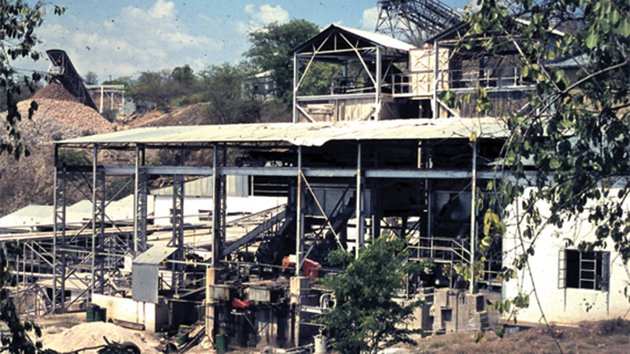
The exact number of artisanal miners in Filabusi is hard to tell but judging by the number of stamp mills, machines that crush gold ore, that are littered in the vast district, it is evident the area accounts for a significant amount of gold produced in the country annually.
A drive around Bekezela suburb clearly shows the boom in housing development that Filabusi is experiencing.
Filabusi’s central business district is equally a hive of activity as people mingle in and out of grocery, liquor, furniture, and clothing shops. No doubt business is thriving. One grocery shop attendant told Chronicle that the owner is a former gold miner who ventured into the retail business.
“He used to own a small gold mine but there was a lot of violence in the Nkankezi area so he stopped mining and opened shops here at the centre and in Tombo.
“Most of these shops are owned by gold miners or people who used to be in that business. Take for instance that big wholesale, it’s owned by Farai, who is a gold miner,” said the shop attendant.
The Farai being referred to is the Zanu-PF Member of Parliament for Insiza North, Cde Farai Taruvinga who, apart from the popular wholesale outlet at Filabusi also runs a drive-through known as KoScooter along the Filabusi-Zvishavane Road.
This news crew encountered several small-scale miners commonly known as omakorokoza on the road leading to Silalatshani who work in the mines dotted around the area or are self-employed.
“We don’t work for anyone. There is an old mine up the road where we go in and dig for gold,” one of them says.
Back at the Filabusi Centre, the crew talked to the Insiza District Council chief executive officer, Mr Shepherd Tshuma, who said it was encouraging to see the level of development in the area.
“This is a thriving town whose economy is centred around gold and farming. The construction industry is also growing because people are building homes and businesses,” said Mr Tshuma.
Mining mogul and construction company owner, Mr Khumbulani Nkomo, is one of the people whose businesses are uplifting Filabusi.
He has built a college that specialises in technical skills such as mining courses, textile technology, agriculture, and design technology.
He also owns Talen Vision, a Zifa Southern Region league football team that employs dozens from players, coaches, and the team’s support staff. The sky is the limit for Filabusi as long as gold continues to fuel the economy of the gold-rich Insiza District.


 Online Reporter