

 admin
admin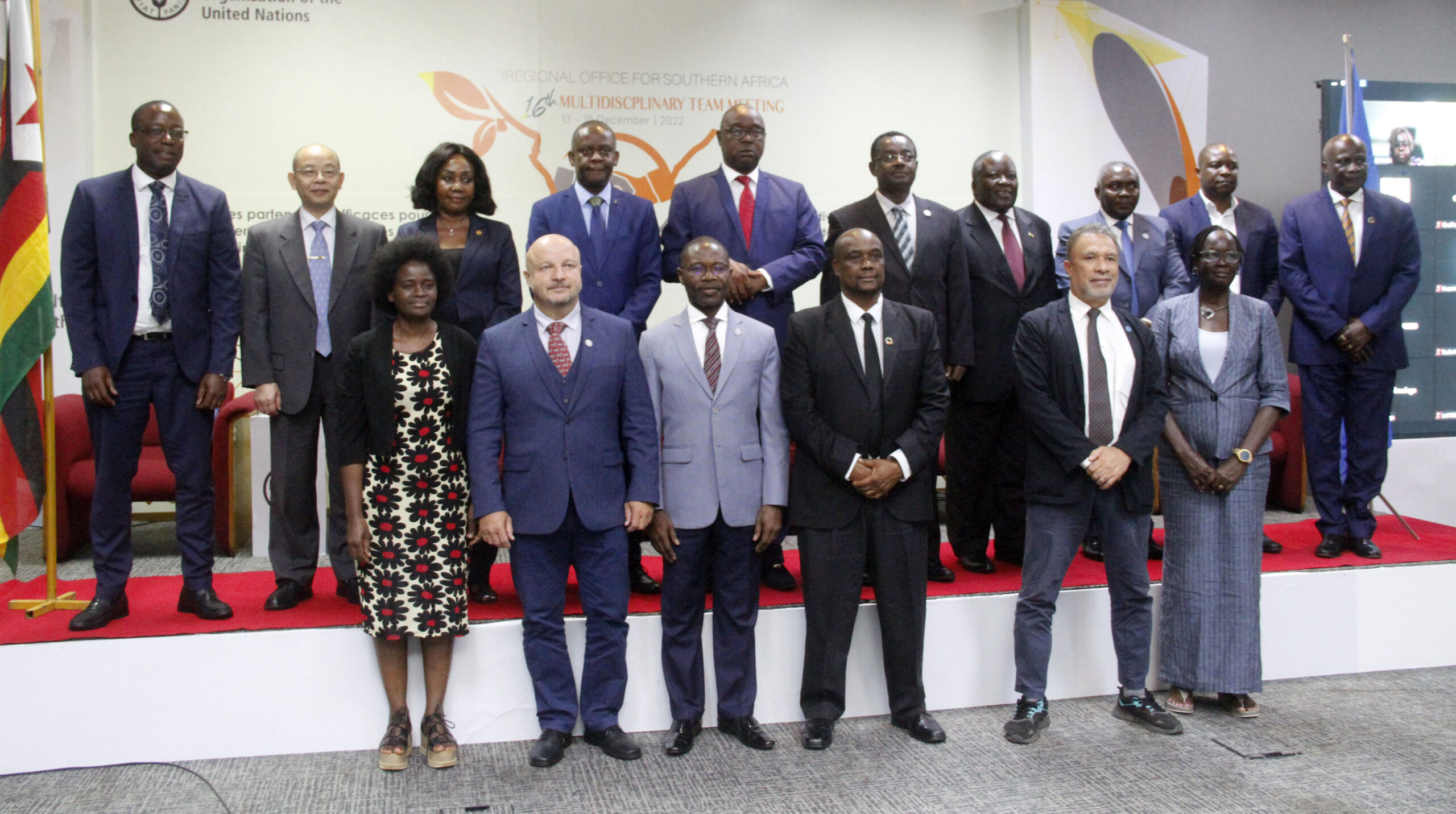
Yeukai Karengezeka-Herald Correspondent
Making food systems more sustainable could help address hunger and malnutrition in Africa – a continent prone to natural shocks and other challenges, Food and Agriculture Organisation of the United Nations (FAO) assistant director–general and regional representative for Africa Mr Abebe Haile-Gabriel has said.
Mr Haile-Gabriel told the FAO Sub-regional Office for Southern Africa’s 16th Multi-Disciplinary Team meeting held in Harare yesterday that unless agrifood systems challenges faced in the agriculture sector are addressed, food security will remain a challenge on the continent.
“Unless agri-food systems in Africa are addressed, we shall continue to face hunger. The major problem is poor and sometimes non-existent mechanisms and systems that are there to mitigate the impacts of climate shocks,” he said.
Consequently, Mr Gabriel said Africa was behind in terms of implementing the Malaba Declaration whose target is to achieve zero hunger and malnutrition by 2025.
Recent results of the bi-annual report published by the African Union on the implementation of the Malabo Declaration noted that Africa was not on track.
At least 278 million people in Africa are vulnerable to hunger and malnutrition and the number is expected to increase to 310 million people by 2050 according to FAO projections.
Mr Gabriel however commended Zimbabwe for making tremendous efforts in averting hunger through various presidential agricultural schemes being implemented by Government.
“We are very glad that the leadership of President Mnangagwa is implementing various presidential schemes aimed to address agri-food system challenges.
“He added that the system needs to be modernised and transformed continentally.
“The efforts by the Government of Zimbabwe in putting in place mechanisms towards steering this process of transformation through poultry projects, crops and fisheries among other things are very key to suppressing hunger.”
Speaking during the official opening of the meeting, Lands, Agriculture, Fisheries, Water and Rural Development Minister Anxious Masuka who was represented by his deputy Mr Davis Marapira said Government was committed to working with development partners like FAO in the fight against hunger and rapid transformation of Southern Africa.
Minister Masuka said the transformation of agri-food systems was possible through value creation and improved processing, innovation and digitalisation.
In October Minister Masuka said he had an opportunity to participate at the World Food Forum at FAO Headquarters in Rome where Zimbabwe presented the country’s experiences on the Hand In Hand Initiative during the investment forum.
FAO through the Hand-in-Hand Initiative is supporting the Government in identifying investment opportunities related to smallholder irrigation systems, decentralised agro-processing centres, and smallholder aggregation to include smallholder producers in value chains.
The two-day workshop which ended yesterday was running under the theme: “Effective partnerships for accelerated agrifood systems transformation in Southern”.
Various stakeholders including different representatives from the SADC and United Nations member states are attended the workshop.



 Online Reporter