Chronicle Editor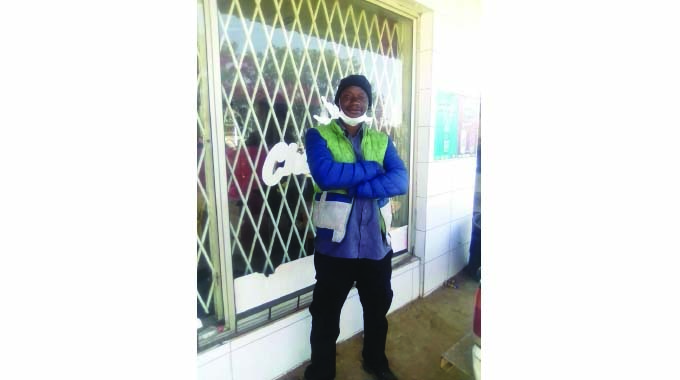
RICHARD “Buju” March was among AmaZulu FC’s first acquisitions when the club gained promotion from the Zifa Southern Region Division One League.
He had so much promise like most players Delma Lupepe brought on board. Many scaled dizzy heights and went all the way to represent their country.
For others, the icing of the cake was when AmaZulu won the league championship in 2003. This was due reward and honour for a man who had dreamt the Kaizer Motaung way. Assembling stars in pursuit of football glory, paying them well and ensuring there was colour and glamour on the dotted black and gold side of Bulawayo.
Sadly the likeable defender who could play at rightback, centreback and anchor, AmaZulu’s crowning moment happened the year he left. Meaning he was without a real major piece of silverware for his brilliance.
Not so pacy, known for being hard on the tackle, March was among a number of defenders that helped brand Usuthu as AmaZulu were affectionately known.
He partnered David Mkandawire, Sikhumbuzo Ndebele, Herbert Dick, Mkhuphali Masuku, Vorster Chitemu, Nkosana Gumbo and Misheck Makota in a defence nicknamed The Germans. Add Mlungisi Ndebele and Ferdinand Mwachindalo, a chopping side they were. All were hard tacklers in a side that appeared to pride itself with the “hardmen” tag.
Given “softies” like Kingstone Rinemota, Norman Komani, Costa Chiimba, Patrick Daka and Joseph Kabwe in the AmaZulu attack, to fend off threats rough play was employed to ward off threats.
March did not plunge into football by accident. Born on 2 July 1977, in the gold mining but football crazy mining town of Kadoma’s Eiffel Flats, made popular by Rio Tinto, the game took our away the kids from homes and streets.
It provided wellness programmes, recreation and an opportunity for employment in Rio Tinto mines and smaller ones dotted around the province and clubs in the cities.
Rio Tinto, with an array of stars, Gibson Sibanda, Robert Godoka, Nelson Mapara, Barnabas Likombola, David Mwanza, Wonder Phiri, Robert Phiri, Abraham Mwanza, Raphael Phiri, Joseph Zulu and Ernest Makosa, provided so much for childhood football heroes for generations of footballers.
Buju would fall into the trap following footsteps of Kaitano Tembo, Cyprian Kanyemba, Benjani Mwaruwari, Watson Muhoni and Herbert Dick who had emerged from the towns of Chegutu and Kadoma to make it big in the game.
His route was clear from childhood attending Cam and Motor and Eiffel Flats primary schools then later Chemukute High School known for producing good players.
He wrote his O-levels in 1994. His breakthrough with semi-professional football was in 1995 when he joined Eiffel Flats with whom he stayed for two years.
With AmaZulu gaining Premiership status at the end of 1996, the need for grit arose and that marked March’s arrival to bolster the side.
“I had a stint with the national team during Roy Barreto’s days. I was capped six times,” said March.
He also played for the 2000 Olympic qualifiers team in 1999.
“Eish I was with good players under Misheck Chidzambwa, Barry Daka and Gibson Homela. Clemens Westerhorf coached us with players like Francis Shonhayi, Henry Mckop, Peter Ndlovu, Ronald Sibanda and Agent Sawu,” said the 44-year-old former Warrior who rates among Kadoma’s legends of the recent past yesteryear.
To have been able to break into a squad with Dream Team legends says a lot of the defender and player March’s talent was.
In the Under-23 team he had the late Blessing Makunike, Artwell Mabiza, Benjani Mwaruwari, Master Masiku, captain Thulani Ncube and Richard Choruma.
Like all who played for AmaZulu, March speaks highly of Lupepe’s professionalism.
He says Lupepe and his management made it easy for them to concentrate on the game. He said that hard work and professionalism resulted in runner-up berths to Highlanders and the title which arrived in 2003.
He said they were well paid and always on time, with training and camping facilities given a priority ensuring a motivated force always.
Buju said playing against Highlanders always provided for an electric atmosphere at Barbourfields Stadium or Luveve.
“I believe AmaZulu gave Bosso a good run for their money. The two teams had talented players then,” said March.
March moved to Kambuzuma United in 2003 but would suffer a career ending injury in a match against Chapungu the same year.
“Playing for my country was my career high point. For six months I was out of action, but thereafter I did not play much forcing my retirement,” said March.
March is married with four children and now lives in Bindura where he works for Freda Rebbeca Mines.
He says football would have been richer with AmaZulu still in existence. Zenzo Moyo, who was quite an aggressive striker was March’s most difficulty opponent.


 Online Reporter