malvernmugadzikwa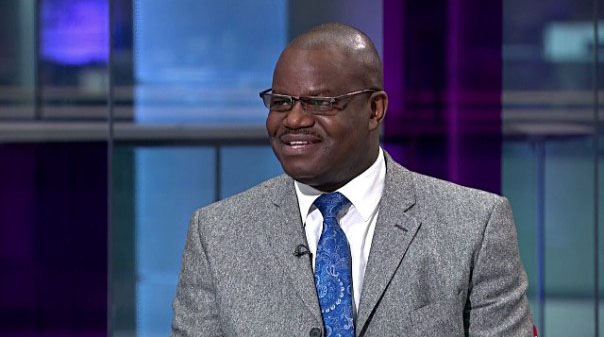
IT is just two days before we cast our votes in the 2023 harmonised elections and, as Zimbabweans, we should give ourselves a pat on the back for creating one of the most peaceful election seasons on record.
The Pulse of the Nation
Nick Mangwana
I say created because it took a conscious effort and decisions from citizens to refrain from violence and any efforts to stifle alternative voices. It also took a serious leadership to berate seriously and warn against anyone who was so tempted to ignore the guidance to allow democracy to freely flow.
Those who tested the resolve of President Mnangagwa and his Second Republic found themselves at the wrong end of a pair of handcuffs and were dragged before the courts to answer for their transgressions.
Democracy was allowed to flourish unfettered and the expression of one’s views and opinions was not only unhindered, but enabled.
May the reader, please, take note that this is the first election Zimbabwe has entered with a number of local television channels to choose preferred editorial slants and narratives from after the opening up of the airwaves by the Second Republic.
It is an election we are going into with dozens of community radio stations and nearly 10 campus radio stations.
We are going into this poll with both pluralism and diversity in the media sector having been achieved and, therefore, our democracy having reached a different maturity stage.
Those who watch the Zimbabwe Broadcasting Corporation (ZBC), our national broadcaster, have noticed that opposition leader Mr Nelson Chamisa has his campaign messages openly covered without commentary by the ZBC. His campaign adverts are aired during prime time on the same media outlet.
This is a democracy like no other in Zimbabwe. Zimbabwe is on a new democratic trajectory and is breaking new grounds, sailing in unchartered waters. We did it ourselves, without any coercion, monitoring and definitely not because of any “observing”.
Which brings me to today’s topic, that of election observers and the need for them to stay in their lanes and keep to their mandates.
To be honest, the issue of inviting foreign observers to witness our electoral process has always sparked debate. One school of thought is of the opinion that we are a sovereign country capable of carrying out its internal processes, without any self-appointed world prefects observing.
Those of this view find the idea of the West coming to observe African elections both patronising and condescending.
This group finds this idea abominable.
Then, of course, there are those who sadly believe that African countries need the West’s stamp of approval for their internal processes to be deemed acceptable and leadership to attain genuine legitimacy.
It can be argued that Zimbabwe is located in between these two alternative viewpoints. His Excellency, President Emmerson Mnangagwa, being the unifier that he is, settled on a compromise between the two schools of thought.
In May this year, he invited those interested in observing our elections to come, saying: “my Government has put in place the requisite mechanisms to guarantee peaceful, free, fair and credible elections. International observers are welcome and will be invited through the relevant channels.”
This invitation was extended to even those who previously found themselves barred from observing Zimbabwe elections owing to their previous acts of mischief.
It was in keeping with His Excellency’s engagement and re-engagement thrust.
He was also clear that when one has nothing to hide, one would not mind witnesses.
That is how this year, we have ended up with hundreds foreign observers swarming in to witness what, from all angles, looks to be another resounding victory for President Mnangagwa.
All 51 embassies and nine consulates accredited to Zimbabwe were invited to observe the polls. Previously, only diplomats accredited on a full-time basis observed the elections.
The Southern African Development Community (SADC), the African Union (AU), the Pan-African Parliament, the Common Market for Eastern and Southern Africa (COMESA), the ACP-EU Joint Parliamentary Assembly, the European Union (EU), the Non-Aligned Movement (NAM) and the Commonwealth were invited.
Liberation movements invited include the African National Congress (ANC), Chama Cha Mapinduzi, the Mozambique Liberation Front (Frelimo), South West Africa People’s Organisation (SWAPO), the Botswana Democratic Party and the People’s Movement for the Liberation of Angola.
All schools of thought on foreign observers have no problem with the latter groups because they also invite Zimbabwe to observe their elections and she obliges.
This can be characterised as peer review to ensure both quality and validity, as well as maintain high acceptable standards.
This sounds like a fair position to take.
Anyways, back to the August 23 harmonised elections.
Countries in Europe, the Americas, the Caribbean, the Pacific and Asia were also invited, inclusive of Russia, Belarus, the United Kingdom and the United States.
It would be remiss not to highlight that this is the second consecutive election in which observer missions from the US and the EU have been invited to observe after being shut out since 2002 for reasons they know very well.
All these invitations demonstrate that President Mnangagwa is very confident of victory and wants to build public confidence in the honesty of our electoral processes.
If anything, he wants the great triumph to be seen by a diverse array of witnesses.
In the very unlikely event that he loses, he would still walk away and retire to his farm, leaving a legacy of democratic legitimacy for posterity. But let no one gets carried away. He has put in the work and wisdom, and that scenario does not look like it will ever play.
One hopes those who are wont to getting excitable and chirp at the flimsiest rumour they hear will finally let it rest.
And we welcome all these observers to be part of this continuing great story of the reawakening of the Southern Africa giant that is Zimbabwe.
What they should be reminded of, though, is that their mandate is to observe.
The dictionary meaning of observe is to “watch carefully the way something happens or the way someone does something, especially in order to learn more about it”, the operative word being WATCH.
Zimbabwe’s electoral law is clear that “an observer shall generally conduct himself or herself in a manner conducive to the peaceful, dignified and orderly conduct of the poll”.
Tweeting unverified claims IS NOT conducive to the peaceful conduct of Zimbabwe’s elections. Some reports trickling in over the past weeks are disappointing, to say the least. Issuing premature statements, betraying both political and cognitive biases, is quite unhelpful.
The European Union Election Observation Mission Zimbabwe 2023 is on record stating through its chief observer, Mr Fabio Massimo Castaldo, that “we will observe and analyse elections and our tested methodology ensures that there won’t be any interference in the process by our side”.
The mission also spells out its mandate as being independent, impartial and comprehensive. As they observe our elections, we will also observe their conduct.
No observer, whether its Ellen Sirleaf Johnson and her Centre for Women Development or the EU and its observer mission, should interfere. They should all maintain a watching brief. That watching brief should not be guided by who makes the loudest noise on social media, but evidence-based practices.
The President himself was clear that an invitation to observe was not an invitation to interfere.
Addressing a Miners for Economic Development Convention in Gweru in June, the President warned that “we will not allow those who want to observe, but already have their results. To hell with them.
“Our elections will be democratic and transparent, and we want those who want to sincerely observe them to come and observe. No single foreign country can teach us democracy because we fought for it and we can entrench it.”
He also emphasised, on a different forum, that foreigners are invited to participate as observers and not as monitors.
“No foreign power is a stakeholder in Zimbabwe’s electoral processes.”
Zimbabwe was under no legal or moral obligation to invite countries that have placed her under unilateral, therefore, undemocratic and illegal sanctions to come and observe its elections.
But in the spirit of rapprochement and as a gesture of good faith, President Mnangagwa felt this was necessary.
May that positive signal be rewarded with honesty, fairness and an equal measure of goodwill upon the people of Zimbabwe.
We do not intend to manipulate the guests we invited to observe our elections, but they should note that our intention is to hold our elections in accordance with acceptable international standards, particularly the SADC Principles and Guidelines for Democratic Elections and the African Union Principles, but more importantly, the Zimbabwean Constitution and all its subordinate laws, particularly the Electoral Act.
Let me sign off by throwing this here: We do not suspend our national security interests because there is an election.
We do not hold our national interest in abeyance because there is an election and we certainly do not open the immigration floodgates for all and sundry to enter our country because there is an election.
We are, therefore, no less democratic if we keep undesirables who come under different guises from entering our country.
Every country does the same.
When delegates of member states go the United Nations, they still apply for visas and many are denied regardless of the fact that we all own the UN and we are all said to be equal.
By the same token, there are members of the media or certain delegations who will be denied entry into Zimbabwe on the strength of different considerations.
Please, note that we are acting within our sovereign rights. Thus, all the election observers stand guided.
Happy voting, Zimbabwe, and may the peace continue.
Nick Mangwana is the Permanent Secretary in the Ministry Information, Publicity and Broadcasting Services.


 Online Reporter