admin
admin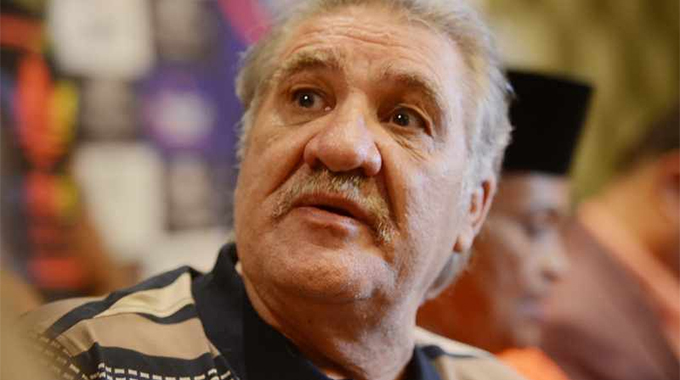
JOHANNESBURG. — Former South African and World Boxing Association heavyweight champion, Gerrie Coetzee, known as the Boksburg Bomber, died at his home in Bloubergstrand in the Western Cape on Thursday.
He would have celebrated his 68th birthday on April 8, but had been ill for some time.
Boxing’s heavyweight championship has always been considered to be the richest prize in sport. And Coetzee once held at least a portion of that prize.
It must be remembered, too, that when the Boksburg Bomber won the WBA title, there was only one other recognised heavyweight champion — Larry Holmes, who held the WBC title.
Coetzee stunned the boxing world when, on September 23, 1983 in Cleveland, Ohio, United States, he knocked out Michael Dokes in the 10th round.
That made him the first white heavyweight champion since Ingemar Johansson in 1959 and the first South African to win a world heavyweight title. It remains one of the greatest performances by any South African sportsman.
Born Gerhardus Christian Coetzee on April 8, in Witfield, Boksburg, Coetzee was the oldest of four children. His father, Flip, an amateur trainer, “bribed” the reluctant Gerrie to put on gloves and get into the ring. It cost him 50c a time.
The youngster later began to enjoy the sport and at the age of 13, he won the Eastern Transvaal bantamweight title. He went on to win the senior amateur heavyweight championship in 1973 when he stopped Kallie Knoetze in the final.
After an estimated 192 amateur fights, he turned professional at the age of 19. On September 14, 1974, he made his professional debut at the Portuguese Hall in Johannesburg, winning against former South African heavyweight champion Chris Roos on points over four rounds.
On August 16, 1976, Coetzee won the South African heavyweight title from Mike Schutte on a sixth-round disqualification. This was his 13th professional fight and it proved an unlucky one as he injured his right hand, which was to give him trouble for the rest of his career.
In October the same year Coetzee met his old amateur rival, Knoetze. He went into the fight against medical advice but despite a pulled back muscle, he won on a disputed 10-round points decision.
He then became “supreme” South African heavyweight champion when he knocked out Black champion James Mathatho on November 27, 1976.
After an easy three-round stoppage of Pierre Fourie, and in a rematch with Schutte, Coetzee won his 17th pro fight in a row, but paid a heavy price when he shattered bones in both hands.
He told his corner in the second round that he had pain in his left hand and in the third felt his right hand going. Showing tremendous courage, he continued to punish Schutte to win on points over 12 rounds. At the end of the fight his gloves had to be cut off his swollen hands.
A Johannesburg surgeon performed a complex operation on his right hand in April 1977 and at the same time operated on the left.
After a six-month layoff, Coetzee returned to the ring on October 30, 1977, to stop American Tom Prater in four. He then knocked out another American, Johnny Boudreaux, in six rounds in December.
After a lacklustre win over Randy Stephens in May 1978 Coetzee needed another operation on his right hand. It was reported that he had taken a pain killer that was to blame for his poor performance. However, Coetzee denied that a tranquilliser had anything to do with his performance.
However, the Transvaal Boxing Board of Control was upset about Coetzee’s performance and because he tried to use a plastic splint for his right hand.
It was reported that Coetzee, previously a dental technician, had made a thin protector from plastic cut from a milk bottle. Curtis Cokes, who trained Stephens, saw the splint being taped on to Coetzee’s hand and objected. The Transvaal Boxing Board then held an enquiry and announced that Coetzee, his manager, Hal Tucker, and co-manager Jock Lewin, as well as trainer Flip Coetzee were all suspended for six months. No reasons were given but after an appeal, the suspension was reduced to three months. — Supersport.com.



 Online Reporter