


 admin
admin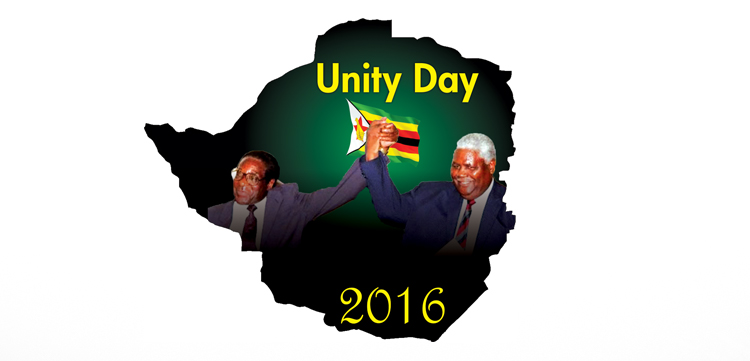
Hon. Cephas Msipa —
Joshua Nkomo returned to Zimbabwe in 1986 and stayed at his other home in Bulawayo, in Pelandaba. He was briefed on the suggestion of talks made at the district council chairpersons’ meeting with Mugabe in April 1983, when they said all the enmity and violence would end only when the two parties united.
He also held a discussion with (Jacob) Mudenda. He was an excellent person to act as a mediator. He was a provincial administrator and highly respected. I knew him as a teacher and had worked with him when he was a district administrator. He was well liked by those who worked with him and he was apolitical.
Nkomo was very interested in Mudenda’s suggestion to explore unity between PF Zapu and Zanu (PF). He agreed that a go-between should be used between him and Mugabe. They agreed to approach President Canaan Banana, the titular head of state, who was also a Ndebele, but a member of Zanu (PF), and asked him to mediate.
Banana, in turn, asked me to assist as another mediator.
In September 1987, my third year out of Government, I was invited to State House in Harare by Rev. Banana. At the time, I was at a board meeting at Triangle Sugar Estate in Chiredzi District when the Secretary to the President, Clifford Sileya, telephoned me with the invitation.
When we met, Banana explained that Nkomo was very keen to talk to Mugabe about uniting their parties. Banana had tried very hard to set up a meeting, but without success. He said that he had tried to use intermediaries to bring the two together but Mugabe had hard preconditions.
In short, Zanu (PF) saw no need for unity with PF Zapu. Banana continued, “I have been told that Mugabe and Nkomo are both your friends and that if you can’t bring them together, no one can.”
I had known the two men for a long time and certainly considered both of them my friends. This was at least a good start. I asked what Mugabe was insisting on before he could meet Nkomo. There were three conditions, he said.
The first was that the name of a united party formed between the two would have to be Zanu (PF); second, that the president of the new party would have to be him, Mugabe; and finally there would be two vice-presidents, Joshua Nkomo and Simon Muzenda, who would have equal status.
I told Banana that the first was going to be difficult to sell to Nkomo. Banana said that the way to look at it was that each party had its name in it.
“You should explain that we have taken Zanu from Zanu (PF), and the PF is from PF Zapu.”
I told him we should be honest and say the name will be as it is, Zanu (PF). I made an appointment to see Nkomo.
Although he was not well, he told his secretary to bring me into his bedroom. He was lying on his bed and I sat on a chair next to it. I then explained the purpose of my visit and the conditions for unity as given to me by Banana.
He immediately answered, “These people are not serious about unity. Do you think I can go to Matabeleland and tell people that we are now Zanu (PF)?”
I suggested to him that we should move to the next two pre-conditions. He said he had no problem with Mugabe being president of the party after unity, but he questioned why Muzenda should be equal to him when he, Nkomo, was leader of the party that was the other partner in the deal.
I said that Muzenda would see this as a demotion. I asked him, “Do you see any problem in you being equal to Muzenda?”
He shrugged and agreed to it. Then he suggested that we go back to condition number one. He pleaded with me to go and explain to Mugabe personally, and not through Banana.
Deep in my heart I knew that if I told Mugabe that Nkomo did not want the name Zanu (PF), he would say, “Nkomo does not want unity.”
The other issues were not a problem; as I explained to Nkomo, as vice-president he would be in a stronger position to put across his views on any issue. Nkomo and I had several meetings. I was communicating with Mugabe through Banana.
After each meeting, I wrote a report on the issues raised and Nkomo’s responses, to keep Mugabe in the picture. Each time I thought we were making progress, the name Zanu (PF) would occur and take us back to square one. I was on the point of giving up, but Joseph Msika, PF Zapu vice-president, urged me to continue.
“This is the most important assignment you have ever been given for your country,” he said.
Willie Musarurwa and Ariston Chambati were of the same view. Then I decided to persuade him instead of discussing with him. I appealed to him to give me time to explain to him why I was so anxious for him to unite with Mugabe. Furthermore, I asked him to just take note of what I was going to say and to take time to give it serious consideration.
I said whether it took him a week or a month, I was prepared to wait for his considered final decision.
He agreed.
My appeal was in three parts. In the first place, I told him what unity would mean to him personally, that his status would change immediately from being leader of the opposition to being the vice-president of Zimbabwe. Secondly, I referred to the people of Matabeleland in particular – they would feel that they were part of the Government of Zimbabwe and that their needs would be attended to at the highest level.
Lastly, the country would benefit from his long experience, and policies that were the result of many years of thought, suffering and sacrifice for majority rule in Zimbabwe.
I left him to consider what I had said, and told him I was ready to hear from him whenever he had made up his mind. Four days later he called me back to ask me if I had discussed the issue with any other members of PF Zapu. My answer was that I had not (Joseph Msika had asked me not to tell Nkomo of his knowledge of the mediation).
Also, during one of my visits to Chikurubi Prison where Dumiso Dabengwa, former Zipra head of intelligence, and former Zipra commander Lookout Masuku had been in detention without trial for almost a year, I had mentioned the talks.
Dabengwa had responded, “How can I give an informed answer to such an important matter when I am isolated from the people?”
Nkomo’s initial response was to give me the names of three PF Zapu people, Welshman Mabena, MP for Matabeleland North, Sydney Malunga, MP for Bulawayo, and Naison Ndhlovu, MP for Matabeleland South. He emphasised that I should talk to them individually about unity between PF Zapu and Zanu (PF).
I arranged to meet each of them and asked them whether they would support unity between PF Zapu and Zanu (PF) if talks between Nkomo and Mugabe were successful.
I was pleasantly surprised when all of them said, “Nkomo is our leader and if he thinks unity with Zanu (PF) is in the best interest of PF Zapu and the country at large, we shall go along with him.”
I took the message to Nkomo, who looked at me and said, “Kawungitsheli amanga? (Are you not telling lies?)”
“I have worked with you for many years,” I said.
“Have you known me to lie?”
“Go and tell Banana that I have accepted to unite and work with Mugabe,” he answered.
I could not believe what I was hearing. I was at a loss for words. I thanked him most sincerely and quickly left because I feared that he might change his mind.
It seemed too good to be true. As soon as I left Nkomo, I broke the good tidings to Banana who jumped from his seat and congratulated me profusely. His joy is better imagined than described. The following day, he called me to say Mugabe wanted to be given the message from Nkomo himself.
Banana asked me to arrange for a meeting with Nkomo. I immediately snapped.
“Does Mugabe not believe what I said?”
Banana said, “No, don’t be angry, this is normal in agreements like this.”
I cooled down and passed the message on to Nkomo. He did not appear surprised and we quickly agreed on a date and time when he would come to State House for this historic meeting. The day came and there was no Nkomo. Banana phoned me from State House to find out where he was.
I was in Kariba.
I phoned several numbers in Bulawayo and eventually I located him at the Blue Lagoon, a restaurant owned by his daughter, Thandiwe. I asked why he was not in Harare for the appointment and he said he was not feeling well. I asked why he had not phoned to cancel the appointment, and his answer was that his telephone was not working.
I was asking in the most polite and friendly manner I could manage under the circumstances. I understood his position. He was consulting close friends.
The decision he was making was most difficult. I asked when next he would be able to make the appointment. To my relief, he gave me date and time without any hesitation.
I was even more delighted to hear later that he had met Banana as promised. And there my assignment ended. I became a spectator.
No one mentioned my role until long after the Unity Accord of 1987 when Joshua Nkomo invited me to his office in his capacity as Vice-President and he said, “Wena mfana ngite ngibong’ukuti wakhuluma lami ngavuma ukuti iPF Zapu le Zanu sibambane (Young man, I thank you for persuading me to agree to the unity between PF Zapu and Zanu (PF)).
“I was not very sure that I had made the right decision. I want to tell you that it is working very well.”
Many people have questioned the benefits of the Unity Accord. I maintain that it was the right decision. It ushered in peace and oneness in Zimbabwe, although some members of PF Zapu were sceptical.
In April 1988, over 90 dissidents marched to the Zimbabwe Republic Police station at Nkayi in Matabeleland North and asked to see the Governor, Jacob Mudenda. They surrendered to him and handed in their weapons. It was immediately after the signing of the Unity Accord.
I couldn’t think of anything more spectacular and dramatic!
Honourable Cephas Msipa was a veteran politician who served in Government in various capacities. These excerpts were taken from the National Hero’s memoir, “In Pursuit of Freedom and Justice”, which he published in 2015.


 Bongani Ndlovu