admin
admin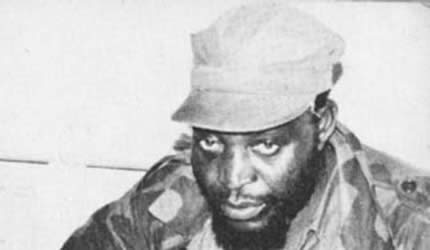
Phyllis Johnson Correspondent
THE Josiah Magama Tongogara Legacy Foundation and the Tongogara family held a small commemoration at the National Heroes shrine on December 26, in advance of a bigger national event to be held early next year. The family members who ranged in age from seven to 70 placed fresh flowers at the grave of the late national hero and spoke of his life lost 36 years ago on December 26 1979 in Mozambique, in a vehicle accident on the main highway in the southern province of Inhambane.
The late Zanla Commander was on his way to Chimoio to brief other commanders on the ceasefire agreement signed at Lancaster House in London just five days earlier. The name of Josiah Magama Tongogara evokes the successful prosecution of the liberation war, and the JMT Legacy Foundation was established in his name to carry forward the national values that emerged from the liberation struggle and provide the framework for the Constitution and development of independent Zimbabwe.
The Foundation offers scholarships to students in primary or secondary school who have very good results, but are unable to pay school fees and levies. The selected students are expected to work hard and maintain their trajectory of good results to continue receiving support from the Foundation through its Scholarship Committee.
One of several success stories is that of Isaac Sharara, who is now studying for an Honours degree in Business Studies and Computer Science at the University of Zimbabwe and is the first undergraduate student supported by the Foundation.
He told his story in a letter to the Foundation dated December 8 2015. “Between 2002 and 2012, my education was being financed by my mother, a vegetable vendor, without the help of my deceased father. She managed to pay my school fees using little money she earned from selling vegetables and sometimes being helped by close relatives.
“But as a person grows and continues with studies, education becomes more expensive and my mother could not carry the burden anymore when I was doing my final advanced level year at Highfield High School in 2014. I almost dropped out of school during that time.
“I was stranded and I went to the Ministry of State Affairs in Harare Metropolitan Province to seek for help and I was advised to apply to the Tongogara Legacy Foundation. I applied and I was accepted. I felt relieved and it took a lot off my shoulders. …
“Education is a privilege that I feel lucky to have. I thank the foundation for giving me support in achieving my future goals and for showing faith in me by making me their first undergraduate student.
“I take all this as an inspiration to me, so that one day I will be able to help students achieve their goals just like how the foundation has helped me.”
The Tongogara Foundation seeks support from individuals and corporate sector for these activities, and the next fundraising event will be held early in the New Year, although interested parties can contact the foundation at any time of the year to seek information or offer support.
Cde Tongogara was born on February 4 1940 and left the country as a youth to further his education.
He joined the party youth league in exile in Zambia in 1963, returning to attend the first Zanu congress in Gweru in 1964 before going to Tanzania and then to China for military training in guerrilla strategy and tactics.
On his return, he began to review military strategy to prioritise the preparation of materials and mobilisation of the population. In 1970, he arranged for Zanla forces to work with Frelimo in Mozambique and later established camps there after Mozambique gained independence in 1975.
His military expertise and dedication led to his appointment as Zanla Commander and Chairman of the High Command in 1972, thus planning the decisive phase of the war.
When the party was reorganised in 1977, General Tongogara was re-elected to the Central Committee as Secretary for Defence and he continued to chair the High Command.
He regarded the Lancaster House negotiations in London with the Ian Smith regime as a “second front” brought about by the freedom fighters on the ground at considerable sacrifice and loss of life.
At the time of those negotiations in late 1979, Zanla and Zipra fighters had already liberated the country, holding most of the rural areas and infiltrating the urban centres, leading to independence on April 18 1980.
His Excellency President R.G. Mugabe, Commander in Chief of the Zimbabwe Defence Forces said in a message for the annual Tongogara commemoration by the ZDF and the JMT Legacy Foundation in 2012 that “the lessons Tongogara learned in China, adapted to Zimbabwean realities, became the foundation of the victory of the armed struggle of the 1970s known as the Second Chimurenga.”
He urged the Foundation to “make Tongo a living legacy, a living tissue of those values and ideals that liberated us, indeed the values and ideals that must continue to inspire our Nation. He deserves that honour.”
He urged Zimbabweans “of means and goodwill to come forward with any form assistance as would further the Foundation’s worthy objectives.
“Foundations that honour and celebrate the lives of those who played leading roles in the making of our country’s history give our history its blood, its flesh and its bones, and indeed its vital human and tangible form.”


 Online Reporter