dyton mupawaenda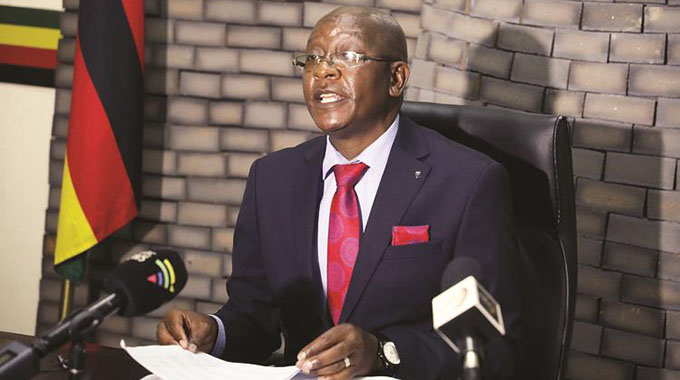
Zvamaida Murwira-Senior Reporter
Debate on four Bills continues in Parliament this week as part of the legislative agenda outlined by President Mnangagwa when he opened the First Session of the 10th Parliament, after general elections last year.
The Bill amending the Criminal Law by increasing protection of children and young persons), Death Penalty Abolition Bill, Administration of Estates Amendment Bill and Persons with Disabilities Amendment Bill are moving through their stages and are set for debate in the National Assembly which resumes sitting today after a week-long adjournment.
The Criminal Law Codification and Reform Act Amendment Bill seeks to raise the age of sexual consent from 16 to 18 in compliance with the Constitution and a court ruling that declared a section of that law that set the age of sexual consent at 16 as unconstitutional. The amendment will bring the law into line with the Constitution.
Presenting the Bill in the National Assembly, Justice, Legal and Parliamentary Affairs Minister Ziyambi Ziyambi said the proposed law closed the gap after the constitutional judgement that children are anyone up to the age of 18 and not 16.
“The Criminal Law Codification and Reform Act contains several sections that protect children from sexual exploitation.
The sections refer to children as young persons and that term is defined as meaning boys and girls under the age of 16 years.
“However, Mr Speaker Sir, the Constitution fixes 18 years as the age at which one is considered to have attained adult status. Although the Criminal Law Code protects the children under the age of 16, it is imperative to note that it does not provide protection for children between aged 16 and 17 in the event of sexual crimes being committed on their persons. This Bill therefore intends to extend protection of children up to the age of 18 as enshrined in the Constitution,” said Minister Ziyambi.
“The Bill will also amend the Criminal Procedure and Evidence Act to make it possible for children and other witnesses who cannot talk due to impairments, to be able to give evidence through other means such as written statements, use of sign language and other argumentative and alternative communication.
“This amendment ensures that people with speech impairments are not left out in enjoying their rights to be heard and participate in all our court proceedings.”
Also up for debate will be the Death Penalty Abolition Bill, which seeks to remove the death penalty as a sentencing option for all crimes in the future, as well as see the resentencing of 65 convicts now on death row.
The Constitutional provision that Parliament can pass a law allowing the death penalty for aggravated murder by adult men will remain, but Parliament will not pass such a law. The Bill also removes the death penalty for a couple of other crimes, bringing the law into line with the Constitution.
Minister Ziyambi told legislators that experience had shown that capital punishment has not helped in reducing the offence of murder.
He said while in principle, people favour the death penalty for extreme crimes, in practice, they were hesitant to see it carried out as shown by the fact that the country had more than 60 prisoners on death row because execution warrants were not being signed.
The Administration of Estates Amendment Bill seeks to have the Master of High Court’s Office weaned from the Judicial Service Commission (JSC) as part of elaborate measures to inspire confidence among litigants in the adjudication of disputes of deceased estates’ cases involving widows, widowers and orphans.
Previously, the Master of High Court’s Office was under the JSC, which also administers courts, a development that created a perception of conflation between that office and that of judicial officers who would eventually preside over disputes involving deceased estates.
Another proposed law is the Persons with Disability Bill, which seeks to confer rights and freedoms on people living with disabilities in line with the Constitution and United Nations Convention.
The Bill aligning the disability law with the Constitution was tabled last week before it was referred to the Parliamentary Legal Committee, which scrutinises Bills and Statutory Instruments to establish if they are consistent with the Constitution.


 Online Reporter